

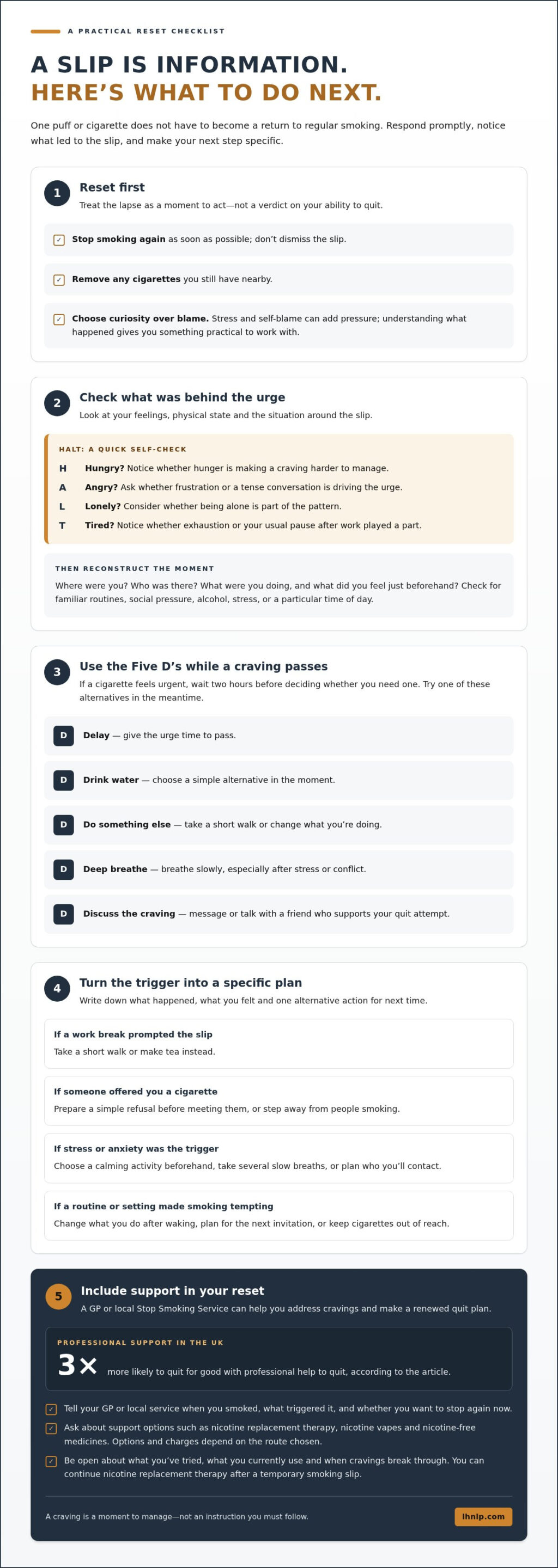
A slip doesn’t erase your progress, but it’s a moment to act: stop smoking again, get rid of any cigarettes you have, and work out what led to it. If you’re wondering what to do if you relapse while trying to quit smoking, start by treating the lapse as information, not failure. In the UK, professional support to quit can make you three times more likely to quit for good.
It’s understandable to feel disappointed or worried that one cigarette could lead back to smoking. But shame and self-blame can add stress, while understanding what happened gives you something practical to work with. A slip can show where your plan needs more support.
This article explains why smoking relapses happen, how to spot triggers such as stress, alcohol or familiar routines, and what to do next. You’ll also learn how to seek support for cravings and plan another quit attempt with a GP or local Stop Smoking Service.
Key Takeaways
- Notice whether stress, anxiety or feeling hungry, angry, lonely or tired is making a cigarette seem appealing, then choose a coping step before acting.
- A GP or local Stop Smoking Service can help you explore practical support for cravings and make a plan that fits your quit attempt.
- Look back at the setting, people and routine around a slip to identify what you could change next time.
- Use a lapse as information, not a verdict on your ability to quit, and take one manageable step back towards being smoke-free.
1. Emotional triggers such as stress and anxiety
A cigarette after quitting can feel like proof that your attempt has failed. It isn’t. One puff or cigarette is a lapse, not necessarily a return to regular smoking. Still, a single puff can lead back to smoking, so respond promptly rather than dismissing it. Stress after a slip can intensify the urge to smoke again. Blame adds pressure; curiosity helps you work out what happened.
Stress and anxiety are common emotional triggers, but physical states can make cravings harder to manage too. Use HALT to check whether you’re hungry, angry, lonely or tired. For example, after a tense conversation, ask whether anger is driving the urge. If you’re exhausted after work, notice whether smoking has become your usual way to pause. Naming the feeling helps separate the trigger from the choice that follows.
Then try the Five D’s: delay, drink water, do something else, deep breathe and discuss the craving with a friend. These steps offer alternatives while the urge passes. If a cigarette feels urgent, wait two hours before deciding whether you need one. In the meantime, take a short walk, breathe slowly or message someone who supports your quit attempt. A craving is a moment to manage, not an instruction you must follow.
Make your plan specific to the emotional pattern you notice. If anxiety rises before a meeting, choose a calming activity beforehand and arrange a smoke-free break afterwards. If loneliness is the trigger in the evening, plan a call or shared activity for that time. If anger follows conflict, step away and take several slow breaths before deciding what to do next. Specific alternatives are easier to use than a general promise to resist.
After a slip, write down what you felt, what happened just beforehand and what might help next time. This gives you a personal reminder of what to do if you relapse smoking, based on your own triggers rather than self-blame. Include the place, time, people present and whether you felt hungry or tired. Review your notes to decide what to do if you relapse into smoking again. A clear record can help you adjust your plan and get back to quitting.
2. Getting help from a GP or Stop Smoking Service
A slip is a useful reason to seek practical support, not a reason to hide what happened. In the UK, professional help to quit makes you three times more likely to quit for good. Tell your GP or local Stop Smoking Service when you smoked, what triggered it, and whether you want to stop again now. That gives the conversation a clear starting point.
The cost comparison depends on how often you buy cigarettes and which stop-smoking support you use. Cigarette spending can recur with each purchase, while treatment options and any charges depend on the route chosen. Ask your local Stop Smoking Service about the support it can advise on, and compare that with your usual tobacco spending. Don’t assume every treatment has the same cost.
A local Stop Smoking Service can advise on nicotine replacement therapy, nicotine vapes and nicotine-free medicines. These are different options, not one standard prescription for everyone. Tell the adviser what you have already tried, which cravings are hardest, and whether you have returned to regular smoking. A GP can also discuss which support may suit your circumstances. Describe your quit attempt honestly, including any treatment you currently use.
You can continue nicotine replacement therapy after a temporary smoking slip. Nicotine replacement therapies and vapes are options some people use when managing cravings. If you vape or use nicotine replacement, tell the Stop Smoking Service what you use and when cravings break through. This can help you manage urges without treating one cigarette as a reason to abandon support.
Smoking again exposes you to tobacco smoke and may make a return to regular smoking more likely. Focus on the next cigarette: stop again as soon as possible and remove any cigarettes still nearby. A GP or Stop Smoking Service can help you address cravings and make a renewed quit plan. If you’re unsure what to say, begin with the date of the slip and what was happening beforehand.
3. Learning from what caused a slip
One cigarette doesn’t mean your quit attempt has failed. A single puff or cigarette is a lapse, not a verdict on your ability to quit. What matters now is what happened around it and how you respond. Treat the moment as information, then use it to shape your next plan.
Reconstruct the situation as clearly as you can. Note where you were, who was there, what you were doing and what you felt immediately beforehand. Was it after a meal, during a work break or while drinking alcohol? Did someone offer you a cigarette, or did you reach for one automatically? These details can reveal whether the main trigger was a familiar routine, social pressure, a particular emotion or a specific time of day.
Common triggers include old smoking routines, being around people who smoke, drinking alcohol and smoking first thing in the morning. Look for the moment when the choice became harder. For example, if a pub visit ended in a cigarette, plan how you’ll handle the next invitation. You might limit or temporarily avoid alcohol, tell friends you’re quitting, or step away from people smoking. If your morning routine is a risk, change what you do after waking and keep cigarettes out of reach.
Turn each observation into a practical response. Write down the trigger, the thought or feeling it brought up, and one alternative action. If a work break prompted the slip, take a short walk or make tea instead. If a friend offered you a cigarette, prepare a simple refusal before meeting them. If the slip followed a stressful event, plan who you’ll contact and what you’ll do first. This gives you a specific answer to “what to do if I relapse smoking” in that situation.
Review your notes before another quit attempt and adjust the plan where it felt weak. To work out what to do if I relapse smoking again, identify a support person and an alternative action in advance. A slip can show which situation needs more preparation; it doesn’t erase the effort or learning you’ve already invested. Focus on the next decision, not self-blame.
4. How can I get back on track with quitting smoking after a relapse?
Start with the next decision, not a judgement about yourself. If you smoked once or twice, stop again now and throw away any remaining cigarettes. If you bought a packet, dispose of what is left. If a friend gave you one, ask them not to offer cigarettes again. Removing easy access helps interrupt the path from a slip to regular smoking.
People trying to quit experience an average of five or six relapses before quitting for good. That figure doesn’t make another attempt automatic, but it shows why a slip need not end your effort. Remind yourself why you chose to quit, and keep those reasons somewhere visible, such as beside your kettle or on your phone’s home screen.
If smoking has become regular again, choose a new quit date, ideally within the next two weeks. Put it in your calendar and decide what needs to change before then. If a night out led to smoking, consider limiting or temporarily avoiding alcohol. If you smoked in your car, clean it and remove anything that reminds you of cigarettes. Make each adjustment address a trigger you identified.
If you don’t feel ready to quit today, wait a few weeks and use that time to address what makes quitting difficult. Write down the obstacles, such as stress, a smoking routine or being around friends who smoke. Choose one practical response for each. If you use nicotine replacement therapy, you can continue using it after a temporary slip. A GP or Stop Smoking Service can also help you plan your next attempt.
Quitting again means applying what you learned, not starting from nothing. Set a date, prepare for the situations that challenged you, and tell someone you trust how they can support you. For a structured approach to changing smoking habits, explore support for quitting smoking.
London Hypnotherapy & NLP: Hypnotherapy for Anxiety
London Hypnotherapy & NLP offers Hypnotherapy for Anxiety and Hypnotherapy for Smoking Cessation for people seeking support with anxiety or smoking habits. If anxiety is part of the pattern behind your cravings, sessions offer space to explore it and work towards a more considered response. Smoking cessation support can also help you focus on the routines and thoughts connected with smoking.
This may be a useful next step if you’ve identified a trigger but find it difficult to change your response alone. You can discuss the situations that make quitting harder and the kind of support you’re seeking. Hypnotherapy is not a replacement for advice from a GP or Stop Smoking Service about nicotine replacement therapy or medicines.
If you’d like to explore whether this support fits your goals, contact London Hypnotherapy & NLP.
Make your next step a deliberate one
A smoking slip can become a turning point when you use it to make your next choice more considered. Instead of waiting to feel completely ready, choose one small action today: move cigarettes out of reach, tell someone you trust you’re trying again, or write down what you want a smoke-free life to make possible. Small actions give your intention somewhere practical to land.
If you’re wondering what to do if you relapse while quitting smoking, remember that asking for support is a step forward. If anxiety or smoking habits feel difficult to work through alone, London Hypnotherapy & NLP offers support through Hypnotherapy for Anxiety, Hypnotherapy for Weight Loss and Hypnotherapy for Smoking Cessation. Choose the kind of help that fits the challenge you want to address.
To explore support for your next step, contact London Hypnotherapy & NLP. You can begin again with greater understanding, one choice at a time.
Frequently Asked Questions
Why do relapses happen?
Relapses happen when a trigger or familiar smoking pattern draws someone back to cigarettes, sometimes long after quitting. A relapse can occur six months after stopping, or around an anniversary as late as 11 years afterwards. This is why noticing changing circumstances matters, even after a long smoke-free period. A calendar reminder before a personally significant date can prompt you to revisit your coping plan.
What should I do immediately after relapsing and smoking a cigarette?
Interrupt the moment and protect your next smoke-free choice. Move away from the place where you smoked, put out the cigarette, and avoid buying another packet on your way home. If you’re with someone supportive, tell them you want to continue quitting and ask them to check in with you. A short message saved on your phone can help you remember why you’re stopping.
Where can I get free stop-smoking support in the UK, including NHS services?
Start with your GP or local Stop Smoking Service for UK quit-smoking support. A local service can advise on nicotine replacement therapies, nicotine vapes and nicotine-free medicines. Ask what support is available in your area and how to access it; local services can guide you through the options. You can also tell your GP about previous quit attempts and what made them difficult.
When should I seek medical or professional help after a smoking relapse?
Seek support if smoking has become regular again, cravings feel difficult to manage, or you’re unsure how to restart your quit attempt. A GP can discuss your circumstances and available support, while a local Stop Smoking Service can help you consider options for cravings. You don’t need to wait for another quit date to start that conversation. Bring a note of what you’ve tried and what you need help with.