

Stress can feel like a fixed pattern, but you can explore and practise different ways of responding. If you’re trying to find an NLP coach near me in London, look for someone who helps you set a clear goal and uses practical techniques such as reframing, guided imagery and rehearsing new responses. NLP is commonly used as a coaching tool for communication and performance, but it shouldn’t replace evidence-based mental health treatment.
If anxiety, pressure or self-doubt is shaping your choices, it’s understandable to want more than a quick fix. It helps to understand how coaching works, what you may practise and how to decide whether an approach suits your needs.
This guide explains what happens in NLP coaching, how it may relate to stress, confidence and self-esteem, and what to consider when choosing a London practitioner. It also covers when another kind of support may be more appropriate, so you can choose your next step with greater clarity.
Key Takeaways
- Assess a coach’s relevant training, experience and scope of practice, not credentials in isolation.
- Turn concerns about anxiety, stress or confidence into a clear coaching goal you can work towards.
- Compare practitioners by their approach, specialisms and how they explain the role of NLP in support.
- Recognise when anxiety may call for a different form of mental health support alongside or instead of coaching.
Coach’s professional background and qualifications
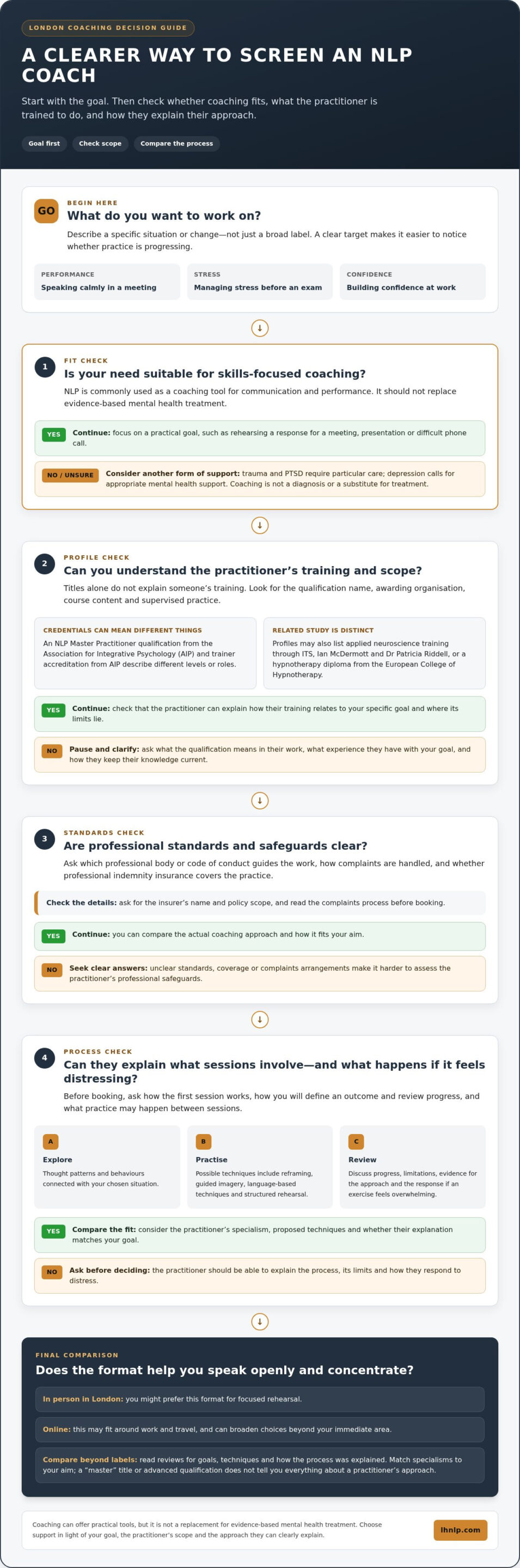
A useful profile separates NLP training from experience in therapy, coaching or another profession. Neuro-Linguistic Programming developed in the 1970s, and UK practitioners commonly position it as a coaching tool, rather than regulated psychological therapy. Titles alone don’t explain someone’s training. Look for the qualification name, awarding organisation, course content and supervised practice. For example, an advanced profile may list an NLP Master Practitioner qualification from the Association for Integrative Psychology (AIP), or trainer accreditation from AIP. These describe different levels or roles, so ask what the practitioner’s qualification means in their work.
Some practitioner profiles mention related study, such as applied neuroscience training through ITS, Ian McDermott and Dr Patricia Riddell, or a hypnotherapy diploma from the European College of Hypnotherapy. Treat each as a distinct credential, not proof of expertise in every health concern. A practitioner with therapy experience can explain how it informs their coaching, where its limits lie and when another form of support may be more suitable. Ask how they keep their knowledge current and what experience they have with your specific goal.
To understand a coach’s professional standards in the UK, ask which professional body or code of conduct guides their work, how they handle complaints and whether professional indemnity insurance covers their practice. Ask for the insurer’s name and the policy scope, and read the complaints process before booking.
Before booking, ask what happens in the first session, how you’ll define an outcome and how you’ll review progress. Ask which techniques they might use, such as reframing or structured rehearsal, and whether they may suggest practice between sessions.
NLP can offer practical coaching tools, but it shouldn’t replace evidence-based mental health treatment. Ask what evidence supports the proposed approach, what its limitations are and how the practitioner responds if an exercise feels distressing. Clear answers can help you decide whether the work suits your needs.
Support for anxiety, stress and confidence
An NLP session usually starts by defining a clear outcome, such as speaking calmly in a meeting or managing stress before an exam. The practitioner then explores the thought patterns and behaviours connected with that situation. Guided imagery, language-based techniques and reframing can help you consider a different response. Structured rehearsal gives you a chance to practise it, while exercises between sessions can bring the work into everyday life.
For performance anxiety, choose a specific situation to work on, such as presenting to colleagues, competing or making a difficult phone call. The coach can help you identify what you expect to happen and rehearse a more useful response. For habit change, describe the cue, your usual behaviour and what you’d like to do instead. A clear target makes it easier to notice whether your practice is progressing.
With anxiety or phobias, a coaching conversation can explore situations that trigger distress and the beliefs associated with them. For example, someone who avoids speaking up might practise making a short contribution and reflect on the result. This is skills-based support, not a diagnosis. Discuss a phobia treatment’s method, boundaries and session pace before starting.
Trauma and PTSD require particular care. NLP coaching shouldn’t replace evidence-based mental health treatment, and a practitioner should explain the distinction between coaching and therapy. Depression also calls for appropriate mental health support, rather than assumptions that reframing alone will address it. Ask how the coach responds if an exercise feels overwhelming, and whether they can explain the limits of their training, including any relevant diploma.
For an anxiety-focused route that combines practical support with a defined treatment approach, explore anxiety treatment options.
London NLP counsellor and therapist listings
London listings include practitioners who use NLP in coaching, counselling or therapy. Their approach will reflect their training and your goals, so compare their focus and session format before deciding what suits you.
Comparing Local Coaches
If you want to find an NLP coach near me in London, use local search results as a starting point, then compare profiles more closely. Read reviews for details about the goals people worked on, the techniques used and how the practitioner explained the process. Match the practitioner’s focus to your aim: career confidence, for example, calls for a different approach from relationship communication. A “master” title or advanced qualification offers context, but doesn’t tell you everything about their approach.
Online and In-Person Sessions
You can find NLP sessions in person in London or online, depending on the practitioner. Searching for “find an NLP coach near me” can surface local options, while an online search may broaden the choices beyond your immediate area. Choose a format that helps you speak openly and concentrate. You might prefer in-person coaching for focused rehearsal, or online sessions to fit around work and travel.
Speciality filters can narrow a directory, but read beyond the labels. Integrative therapy and coaching may combine NLP with other approaches, with a plan shaped around your goals. If you’ve worked with a therapist before, consider whether you want focused coaching, such as building confidence at work, or a broader therapeutic conversation. Ask how the practitioner’s training relates to your aim.
Some listings mention Timeline Therapy, an NLP approach that may explore memories, emotions and beliefs connected with a present concern. Ask the practitioner to explain the process and how it fits alongside other therapies. NLP can be combined with other approaches in a plan agreed with the practitioner. Clear answers help you compare profiles on more than titles alone.
How do I compare local NLP coaches, reviews, experience, and specialisms?
If you’re trying to find an NLP coach near me, start by defining the outcome you want, such as speaking more confidently at work or managing pressure before a presentation. Use that goal to compare practitioners instead of relying on location or review scores alone. Look for a clear connection between the coach’s stated specialism and the change you hope to make.
Read reviews for specific details, not just general praise. Look for examples of what clients worked on, how the practitioner explained their approach and what practical changes reviewers describe. Reviews offer insight into other people’s experiences, but they don’t establish qualifications or predict your outcome. Consider them alongside relevant training and experience.
Next, compare specialisms and methods. A practitioner focused on performance goals may suit presentation nerves, while another may work on different concerns. Ask how sessions would relate to your situation and how progress would be discussed. If you search again to find an NLP coach near me, apply the same criteria to each profile rather than assuming a nearby listing is the right match.
Professional standards matter too. Look for information about a code of conduct, complaints process and professional indemnity insurance. Ask how the practitioner handles concerns beyond their scope and whether they’ll signpost you to regulated mental health support when appropriate. Be wary of medical claims or promises of a cure. In the UK, NLP is commonly positioned as a coaching tool, not regulated psychological therapy, and shouldn’t replace evidence-based mental health treatment.
Before choosing, consider whether the session format and structure fit your life. A clear conversation about your goal can help you judge whether the practitioner listens and explains their approach in terms you understand. If you’re ready to find an NLP coach near me and explore goal-focused support, get in touch about coaching.
London Hypnotherapy & NLP: Hypnotherapy for Anxiety
London Hypnotherapy & NLP offers Hypnotherapy for Anxiety and NLP Coaching for people seeking structured support with anxious responses and practical personal goals. Sessions are personalised and solution-focused, helping you explore patterns that may affect everyday life and consider useful ways forward. Hypnotherapy and NLP coaching take different approaches, so the right starting point depends on whether you want support focused on anxiety or coaching towards a defined goal, such as greater confidence. Neither is a substitute for evidence-based mental health care when that is needed.
If anxiety is the concern you want to address, explore the approach and decide whether it feels suited to your needs. You’re welcome to contact London Hypnotherapy & NLP to discuss taking the next step.
Take one considered step towards change
Choosing support can start with a simple intention: name the change you want to explore and what would make a first conversation useful. If you’re still trying to find an NLP coach near me, keep that intention in view as you consider whether coaching or another form of support better suits your needs. You don’t need to have every answer before you begin. A clear starting point can help you explain what’s been difficult and what you hope to work towards.
London Hypnotherapy & NLP offers Hypnotherapy for Anxiety, Hypnotherapy for Weight Loss and Hypnotherapy for Smoking Cessation. These are distinct areas of support, so focus on the one that fits your reason for reaching out. Take the next step at your own pace and ask about the approach that feels relevant to you.
Contact London Hypnotherapy & NLP to explore your next step. Small, thoughtful choices can open a path forward.
Frequently Asked Questions
How does neuro-linguistic programming work?
NLP explores how language, attention and learned patterns relate to the way people respond to situations. A practical starting point is to notice what happens before a difficult moment: what you think, where your attention goes and how you react. For example, before a work presentation, you might notice when tension rises. Coaching can then help you consider a different response to practise.
Is NLP therapy or coaching?
In the UK, NLP is most commonly positioned as a coaching tool rather than regulated psychological therapy. Coaching generally focuses on a goal, such as communicating more clearly at work, while therapy may address broader emotional or mental health concerns. Ask how a practitioner describes their role and training. NLP shouldn’t replace evidence-based mental health treatment when that support is needed.
WHAT IS NLP?
NLP stands for neuro-linguistic programming, an approach developed in the 1970s. The term refers to ideas about connections between language, thought and behaviour, which practitioners use in coaching or therapeutic contexts. For a personal goal, such as speaking up in a meeting, the work may explore how you interpret the situation and what response you’d like to practise. NLP is not a psychiatric diagnosis.
What Can NLP Assist With?
NLP is commonly used in coaching for goals involving communication and performance. Examples include preparing for a presentation, building confidence in a new role or practising a response to everyday stress. The focus should be a specific, workable aim, not a promise to resolve every concern. For anxiety, depression, trauma or another mental health difficulty, NLP shouldn’t take the place of evidence-based treatment.
What happens in an NLP session?
A session usually begins by agreeing on what you want to achieve, then exploring how you currently respond to the relevant situation. You might describe a conversation you’re avoiding or a moment when self-doubt takes over. The practitioner can help you explore the language and assumptions involved, then use an appropriate technique to work towards a response that better serves your goal.
Will I get exercises to try?
You may receive an exercise to use between sessions, helping connect coaching with your goal in everyday life. For example, you could note what you say to yourself before a challenging conversation, then practise a more helpful phrase beforehand. Ask how the exercise relates to your objective and discuss what you noticed at your next session.