

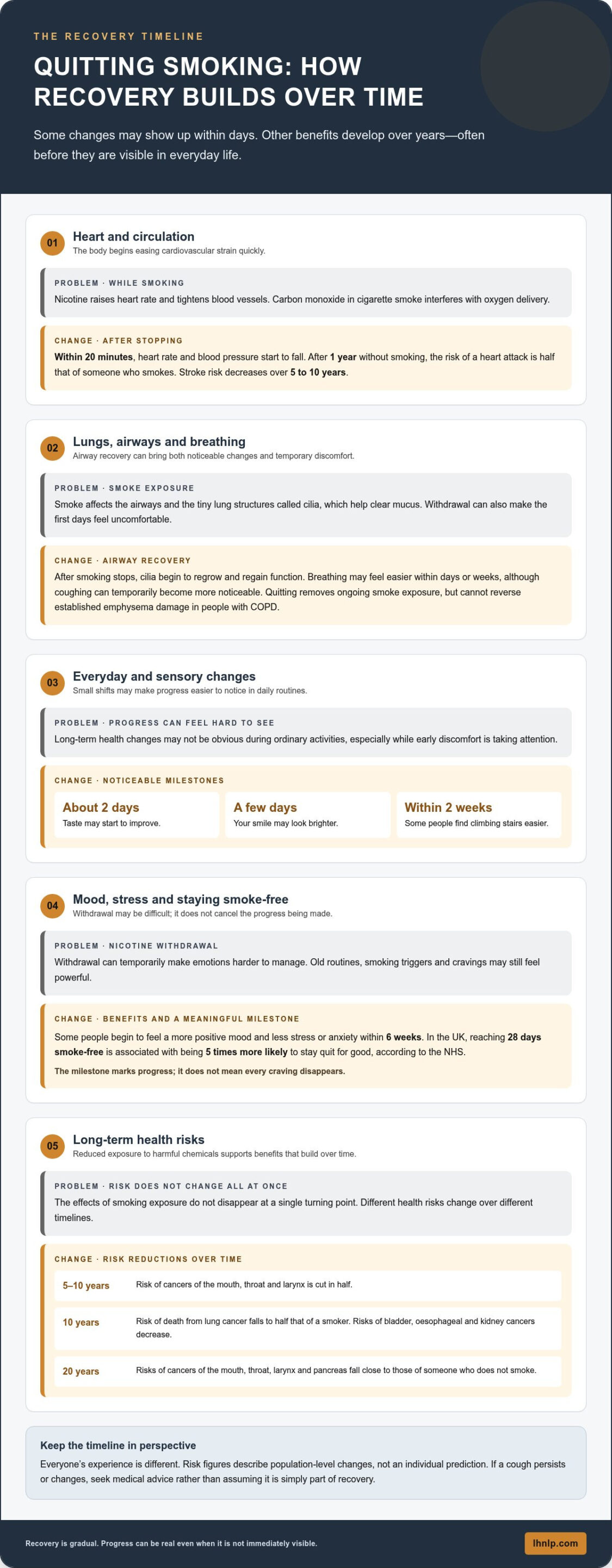
Quitting smoking starts changing the body quickly, and the benefits continue to build over time. According to the NHS, after 1 year without smoking, the risk of a heart attack is half that of someone who smokes; after 10 years, the risk of death from lung cancer falls to half that of a smoker. These long term effects of quitting smoking can make the effort feel worthwhile even when progress isn’t immediately visible.
It’s understandable to focus on cravings and the discomfort of the first days, when those changes feel immediate. But your body’s recovery continues after withdrawal eases. Seeing how it unfolds over time can give you a clearer sense of what you’re working towards.
This article explains how quitting smoking affects heart rate and blood pressure, breathing, skin and everyday activities, as well as what nicotine withdrawal can feel like. You’ll learn which changes may appear soon and which take longer, while keeping in mind that everyone’s experience is different.
Key Takeaways
- Recovery begins soon after your last cigarette, while some benefits become clearer over time.
- Notice how changes in breathing, taste, energy and everyday movement can signal progress.
- Understand why heart rate and blood pressure can respond quickly when smoking stops.
- Recognise common nicotine withdrawal symptoms and how their intensity can change over time.
- Explore how the skin, lungs and airways may respond as the body adjusts to life without cigarettes.
Are there other benefits of quitting that I’ll notice right away?
Some changes may appear within days or weeks of quitting smoking. Taste and smell may sharpen, breathing may feel easier, and energy may begin to return. These early signs accompany deeper changes that develop over years. Recovery is gradual, not a single turning point.
After smoking stops, cilia in the lungs begin to regrow and regain function. These tiny structures help clear mucus from the airways. As they recover, airway cleaning may improve, though coughing can temporarily feel more noticeable. If you have COPD, quitting removes ongoing smoke exposure but cannot reverse established emphysema damage.
To see how recovery develops over time, watch this video:
Cancer risks change over longer periods. After 5 to 10 years without smoking, the risk of cancers of the mouth, throat and larynx is cut in half. After 10 years, risks of bladder, oesophageal and kidney cancers decrease. After 20 years, risks of cancers of the mouth, throat, larynx and pancreas fall close to those of someone who doesn’t smoke.
Lung cancer risk also declines with time. According to the National Health Service (NHS), after 10 years without smoking, the risk of death from lung cancer falls to half that of a smoker. This measures risk, not an individual prediction. Quitting reduces future exposure to harmful chemicals, but it doesn’t erase past exposure or replace assessment and treatment for concerning symptoms.
Heart and circulation benefits build too. After 1 year without smoking, the risk of a heart attack is half that of a smoker. Stroke risk decreases over 5 to 10 years. Better circulation can also improve blood flow to wounds, helping them heal. These changes can matter even when they aren’t visible in daily life.
Persistence matters during nicotine withdrawal. In the UK, reaching 28 days smoke-free is associated with being 5 times more likely to stay quit for good, according to the National Health Service (NHS). That milestone doesn’t mean every craving disappears. It marks progress through an early period when old routines and smoking triggers can still feel powerful.
There isn’t one moment when every benefit arrives. Breathing may feel easier before long-term changes in cancer or heart risks develop. Cilia recovery, circulation and reduced smoke exposure each contribute in different ways. If a cough persists or changes, seek medical advice rather than assuming it is simply part of recovery.
Benefits of quitting for everyday activities
Daily life can change in small, noticeable ways after you stop smoking. Sensory, physical and mental changes may unfold on different timelines.
Everyday and Sensory Benefits
Everyday and sensory benefits are changes you may notice during familiar activities. After about two days, taste may start to improve, making meals seem more vivid. A few days after quitting, your smile may look brighter. Within two weeks, some people find climbing stairs easier. A walk, meal or conversation may begin to feel different.
As circulation and energy improve, routine activities may take less effort. You might notice this while walking to the bus or carrying shopping. The pace varies, but these moments can make progress tangible. Long-term health benefits continue beyond what you can see or feel in an ordinary day.
Mental Health and Benefits for Others
Mental health benefits describe changes in mood, stress and anxiety after stopping smoking. Some people begin to feel these benefits within 6 weeks. Stopping is associated with a more positive mood and feeling less stressed or anxious. Nicotine withdrawal can temporarily make emotions harder to manage, so a difficult day doesn’t erase the progress made.
Quitting can also change the environment shared with family and friends. It removes cigarette smoke from shared rooms, cars and outdoor gatherings. Teens whose parents or caregivers smoke are 4 times as likely to take up smoking. Becoming smoke-free can offer a different everyday example to young people around you.
How does quitting smoking affect life expectancy? Quitting can add as much as 10 years to life compared with continuing to smoke. The health gains build over time, as exposure to harmful substances stops and risks of smoking-related disease decline.
How does quitting smoking affect fertility, pregnancy and sexual health? Quitting can increase the chances of a healthy future pregnancy and lower the chances of erectile dysfunction. In women, oestrogen levels gradually return to normal after stopping. These changes support reproductive and sexual health, but don’t replace pregnancy or fertility care when needed.
Other health benefits extend beyond breathing and the senses. Quitting can reduce the risk of fractures and diabetes, and may help people with diabetes keep blood sugar levels in check. This can make ongoing health routines more manageable. The benefits are relevant at any age, regardless of how long someone has smoked.
If nicotine cravings make it harder to stick with quitting, finding an approach that feels manageable may help you stay focused on stopping smoking.
Immediate changes in heart rate and blood pressure
After your last cigarette, cardiovascular changes begin quickly. Heart rate and blood pressure start to fall within 20 minutes. That early shift is one step in a longer process, as stopping smoking reduces strain on the heart and blood vessels.
Nicotine stimulates the body, raising heart rate and tightening blood vessels. Cigarette smoke also exposes the body to carbon monoxide, which interferes with oxygen delivery. When you stop smoking, these immediate pressures begin to ease. You may not feel your blood pressure change, but the underlying adjustment can begin without a noticeable sensation.
Heart rate can drop within minutes of quitting. Within 20 minutes, blood pressure also starts to reduce. These are changes in the body’s response, not a guarantee that a person with diagnosed high blood pressure no longer needs treatment. For example, someone taking prescribed medicine should continue following their treatment plan while their clinician monitors their health.
Heart attack risk follows a different timeline from heart rate. The risk begins to decline within 24 hours of quitting, while the reduction in coronary heart disease risk continues over years. Between 1 and 2 years after quitting, that risk falls sharply. The added risk of coronary heart disease drops by half 3 to 6 years after quitting.
According to the National Health Service (NHS), after 1 year without smoking, a person’s risk of heart attack is half that of a smoker. This is a population-level comparison, not a personal forecast. The longer-term effect matters because coronary heart disease can develop through damage to blood vessels over time. Stopping smoking removes continued exposure to smoke that contributes to that damage.
Stroke risk also changes gradually. It decreases 5 to 10 years after quitting smoking. That timeline differs from the first minutes, when heart rate begins to fall. Smokefree progress therefore has several layers: an early cardiovascular response, followed by a longer decline in disease risks.
These timeframes describe different outcomes, not one single recovery date. Heart rate, blood pressure, heart attack risk and stroke risk each reflect separate processes. If you track blood pressure at home, take readings consistently and share concerns with your healthcare professional. A single reading cannot show the full effect of quitting smoking.
What is nicotine withdrawal?
Nicotine withdrawal is the body and mind adjusting after nicotine stops. Symptoms can begin within hours of your last cigarette.
Psychological Withdrawal Symptoms
Psychological symptoms affect mood, attention and urges as nicotine levels fall. Cravings, irritability, restlessness and difficulty concentrating can make familiar routines feel unusually challenging. For example, a coffee break once paired with smoking may trigger a strong urge. Recognising the cue helps you prepare a different response, such as taking a short walk or changing your usual break routine.
Withdrawal Duration
Withdrawal duration varies, but symptoms average 3 to 4 weeks after quitting. The first week is often the most challenging, particularly the first 3 days, when symptoms are usually strongest. Cravings and sleep or concentration difficulties may ease gradually rather than disappear at once. Some people experience symptoms for a few months, so a difficult day doesn’t mean recovery has stopped.
After 24 hours without smoking, nicotine levels in the blood drop to zero. That change helps explain why withdrawal can begin soon after the last cigarette. Symptoms may include fatigue, restlessness, irritability, difficulty sleeping and difficulty concentrating. Constipation is another possible physical symptom. Not everyone experiences the same combination, and the intensity can shift over time.
Managing Withdrawal and Getting Support
Managing withdrawal means planning for cravings and reducing the pull of familiar triggers. The NHS advises avoiding places or situations that prompt smoking urges during the first 28 days. Nicotine replacement therapy, including gum and skin patches, supplies lower doses of nicotine without harmful chemicals in cigarette smoke. These products can help reduce cravings and withdrawal symptoms.
What NHS support and treatments help people quit smoking in the UK? NHS guidance includes avoiding smoking triggers during the first 28 days, while nicotine replacement therapies such as gum and patches can ease cravings. A pharmacist or healthcare professional can discuss suitable support and treatment options.
Withdrawal can also affect breathing-related symptoms. After quitting, cilia in the lungs begin to regrow and regain function, helping clear mucus from airways. Between 1 and 12 months after quitting, coughing and shortness of breath decrease. A cough during this adjustment doesn’t automatically mean an infection, but persistent or worsening symptoms deserve medical attention.
Stopping smoke exposure also supports the lungs’ ability to clear irritants. Mucus that remains in the airways can make breathing uncomfortable and provide a place for germs to collect. Lung infections have different causes, so quitting doesn’t replace care for infection symptoms. If you develop concerning breathing problems, seek medical advice rather than attributing them to withdrawal alone.
When a craving arises, pause and identify what triggered it. Change location, take a brief walk or use nicotine replacement as directed. Planning for a regular trigger, such as a work break, can help you respond to the next urge with intention.
Changes to skin, coughing and breathing
After you stop smoking, skin and airways respond over different periods. You may notice changes in your complexion, a familiar cough or how much effort breathing takes during a walk.
Changes Across Time Periods
Changes across time periods show how recovery develops rather than arriving all at once. After one month without smoking, complexion may improve and wrinkles might be reduced. Between 1 and 12 months after quitting, coughing and shortness of breath decrease. Lung function can increase by up to 10% between three and nine months.
These milestones can help you interpret changes in daily life. After quitting, cilia in the lungs start to regrow and regain normal function, helping clear mucus from the airways. As this process resumes, a cough may feel more noticeable before easing. Compare how you feel during a familiar activity, such as walking to the shops, over time.
Effects of Age and Smoking History
Age and smoking history don’t remove the value of stopping. Quitting smoking before age 40 reduces the risk of dying from smoking-related disease by about 90%. The long term effects of quitting smoking can still matter later in life, because quitting improves health whatever a person’s age and no matter how long they have smoked.
If you’ve smoked for years, existing lung damage may remain, while quitting removes continued exposure to tobacco smoke. COPD and emphysema involve lasting lung damage, so improved airway function doesn’t mean the condition has disappeared. The long term effects of quitting smoking include changes in future health risks as well as symptoms such as coughing and breathlessness.
Your appetite may feel different after quitting. As taste and smell improve, food may seem more appealing. Nicotine may also have been part of your routines, so a cigarette break could have shaped when you ate. Notice whether hunger follows a meal schedule, a craving or a familiar smoking cue. Planning a meal or snack can help you recognise the pattern.
For a practical comparison, notice your breathing after a regular walk and revisit it over the following weeks. Record persistent coughing or changes that concern you, rather than assuming every symptom comes from recovery. Quitting can support lung function, but it doesn’t reverse established emphysema damage.
Skin changes can offer a visible reference point: after one month without smoking, your complexion may improve and wrinkles might be reduced. Checking the mirror isn’t a measure of lung health, but it can help you notice how changes unfold across different parts of the body.
If cravings make it harder to stick with quitting, hypnotherapy for smoking cessation can support your effort to stop smoking.
London Hypnotherapy & NLP: Hypnotherapy for Anxiety
London Hypnotherapy & NLP offers hypnotherapy for smoking cessation to people seeking structured support as they work towards quitting. Changing a long-standing habit can involve more than managing nicotine cravings: stress, familiar routines and anxiety may also shape the urge to smoke.
Hypnotherapy for Anxiety may be relevant if anxious feelings are part of your smoking pattern, while Hypnotherapy for Smoking Cessation focuses on stopping smoking. These options complement, rather than replace, medical care or prescribed treatment. Support can help you become more aware of the situations and feelings connected with smoking.
If you’d like to explore support for stopping smoking, contact London Hypnotherapy & NLP.
Make your next step one you can sustain
Change can feel more manageable when it’s tied to a clear personal reason, not just a distant health goal. You might want to feel more at ease during a daily walk, more confident around friends, or free from routines that keep cigarettes close. Let that reason guide a practical plan for moments when the urge to smoke returns.
The long term effects of quitting smoking develop over time, but you can seek support today. If anxiety, weight concerns or smoking habits feel connected, choose support that addresses the challenge you’re facing. London Hypnotherapy & NLP offers Hypnotherapy for Anxiety, Hypnotherapy for Weight Loss and Hypnotherapy for Smoking Cessation.
For a calm conversation about support for your next step, contact London Hypnotherapy & NLP. You don’t need to have every part of the journey worked out before you begin. A steady choice today can help you move towards a smoke-free future with intention.
Frequently Asked Questions
Should I quit smoking cold turkey?
You can stop abruptly, but you don’t have to manage nicotine cravings without support. Nicotine replacement therapy, such as gum or skin patches, provides lower doses of nicotine without the harmful chemicals in cigarette smoke. In the UK, the NHS advises avoiding places or situations that trigger smoking urges during the first 28 days. Planning a different response to familiar cues, such as a coffee break, can make quitting more manageable.
What Are the Side Effects of Stopping Smoking?
Nicotine withdrawal can cause cravings, irritability, restlessness, fatigue, and difficulty sleeping or concentrating. Symptoms may start within a few hours of your last cigarette, and some people also experience constipation. They can affect ordinary moments, such as focusing at work or settling at bedtime. Their intensity usually changes over time. Noticing a craving’s trigger can help you prepare a response instead of treating it as a sign that quitting is failing.
What happens to your body when you stop smoking?
Your body begins adjusting soon after smoking stops. Heart rate starts to fall within 20 minutes, and blood carbon monoxide drops to normal around 12 hours later. Taste may begin improving after two days. Over subsequent months, coughing and shortness of breath decrease, while lung function can improve. The changes involve different body systems, so a person might notice a sharper sense of taste before recognising an easier walk or improved breathing.
What are the long-term health benefits of quitting smoking by year?
Benefits continue to develop across the years. After 1 year without smoking, the NHS says heart attack risk is half that of a smoker. Between 5 and 10 years, stroke risk decreases. After 10 years, the risk of death from lung cancer falls to half that of a smoker. By 20 years, risks of several cancers approach those of someone who doesn’t smoke. These are population-level comparisons, not personal predictions.
How does quitting smoking reduce the risk of heart disease and stroke?
Stopping smoking removes continued exposure to chemicals that harm blood vessels and strain the cardiovascular system. Heart rate and blood pressure start to fall within 20 minutes, while reductions in disease risk take longer. The added risk of coronary heart disease drops by half 3 to 6 years after quitting. Stroke risk decreases over 5 to 10 years. These separate timelines show why early changes and later protection shouldn’t be confused.
How does quitting smoking change the risk of lung cancer and other cancers?
Cancer risk declines over time, although past exposure still matters. After 5 to 10 years without smoking, risks of cancers of the mouth, throat and larynx are cut in half. After 10 years, risks of bladder, oesophageal and kidney cancers decrease. After 20 years, risks of cancers of the mouth, throat, larynx and pancreas fall close to those of someone who doesn’t smoke. Quitting also stops continued exposure to tobacco smoke.
Can lung damage from smoking improve after quitting?
Some lung functions can improve, but established damage doesn’t necessarily disappear. Lung function can increase by up to 10% between three and nine months after quitting. Cilia, tiny structures that help clear mucus, begin to regrow and regain function. This recovery can support airway clearance, while emphysema involves lasting damage. So improved breathing and ongoing lung disease can exist together; they describe different aspects of lung health.
What long-term effects does quitting smoking have on breathing and COPD?
After quitting, coughing and shortness of breath decrease between 1 and 12 months. For someone with COPD, stopping smoking ends ongoing exposure to cigarette smoke, while existing lung damage may remain. Cilia recovery supports the airways’ mucus-clearing function. Breathing changes can therefore reflect improved airway function without meaning COPD has gone away. A symptom diary, noting changes during familiar activities such as walking, can help you describe your experience at a clinical appointment.