

A trigger can surface after therapy has ended, and that doesn’t mean you’ve lost the progress you made. Learning how to handle stress triggers after therapy starts with noticing what set off the reaction, recognising what’s happening in your body and emotions, and using a grounding or coping strategy before deciding what to do next.
It’s understandable if a sudden wave of fear, tension or distress leaves you wondering why it happened. Triggers can be linked to a memory, an interaction, a place or an internal feeling, and they vary from person to person. Responding with curiosity rather than self-criticism can help you spot patterns and choose a steadier next step.
This guide explains what triggers are, how to recognise physical and emotional signs, and how to practise grounding tools before stressful moments arise. It also covers when ongoing or worsening distress may be a reason to seek professional assessment, helping you approach recovery with care and a clearer sense of what support might help.
Key Takeaways
- Notice what was happening when your emotions shifted, and record the situation, feelings and response to help spot patterns over time.
- Use sensory grounding or a slower breathing pattern to bring your attention back to the present when distress rises.
- Practise a few coping tools in a calm, safe moment so they feel more familiar under stress.
- Respond to trigger reactions with curiosity and compassion rather than judging yourself for having them.
- Consider professional assessment if distress persists, worsens or significantly affects daily life.
1. Identifying and understanding trauma triggers
A trauma trigger is a particular sound, place, interaction, memory or sensation that brings past pain close to the present. For example, a raised voice may prompt fear in someone whose earlier experiences involved conflict, while another person may not react to it. Triggers can be internal, such as a body sensation, or external, such as a familiar room. They differ between people, so another person’s trigger list cannot define yours.
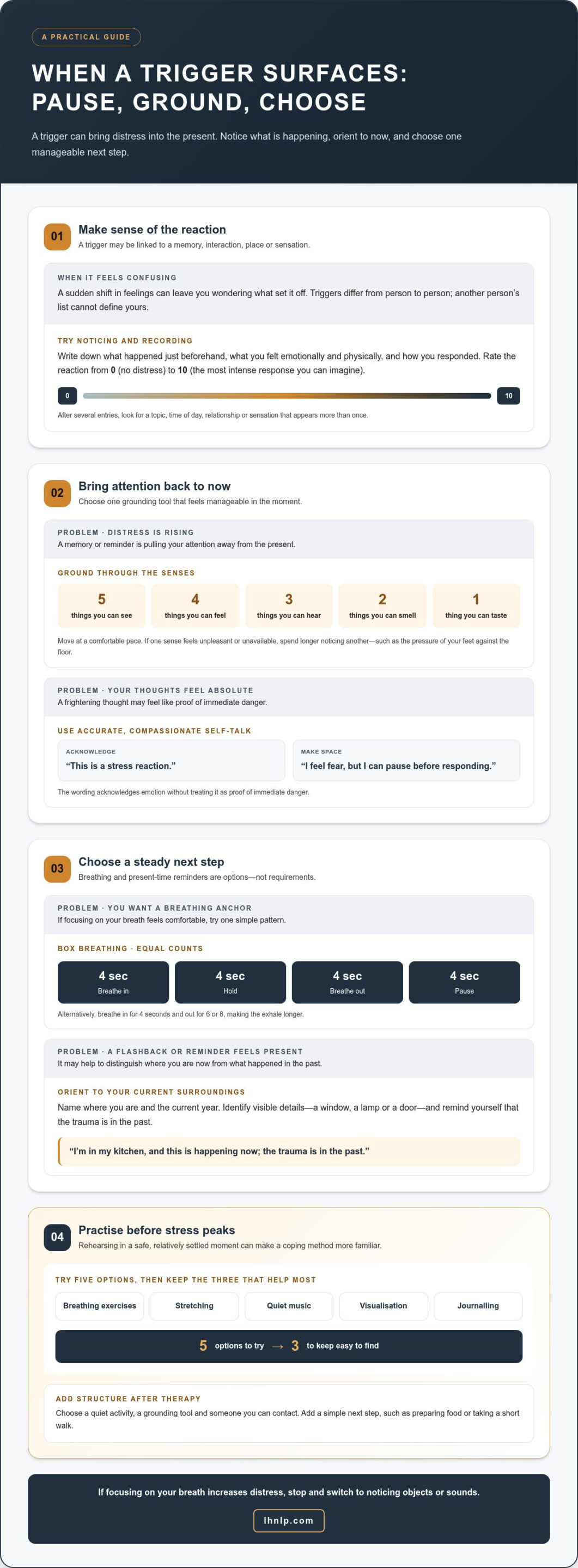
Start by noting the moment your feelings shift from feeling okay to not okay. Record what happened just beforehand, what you felt emotionally and physically, and how you responded. A trigger journal can rate each reaction from 0 to 10, where 0 means no distress and 10 means the most intense response you can imagine. After several entries, look for patterns: a particular topic, time of day, relationship or sensation may appear more than once.
To explore a pattern, ask, “When have I experienced something similar before?” The question can help connect a present reaction with earlier pain without treating that connection as proof or forcing a memory. Learning about trauma can also explain why a response feels sudden: the amygdala scans incoming environmental information for possible threat in around 7 thousandths of a second. A strong alarm can arise before you have consciously assessed whether danger is present.
Healing doesn’t require forgetting an event or feeling nothing when you remember it. Progress may mean fewer symptoms, or reactions that cause less distress and interfere less with daily life. A trauma therapist may explore your history, symptoms and experiences that lead to distress, then help you understand how these connect with current triggers. Sharing only what feels manageable can keep the conversation focused on your needs and sense of safety.
Trauma processing is not the same as deliberately confronting every reminder. A therapist can help you build safety and coping strategies while exploring memories at a manageable pace. Eye-movement desensitisation and reprocessing, or EMDR, helps the brain reprocess traumatic memories and reduce trigger intensity. It aims to change how a memory affects you, not erase what happened. If a reminder causes distress, identify one present-day detail, such as the room you’re in, and discuss your reaction with your therapist when appropriate.
2. Self-talk and cognitive grounding strategies
When a trigger comes up after therapy, pause, orient to the present and choose one grounding technique. Sensory grounding, steady breathing and a brief coping statement can create space between an overwhelming feeling and your next action. Learning how to handle stress triggers after therapy often starts with finding a tool that feels manageable in the moment.
Try the 5-4-3-2-1 method by naming five things you can see, four you can feel, three you can hear, two you can smell, and one you can taste. Move through the senses at a comfortable pace. If one sense feels unpleasant or unavailable, spend longer noticing another, such as the pressure of your feet against the floor.
Other sensory grounding techniques can be simple. Describe the room aloud, hold a comforting object or focus on the texture of a sleeve. Naming ordinary details, such as a mug’s colour or the sound of traffic, directs your attention to what’s happening now. These actions don’t erase a memory; they help distinguish the present moment from a reminder of the past.
Breathing can offer another anchor. If it feels comfortable, try box breathing: breathe in for four seconds, hold for four, breathe out for four, then pause for four. Alternatively, breathe in for four seconds and out for six or eight, making the exhale longer. Stop if focusing on your breath increases distress, and switch to noticing objects or sounds.
During a flashback, look around and name where you are and the current year. Say, “I’m in my kitchen, and this is happening now; the trauma is in the past.” Then identify visible details, such as a window, a lamp and a door. After a trauma-related nightmare, remind yourself that the panic followed a dream, then reorient to your room.
Self-talk works best when it’s accurate and compassionate, not forced or dismissive. Try, “This is a stress reaction,” or, “I feel fear, but I can pause before responding.” This wording acknowledges emotion without treating it as proof of immediate danger. If a thought feels absolute, cognitive restructuring can help you examine it and form a more balanced alternative.
For example, replace “I can’t cope with this conversation” with “I’m distressed, so I’ll pause before deciding what to say.” Reading a paragraph, counting backwards or completing a small puzzle can also engage your attention. If you’re learning how to handle stress triggers after therapy, one manageable action may be a better starting point than trying several techniques at once.
3. Practising coping strategies before stressful situations
Make a self-care plan for after therapy by choosing a quiet activity, a grounding tool and someone you can contact. Add a simple next step, such as preparing food or taking a short walk, to give the time after a session more structure.
Practise coping methods when you feel relatively settled, rather than waiting for anxiety to peak. Choose five options, such as breathing exercises, stretching, quiet music, visualisation or journalling, then try each in a safe situation. Afterwards, select the three that help you feel most present or direct your attention. Keep these choices somewhere easy to find, such as a note on your phone.
Rehearsal can make a method more familiar when a stressful situation arises. If a peaceful place feels comforting, recall it while using bilateral tapping for about 20-30 seconds. Stop if the exercise increases distress. You can also practise a coping statement, such as “I can pause and choose my next step,” repeating it two or three times when useful.
Distressing memories can arrive without invitation, but you don’t have to force yourself to revisit them during practice. Instead, decide in advance what you’ll do if one appears: pause the task, orient to your surroundings, and contact a trusted person if support would help. A short mindful walk may also help if it feels safe. Notice each step and gently return your attention when your thoughts wander.
Include social support in your plan rather than relying on individual techniques alone. Tell a trusted friend what kind of response helps, such as listening without pressing for details or sitting with you while you settle. You might agree on a simple message that means you’d like company. Talking with someone who respects your boundaries can make a difficult reaction feel less isolating.
For immediate coping, write a brief sequence you can follow: pause, choose one familiar tool, and decide whether to stay, step away or ask for support. If a particular conversation tends to raise stress, plan where you could take a break and what you’d say, such as, “I need a moment before I respond.” Practise the plan in advance, then adjust it when the situation or your needs change.
4. Recognising physical and emotional signs of a trigger
Common stress triggers after therapy can include a difficult conversation, a familiar place, conflict, a certain tone of voice or a distressing memory. Internal cues, such as pain, shame or a racing thought, can also spark a response. Triggers vary from person to person, so notice what happened just before your feelings changed.
A trigger response can affect your body, emotions and behaviour together. You might notice a tight jaw, tense shoulders, a pounding heart, shallow breathing, sweating or a sudden urge to leave. Someone else might feel numb, unusually still or unable to speak. These sensations can signal the body’s self-protective fight, flight or freeze response, not a personal failure.
Look for the moment when you shift from feeling settled to uneasy. For example, a message from a relative might bring a sharp wave of anxiety, followed by stomach tension and an urge to avoid replying. Name each part: “I read the message; my stomach tightened; now I feel afraid.” This separates what happened from the meaning your mind gives it.
Emotional signs may include irritability, fear, sadness, shame or a sudden sense of being unsafe. Mental signs can include difficulty concentrating, racing thoughts or feeling disconnected from your surroundings. You might respond by snapping at someone, withdrawing or agreeing to something you don’t want. Notice the sequence rather than judging it: a feeling, a body sensation, then an action.
Internal and external triggers can overlap. A crowded train is an external situation; dizziness or a memory arising during the journey is an internal cue. If you feel overwhelmed, observe what is happening around you and inside you. Ask yourself, “What changed in this moment?” and “What do I need right now?” These questions can help you notice an early sign before the reaction intensifies.
Repeated, soothing contact with a trusted person can support emotional regulation over time, particularly within a secure attachment relationship. A calm conversation, a respectful hand on the shoulder or sitting quietly together may help the body register safety. Consent and personal preference matter: if touch feels uncomfortable, choose a voice, shared activity or quiet presence instead.
After a difficult interaction, note one physical sign, one emotion and the situation that came before them. A pattern, such as tense shoulders whenever criticism arises, can help you recognise an early warning. You can then choose a coping response sooner, before distress narrows your attention or shapes your next action.
5. When triggers may warrant professional assessment
Professional assessment may help when trigger reactions keep disrupting everyday life despite your use of coping strategies. Consider what happens across work, sleep, relationships and daily tasks. Repeated panic before travelling, avoiding important appointments or distressing memories that make concentration difficult are useful reasons to seek support. The key question is whether symptoms are persisting, worsening or becoming harder to manage.
Pay attention to changes over time, not just one difficult day. If trauma-related symptoms aren’t beginning to improve or grow more intense, speak with a counsellor or discuss them with a doctor. This is especially relevant when anxiety, irritability, poor sleep or unwanted memories repeatedly affect your health and routines. You don’t need to wait until every coping method has failed before explaining what’s happening.
A short journal can make that conversation more specific. Note when distress occurs, what you were doing, the thoughts or sensations that followed, and how long the effect lasted. Include practical consequences, such as missing work or withdrawing from friends. These examples help a professional understand the pattern and assess your history, symptoms and experiences that lead to distress.
Assessment isn’t a test of whether your reaction is “serious enough”. It helps clarify what support may fit your needs and what factors could be maintaining distress. A professional may ask about events or situations that remind you of trauma, how your nervous system responds and which parts of daily life feel affected. You can describe what feels manageable to discuss and what you’d prefer to approach gradually.
Seek urgent help if you feel unable to keep yourself or someone else safe. In an emergency, call 999, according to the UK Government. If you’re unsure whether the situation is an emergency, focus first on immediate safety and contact someone you trust who can stay with you while you decide on the next step. Don’t rely on a journal or grounding exercise alone when urgent help is needed.
Consider professional assessment when symptoms persist, worsen or substantially interfere with daily life. Bring a few journal notes, describe what has changed and explain which coping strategies you’ve tried. That gives the conversation a practical starting point. Support can help you understand your reaction and consider next steps without treating a trigger as proof that you’ve lost all progress.
London Hypnotherapy & NLP: Hypnotherapy for Anxiety
London Hypnotherapy & NLP offers Hypnotherapy for Anxiety for people seeking structured support with anxious thoughts and stress responses. If triggers continue to affect everyday situations, sessions can provide space to explore patterns and work towards practical coping approaches. Therapy is not a substitute for urgent help or professional assessment when symptoms are severe or worsening, but it may be a useful next step for anxiety-focused support.
Progress begins with understanding what you experience and what you want to change. You can discuss whether anxiety-focused hypnotherapy fits your needs and consider a clear, manageable direction for your work.
Contact London Hypnotherapy & NLP to discuss taking the next step.
Carry your progress into the next chapter
Learning how to handle stress triggers after therapy is less about controlling every reaction and more about building a considered response, one choice at a time. Let your next step be small and sustainable: notice what support feels useful, make room for it in your routine and adjust as your needs change. Progress can mean responding to yourself with greater understanding.
If you’d like guided support with anxiety, London Hypnotherapy & NLP offers Hypnotherapy for Anxiety. The practice also offers Hypnotherapy for Weight Loss and Hypnotherapy for Smoking Cessation. These services address different goals, so focus on the support that fits what you’re working through.
Contact London Hypnotherapy & NLP to explore a possible next step. You can keep moving forward with care, patience and a growing trust in your ability to respond.
Frequently Asked Questions
What are triggers?
Triggers are cues that bring up a strong emotional or physical response, sometimes because they resemble an earlier experience. A particular phrase, smell, anniversary or moment of conflict might prompt a reaction that feels larger than the present situation. Triggers aren’t signs of weakness, and similar cues won’t necessarily affect you in the same way each time. Context and personal history shape the response.
How do I recover?
Recovery develops through small, repeatable choices rather than a single moment of resolution. Keep daily routines manageable, make room for rest and return to activities that give your day meaning, such as cooking or seeing a trusted friend. Notice whether distress begins to interfere less with ordinary life. You don’t need to measure progress by whether difficult memories have disappeared.
Why does this happen?
The mind can connect present cues with earlier experiences, especially when those experiences involved fear or uncertainty. A sound or interaction may resemble something associated with past danger, and the body can react before you consciously recognise the resemblance. That response is protective in origin, even if the current situation is safe. Learning what tends to activate it can help you respond with more choice.
How can I identify my stress triggers after therapy?
Look for repeated links between a situation and what follows, rather than searching for one definitive cause. For example, compare how you feel after different work meetings, or notice whether a particular topic changes your mood. Record the context and what happened afterwards, including whether you avoided a task or sought reassurance. Review your notes with a therapist if the pattern is difficult to interpret.
How can grounding techniques reduce stress after therapy?
Grounding directs attention towards your immediate surroundings, which can make it easier to distinguish a reminder from what is happening now. If you feel unsettled on a bus, notice its movement, the seat beneath you and the next stop. Keep the exercise simple and stop if it makes you feel more distressed. Grounding is a way to orient yourself, not a requirement to suppress thoughts or feelings.
What should I do if therapy brings up intense emotions or memories?
Let your therapist know what surfaced and how it affected you, even if you can only describe the broad topic. You can ask to slow the pace, focus on stabilising, or agree on what to do after the session. Avoid pushing yourself to explore a memory alone if that feels overwhelming. If you’re in immediate danger, call 999, according to the UK Government.
When should I contact my therapist about stress triggers between sessions?
Raise it when reactions become more intense, recur, or interfere with work, sleep, relationships or daily responsibilities. A brief note describing what happened and what has changed since your last session can help keep the discussion focused. If symptoms aren’t improving or are worsening, you can also discuss them with a doctor. Seek urgent help if you can’t keep yourself or another person safe.
How can friends or family support someone dealing with stress triggers after therapy?
Ask what kind of support would feel helpful before offering advice or physical comfort. They may want quiet company, practical help with a task or space without questions. Listen without pressing for details, and don’t insist that a reminder is harmless or that they should move on. If they want professional support, help them consider a manageable next step while respecting their choices.