
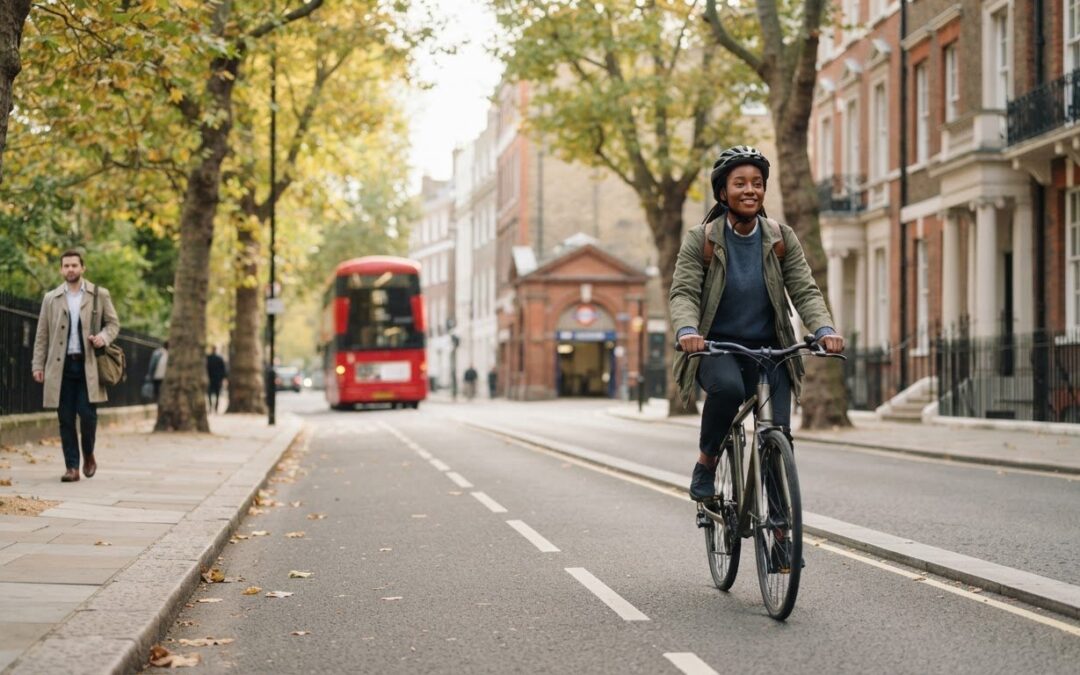
The shortest route isn’t always the calmest one. To learn how to deal with London commute stress, try creating more breathing room in the journey: walk or cycle part of the way where practical, choose a smoother route, and use music, a podcast or an audiobook to make travel time feel less draining. If you can, allow extra time for delays or travel outside the busiest period.
A crowded train, slow traffic or an unexpected hold-up can leave you tense before the working day has even begun. That reaction is understandable, especially when the journey feels beyond your control. Small changes won’t prevent every disruption, but they can help you feel more prepared and make your commute more manageable.
This guide covers practical ways to make your London journey calmer, from adjusting your route or travel time to adding walking, cycling or audio to your routine. You’ll also find ways to handle delays with less pressure, making the journey a more considered part of your day.
Key Takeaways
- Build in a little flexibility for delays and consider whether shifting your travel time could ease the rush.
- Explore whether walking or cycling for part of your journey could make the commute feel more active and less pressured.
- Choose audio that suits your mood, and prepare it before travelling so it can become a more intentional part of the journey.
- Compare routes by how they feel to travel, not only by how short they look; if commute anxiety persists, Hypnotherapy for Anxiety may help you work on your responses to stress.
1. Dealing with Commuting Stress?
Crowded trains and delays can make a commute feel like a second working day. When the journey itself feels unpredictable, it’s easy to spend the whole trip watching the clock. Start by separating what you can influence, such as preparation and route choices, from disruptions you can’t control.
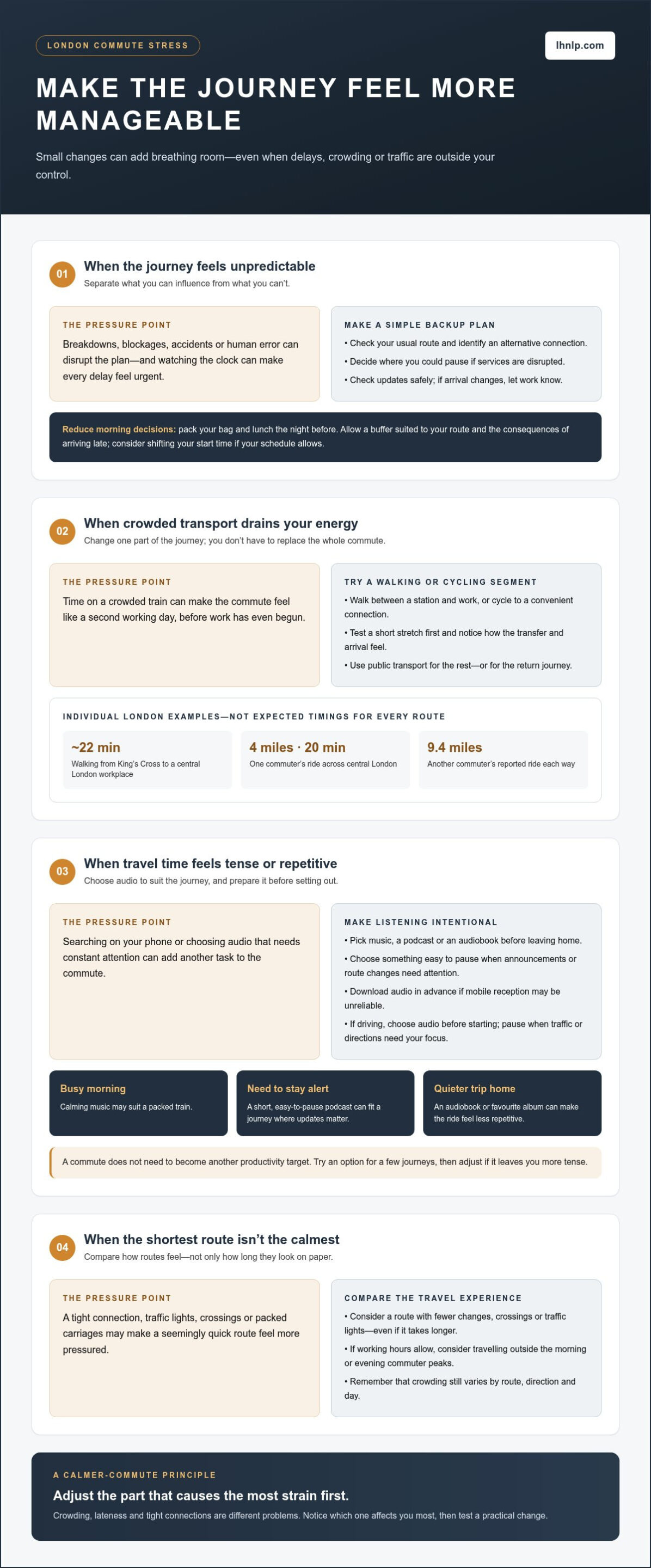
Breakdowns, blockages, accidents and human error can all disrupt a planned journey. Instead of treating every delay as an emergency, decide what you’ll do before leaving home. Check your usual route, identify an alternative and consider where you could pause if services are disrupted. If a train stalls, for instance, knowing which station offers another connection can replace frantic searching with a clear next step.
Allow a buffer that suits your route and the consequences of arriving late. If your first meeting starts promptly, aim to reach the area beforehand. If your schedule allows flexibility, use it to reduce pressure. Where possible, ask whether shifting your start time could help you avoid the busiest period. Packing your bag and lunch the night before also cuts down on decisions during a rushed morning.
Keep a delay in perspective by focusing on the next useful action, not every possible outcome. Check travel updates when you can do so safely, then let someone at work know if your arrival time changes. During an unavoidable wait, collect your thoughts or review the day’s priorities instead of replaying worst-case scenarios. A routine won’t prevent every hold-up, but it can make your journey feel less uncertain. Notice what causes the most strain, whether it’s crowding, lateness or a tight connection, and adjust that part first.
2. Cycling and walking as alternatives
Walking or cycling for one part of a London journey can break up time spent on crowded transport. It doesn’t have to replace the whole commute. One commuter described walking from King’s Cross to a central London workplace in about 22 minutes. A manageable walk between a station and the office may feel more appealing than another connection, while adding movement and a quieter transition into the day.
Cycling can also work for journeys that are practical by bike, or for a section between home, a station and work. One London commuter reported cycling four miles across central London in 20 minutes; another described a 9.4-mile ride each way. These are individual examples, not timings to expect on every route. Consider distance, how the route feels to ride and whether cycling fits your routine before changing your usual travel pattern.
Try changing your commute in stages. Walk or cycle a short stretch, then notice how the transfer, pace and arrival feel. You might walk from a station on the way in and use public transport for the full return journey, or cycle to a convenient connection and take the train or Tube for the rest. These options let you adjust one part of your commute without redesigning your whole day.
Plan an alternative route before disruption occurs. Identify another station, walking connection or bus option, and consider where you could stop if a service interruption leaves you waiting. If your usual train is delayed, for example, a route to another station may offer a different way forward. Save the options in a travel app or note them down, then choose based on current conditions. A backup route doesn’t have to be faster: having a considered option can make a change feel less abrupt. Review your plan when your work location or routine changes.
3. Listening to music, podcasts or audiobooks during a commute
Audio can give a crowded Tube journey a calmer focus. Choose a familiar playlist or audiobook before leaving home, rather than searching through your phone on the platform. Calming music may suit a packed morning train, while an absorbing story can make a quieter journey home feel less repetitive. Make listening a deliberate part of your commute, not another task demanding your attention.
Choose what to listen to based on the journey. If station announcements or route changes need your attention, pick something easy to pause, such as a short podcast episode. On a familiar train ride, an audiobook may offer a more continuous story. Try different options during the week and notice which leaves you calmer when you arrive. A playlist that helps after work may not suit a busy morning.
Prepare your listening in advance. Download music, podcasts or audiobooks before setting out, especially if mobile reception may be unreliable along your route. If you’re driving, choose the audio before starting the car and keep your attention on the road. Something that requires frequent screen interaction can be distracting, so pick audio you can play without browsing during the journey. Pause it whenever traffic or directions need your full focus.
Use the journey’s length to choose a useful format, rather than filling every quiet moment. Dr David Lewis said switching off mentally for 90 minutes during a commute was a waste of talent. That doesn’t mean every trip needs to become productive. A short mindfulness recording, an enjoyable novel or a favourite album can each give your attention somewhere gentler to rest. Try one option for a few journeys, then adjust the sound or content if it leaves you more tense. The aim is to make travel feel more manageable, not to create another performance target.
4. Choosing smoother routes
The London Underground and buses are generally quieter outside the morning and evening commuter peaks. If your working hours allow, travel outside those periods, though crowding still varies by route, direction and day. A quieter departure may suit you better than boarding the first available service, especially if packed carriages are a major source of tension.
Compare routes by how they feel, not only by the shortest journey time. A route with fewer traffic lights, crossings or changes may feel calmer, even if it takes longer. For example, a bus journey may be preferable to a quicker route involving several crowded connections. One blogger reported that buses from Islington to the West End could take under 20 minutes, showing how a direct option can work well on a particular trip.
If you drive, consider whether a smoother-flowing road suits you better than a shorter route with frequent stops. Check local radio or online travel updates before setting off, then choose a route based on current traffic. Don’t use your phone while driving. If an update changes your plan, pull over safely before reviewing it, or wait until you’re parked.
Make route planning practical by comparing your usual journey with an alternative. Note the key interchange, bus stop or road that would change, then decide where you could switch if disruption occurs. For a Tube journey, that could mean knowing which nearby station gives access to another line. For a drive, it might mean taking a route with steadier traffic rather than cutting through busy junctions. Try the alternative on a day when your schedule is flexible, then consider its comfort, predictability and ease. A familiar backup can make a sudden change feel less demanding.
London Hypnotherapy & NLP: Hypnotherapy for Anxiety
London Hypnotherapy & NLP offers Hypnotherapy for Anxiety for people experiencing persistent worry or tension during their commute. If route changes and practical adjustments haven’t eased your anxiety, exploring the thoughts and responses connected with travel may be a useful next step.
Sessions can help you explore what triggers distress and develop different ways of responding. You might identify the thoughts that arise when a train is delayed, for example, then practise coping techniques to approach the next journey more calmly. The focus is on understanding your patterns and building skills you can use in everyday situations.
For a calm next step, contact London Hypnotherapy & NLP to discuss support for anxiety.
Make space for a calmer next step
A commute can bring up more than frustration about a late train. It may show how uncertainty, crowded spaces or time pressure affect your thoughts and mood. Dealing with London commute stress can mean looking beyond the journey itself and noticing which response you want to change. That awareness offers a practical starting point: identify the hardest moment, then consider what support could help you approach it differently.
When travel anxiety continues to affect your wellbeing, London Hypnotherapy & NLP offers Hypnotherapy for Anxiety to help you explore those patterns and develop coping strategies. You can take time to consider whether this kind of support feels right for you. Contact London Hypnotherapy & NLP to discuss taking that next step. Small, thoughtful changes can help you move towards a steadier relationship with your commute.
Frequently Asked Questions
Dealing with Commuting Stress?
To deal with London commute stress, choose one manageable change and practise it consistently. Before travelling, decide what you’ll do if you miss a connection, such as pausing somewhere quiet to reassess your options. During the journey, notice signs of tension, like a clenched jaw, and deliberately release it. Small, repeatable actions can make your response feel less automatic.
Why Is London So Stressful?
London can feel stressful because people, traffic and transport services share busy spaces, while commuters often need to arrive at work on time. A crowded interchange, for instance, can combine noise, close contact and pressure to make a connection. The city’s pace may leave little room to recover between demands. The hardest part can differ from one commuter to another.
What are the most common causes of stress on the London commute?
Common triggers include packed carriages, unreliable journey times, traffic congestion and worry about arriving late. Sensory strain can add to the pressure: noise, bright lights or limited personal space may make a familiar route feel harder. A tight transition from travel to an important meeting can also increase tension. Notice which trigger affects you most; that points to the adjustment most likely to help.
Which London commute alternatives are practical, including cycling, walking, buses, and working from home?
Practical choices depend on distance, accessibility, work requirements and your route. You could walk to a nearby station, cycle for one leg or take a direct bus instead of changing services. If your role allows it, discuss occasional home working or a different start time with your employer. A mixed routine can offer flexibility without giving up the journey that works best overall.
What practical techniques can reduce anxiety and stress during a crowded commute?
On a packed train, ease physical tension by lowering your shoulders and letting your hands rest comfortably. Focus on a neutral detail, such as the colour of a station sign, rather than repeatedly checking the time. If possible, move to a less crowded part of the platform before boarding. Choose techniques that feel discreet and practical in public, then practise them on a familiar journey.
Where can London commuters get mental health support if commute stress becomes overwhelming?
If commute-related anxiety is affecting your daily life, London Hypnotherapy & NLP offers Hypnotherapy for Anxiety. Sessions can help you understand thoughts and responses connected with travel and develop ways to cope with stressful situations. Consider what you’d like help changing, such as anticipatory worry or feeling overwhelmed in crowds. This gives you a clear starting point for discussing support.