

Trying to control everything can leave you feeling less in control. Learning how to feel more in control of my life starts with focusing on what I can influence: my boundaries, daily habits, choices and responses. Small, steady actions can create a clearer sense of direction without requiring certainty about everything ahead.
It’s understandable to want life to feel more manageable, especially when demands, stress or other people’s expectations seem to set the pace. The aim isn’t to force perfect discipline or ignore your feelings. It’s to notice what matters, make choices that reflect it and build routines that support those choices.
This article offers practical ways to set boundaries, strengthen healthy habits and understand what may be driving dissatisfaction. You’ll also see how identifying your values can help you decide where to put your energy, and where it may be kinder to let go.
Key Takeaways
- Set clear boundaries by naming what you need and making space for priorities that matter to you.
- Build self-discipline through manageable routines, and remember that the UK Chief Medical Officers recommend adults get at least 150 minutes of exercise weekly.
- Write down what is causing dissatisfaction, then separate what you can influence from what you cannot.
- Use your personal values to guide everyday choices and decide where your time and energy belong.
1. Setting boundaries and saying no
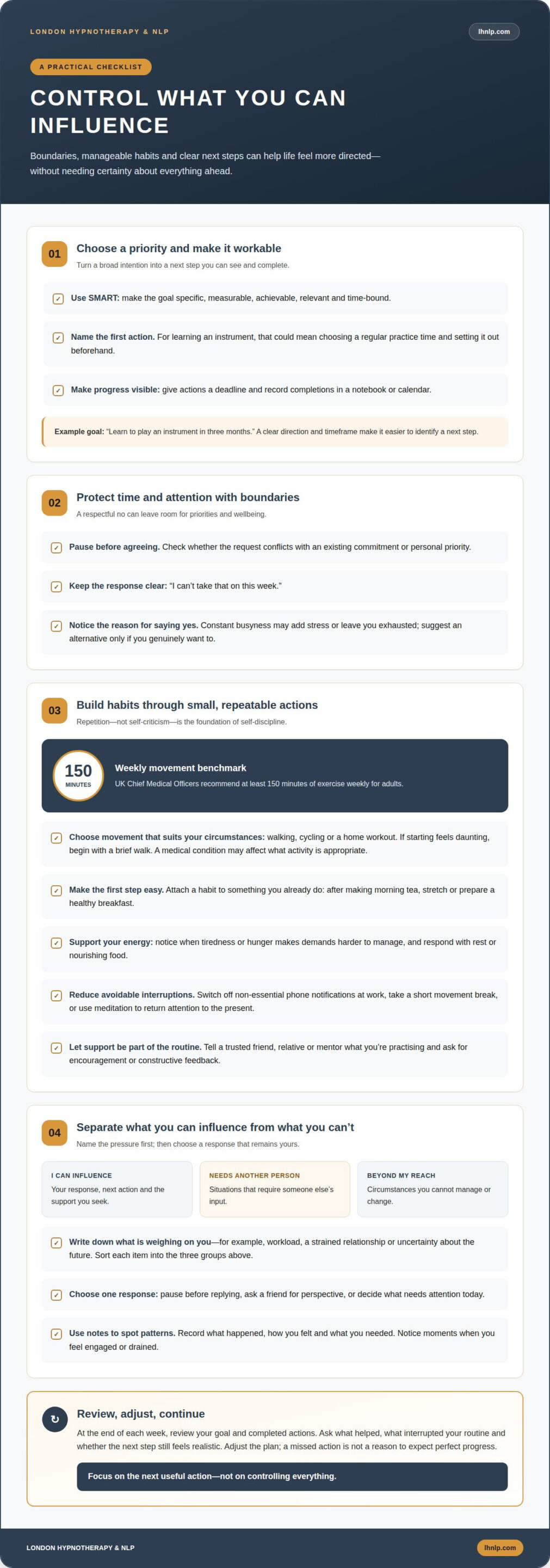
To set realistic goals and build routines that help you feel more in control, choose one priority and define a manageable next step. Use the SMART model: make your goal specific, measurable, achievable, relevant and time-bound. For example, “learn to play an instrument in three months” gives you a clear direction and timeframe. If you’re considering how to feel more in control of my life, start with an aim that matters to you.
Boundaries protect the time and attention you need to follow through. Before agreeing to a request, pause and check whether it conflicts with an existing commitment or personal priority. If it does, try a clear response: “I can’t take that on this week.” A respectful no can make room for activities that support your wellbeing and sense of agency.
Write down your goal, then break it into actions you can see and complete. If you want to practise an instrument, a first step might be choosing a regular time and setting it out beforehand. Give each action a deadline, and record when you complete it in a notebook or calendar. Visible progress can make a broad intention feel more manageable.
Keep your plan realistic for your current circumstances. A routine that leaves no time for rest or unexpected responsibilities may be difficult to sustain. Review your commitments and remove tasks that no longer serve your goal. Then focus on the next useful action, rather than expecting perfect progress every day.
Saying yes to everything can be a way of avoiding difficult feelings, but constant busyness may add stress or leave you exhausted. Notice what you’re agreeing to and why. If a request doesn’t fit your priorities, suggest an alternative only if you genuinely want to. Clear limits help you act with intention.
At the end of each week, review your written goal and the actions you completed. Ask what helped, what interrupted your routine and whether the next step still feels realistic. Adjust the plan instead of treating a missed action as failure. If you’re reflecting on how to feel more in control of my life, use that review to choose one practical adjustment for the week ahead.
2. Building healthy habits and self-discipline
Sleep, movement and balanced meals can support your energy and help you respond more steadily to stress. When you’re tired or hungry, everyday demands may feel harder to manage. Notice these signals and respond with rest or nourishing food. Small acts of care can help you face a difficult situation with more choice.
UK Chief Medical Officers recommend at least 150 minutes of exercise weekly for adults. Choose movement that suits your circumstances, such as walking, cycling or a home workout. If beginning feels daunting, start with a brief walk and build a routine around an existing cue, such as leaving work. A medical condition may affect what activity is appropriate.
Self-discipline grows through repetition, not self-criticism. Choose one habit, make its first step easy to begin, and track each completion on a calendar. Habit stacking can help: after making morning tea, stretch or prepare a healthy breakfast. When resistance appears, name the thought behind it, then try the smallest useful action. Learning to tolerate manageable discomfort can strengthen resilience.
Protect your routine from avoidable interruptions. At work, switch off non-essential phone notifications and focus on the task in front of you. A short movement break can interrupt long periods of sitting, while meditation offers a way to bring your attention back to the present. These practices help you set boundaries around your time and attention.
Resilience also involves connection. Tell a trusted friend, relative or mentor what you’re practising, and ask for encouragement or constructive feedback. If stress repeatedly disrupts your daily routines, structured stress-management support may help you explore coping strategies. Seek medical advice about sleep, exercise or nutrition concerns that need individual attention.
Regular physical activity can support mental health, energy and overall wellbeing. Treat movement as part of a broader approach, not a test of willpower. Pairing exercise with balanced nutrition and mindfulness practices can help support a sense of control over your body.
To strengthen discipline, choose a worthwhile challenge that takes persistence. During difficult circumstances, prioritise self-care and ask for help if needed. Self-care may include managing stress and anxiety, making room for enjoyable activities, and meeting basic needs such as rest and nutrition.
3. Identifying personal desires and sources of dissatisfaction
Feeling out of control can stem from different parts of life, so name the pressure before choosing a response. Write down what’s weighing on you, such as your workload, a strained relationship or uncertainty about the future. Beside each item, note what you can influence, what needs another person’s input and what lies beyond your reach. This simple separation can restore a sense of control without pretending you can manage everything.
When circumstances outside your control feel overwhelming, choose one response that remains yours: pause before replying, ask a friend for perspective or decide what needs attention today. You can’t always change the situation, but you can choose how to respond and what support to seek. Focus on that next action rather than expecting nothing difficult to happen.
Journalling can turn a vague mental fog into specific observations. Note what happened, how you felt and what you needed in that moment. For example, a tense meeting may reveal a need for clearer communication. Mindfulness offers another practical step: notice your breathing and surroundings before acting on an anxious thought. Both practices create space to reflect instead of reacting automatically.
To identify what you want, record moments when you feel engaged or drained. Encouragement from a friend, a recurring wish to learn or frustration about how you spend your time can point towards unmet needs. Re-read your notes and look for patterns, then choose one small action to move forward. The aim isn’t to eliminate every source of dissatisfaction, but to understand what it may be telling you.
Feeling out of control can occur alongside anxiety or depression, but that feeling alone cannot establish either condition. If distress persists, affects daily life or makes ordinary responsibilities difficult, consider speaking with a qualified mental health professional. Notice what has changed, such as withdrawing from a friend or struggling with familiar tasks, and describe those examples when seeking support.
4. Focusing on personal values
Personal values are principles that help you decide what deserves your attention. They might include honesty, family, creativity, learning or contribution. A value isn’t simply a goal you achieve; it’s a direction you can return to when competing demands make choices feel unclear.
Start a journal by describing a recent moment when you felt engaged, proud or at peace. What mattered in that situation: connection, independence, fairness or something else? Then record a moment that left you frustrated. Your emotions can reveal where daily choices align with your values, or where they seem to pull against them.
Look for patterns rather than judging yourself. If you value family but regularly feel unavailable to loved ones, consider one realistic adjustment, such as giving a shared meal your full attention. If creativity matters but work fills your evenings, set aside time for drawing or music. The point isn’t to dwell on guilt; it’s to turn insight into a choice you can make now.
Values can also guide decisions without a perfect answer. Suppose you’re choosing between extra work and rest. If responsibility matters, completing an essential task may fit; if health matters, setting it aside may be wiser. Considering what matters most in that moment can help you act deliberately, rather than trying to satisfy every expectation at once.
Choose a small weekly check-in: reread your journal, notice which activities felt meaningful, and identify one adjustment for the coming days. Ask whether your time reflects your priorities, not someone else’s definition of success. A values-led life still includes uncertainty and difficult emotions, but each considered choice can offer a steadier reference point. Explore support for personal growth as you put those priorities into practice.
Spending time on meaningful or enjoyable activities can also be part of coping with stress and supporting your wellbeing.
London Hypnotherapy & NLP
London Hypnotherapy & NLP can support you when anxiety or recurring patterns make everyday choices feel difficult. Hypnotherapy for Anxiety and NLP Coaching provide structured ways to explore your responses, clarify goals and practise more helpful approaches. This support can complement personal habits and reflection when challenges continue to affect your wellbeing.
Consider support if anxiety repeatedly interrupts your routines, or if you feel stuck despite trying changes that matter to you. The focus is on understanding your concerns and identifying practical steps, not expecting you to control every circumstance. Choose support that fits the difficulty you want to address.
If you’d like to discuss whether this support fits your needs, contact London Hypnotherapy & NLP.
Take one intentional step towards greater control
Change doesn’t require a complete plan for your life. Choose one decision you can make today, then notice how it fits with your priorities. If you’re still asking how to feel more in control of my life, consider whether ongoing anxiety or an unwanted pattern is making it harder to act on what matters. Seeking support can be a practical step, not a sign that you’ve failed to manage everything alone.
London Hypnotherapy & NLP offers Hypnotherapy for Weight Loss and Hypnotherapy for Smoking Cessation, as well as support for anxiety. The right focus depends on the challenge you want to address. A conversation can help you explore whether this approach fits your needs.
Contact London Hypnotherapy & NLP to discuss taking that next step. You can move forward thoughtfully, one choice at a time.
Frequently Asked Questions
What practical steps can help me feel more in control of my life?
When the day feels chaotic, use a brief decision check: name the immediate issue, decide whether it needs action now, and choose one next step you can complete. For example, if several messages arrive while you’re working on a task, finish the essential task before replying, unless something is urgent. At the end of the day, note what helped you regain direction; repeating that response can make your approach more dependable.
What are the risks of trying to control too much, and how can I set healthy boundaries?
Trying to control every outcome can increase tension, reduce flexibility and strain relationships, especially when other people have different priorities. Set a boundary around your own time or response rather than dictating someone else’s choices. For instance, say, “I’m unavailable this evening, but I can talk tomorrow.” Keep the limit calm and specific, then follow through consistently. Revise it if circumstances genuinely change.