

Weight management is shaped by more than food and exercise. Habits, emotional cues and motivation can all influence everyday choices. Online hypnotherapy for weight management may help you explore these patterns, and some evidence suggests hypnotherapy can support weight management. It works alongside healthy eating and regular physical activity, not instead of them.
Knowing what to do does not always make it easy to change a routine. Lasting change often starts with understanding the patterns behind your choices, then practising new responses with patience.
This article explains how hypnotherapy may support weight management, what to expect from online sessions and how to practise between appointments. It also covers how to combine this work with healthy eating and activity in a way that fits everyday life.
Key Takeaways
- Understand how hypnotherapy may help you explore eating patterns and motivation, while keeping expectations grounded in its supportive role.
- Learn what to discuss in online sessions and how simple between-session practice can help reinforce new responses.
- See how to make hypnotherapy part of a broader plan with realistic food and activity habits, including the NHS recommendation for weekly exercise.
- Find out when tailored weight-loss hypnotherapy may be a useful next step in working towards steadier habits.
Hypnotherapy for weight loss: how does it work?
Hypnotherapy uses focused attention and guided suggestions to explore habits around eating, stress and motivation. A therapist may help you notice cues, such as reaching for snacks when tired, then rehearse a different response. In the UK, the NHS uses a BMI of 25 or over to classify someone as overweight, and a BMI of 30 or over to classify an adult as obese.
The Royal College of Psychiatrists says there is some evidence hypnotherapy can help with weight management. Research comparing relaxation hypnotherapy with virtual gastric band hypnosis found no difference in weight-loss results. These findings don’t establish that online sessions outperform in-person work or other weight-management treatments. Online delivery can make therapist-led sessions accessible without travelling.
Research on appetite offers some promising, specific findings. In a study where participants received individual meal and exercise plans, those trained in self-hypnosis consumed fewer calories and lost more weight than those without that training. They also reported improved quality of life. A randomised controlled trial involved patients with severe obesity. Separately, a small clinically supervised programme followed 32 people: after 10 weeks of guided hypnotherapy, participants had lower BMI and blood leptin levels. These studies suggest possible support, not a guaranteed outcome for every person.
In the UK, weight-loss hypnotherapy is generally accessed privately rather than through the NHS. To get started online, identify an eating pattern or emotional cue you want to address and discuss it with your therapist. A session may use guided relaxation and suggestions to help you practise a different response. Between sessions, self-hypnosis can help you rehearse that response.
Weight-loss apps may offer guided audio or self-hypnosis exercises, but their prices and access options vary. Treat an app as a practice aid, not a substitute for working with a therapist. An app is not a medical device and is not intended to diagnose, treat, cure or prevent a medical condition.
Session frequency and between-session practice
Session frequency is shaped by your goals, the eating patterns you want to change and how practice fits your routine. There is no single schedule that suits everyone. One-to-one clinical sessions last approximately 50 to 60 minutes, giving time to discuss progress and work with a specific focus. For example, you might explore evening snacking, stress-related eating or confidence around meal choices.
A session typically begins with a conversation about what has happened since you last met. Your therapist then guides you through focused relaxation and offers suggestions linked to the goals you have discussed. You remain aware and involved throughout, and the session can adapt as your habits and priorities change. A closing discussion helps you choose a practical point to practise before the next appointment.
Between sessions, consistent practice matters more than making the exercise elaborate. Choose a quiet, comfortable place and use guided self-hypnosis audio when you can give it your attention. Afterwards, note the situation you practised for and the response you want to strengthen. For example, if stress often leads to unplanned snacking, rehearse pausing, noticing the cue and choosing a deliberate next step. Keep the exercise simple enough to repeat.
Recordings designed for bedtime are intended to support a bedtime routine, while awake self-hypnosis lets you focus actively on suggestions. Neither format should be treated as medical treatment for a mental health condition. Do not listen while driving, operating machinery or doing anything that requires full attention. If you wake during a recording, stop it and return to your usual bedtime routine rather than practising while drowsy.
Use the next session to discuss what felt useful, difficult or irrelevant; that feedback helps shape the work. The virtual hypnotherapy sessions offer a way to work with a therapist online and build practice around your everyday routine.
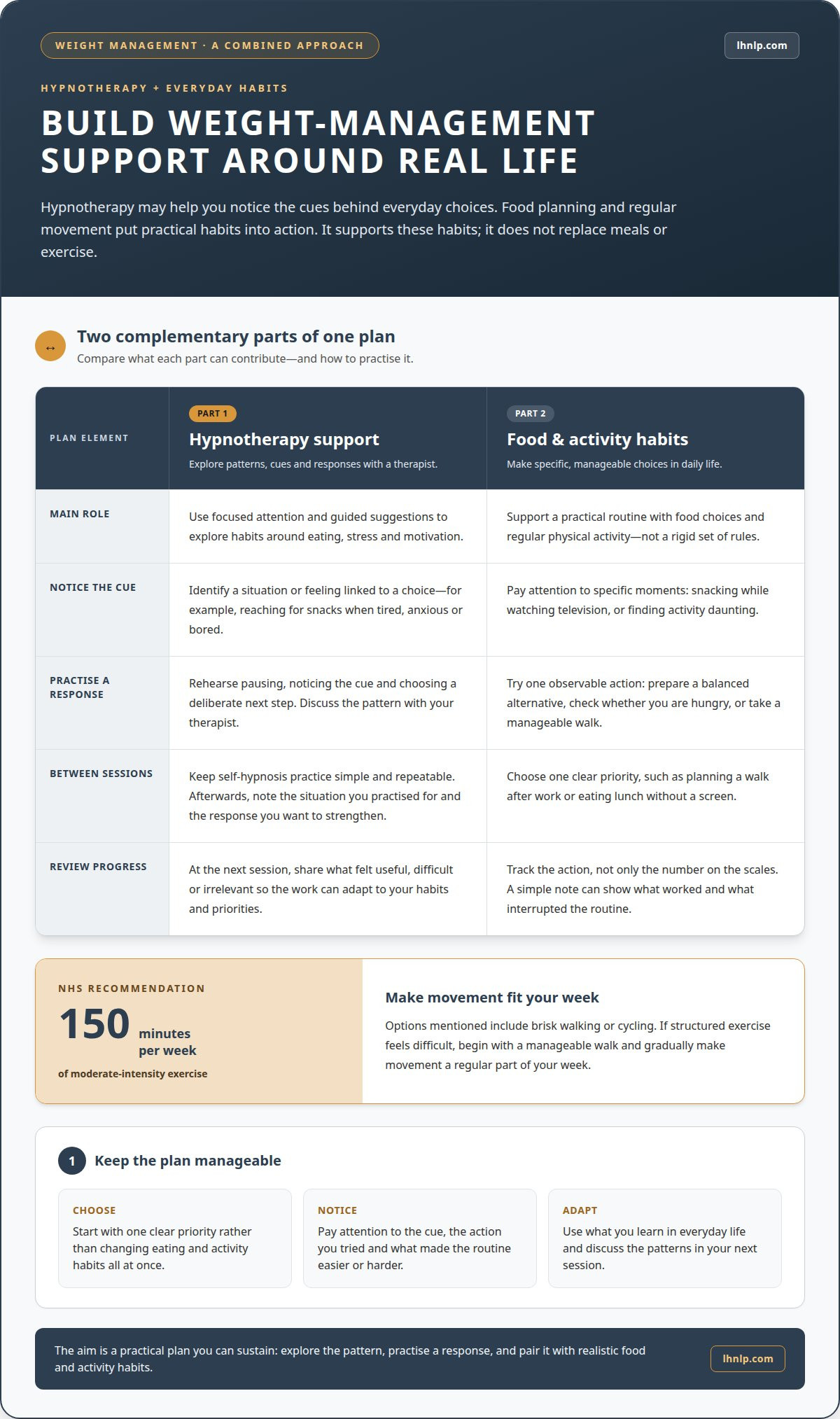
Combining hypnotherapy with diet and exercise
Weight management is easier to plan when food, movement and emotional cues are considered together. Hypnotherapy may help you notice the moments that shape choices, such as eating when anxious, bored or tired. It does not replace meals or exercise, but can support the attention and motivation needed to practise healthier routines. Start with one observable change, such as pausing before an unplanned snack.
The NHS recommends 150 minutes of moderate-intensity exercise per week. Build activity into your existing routine with options such as brisk walking or cycling. If structured exercise feels difficult, begin with a manageable walk and gradually make movement a regular part of your week. During hypnotherapy, you can explore thoughts that make activity feel daunting and rehearse a more constructive response.
For food choices, focus on specific situations rather than vague intentions. If you often snack while watching television, prepare a balanced alternative and practise noticing whether you are hungry or responding to habit. If stress prompts extra eating, pause briefly to identify the feeling before deciding what to do. These steps turn a general aim into actions you can reflect on between sessions.
Changing eating and activity habits at the same time can feel demanding. Choose one clear priority, such as planning a walk after work or eating lunch without a screen. Track the action, not only the number on the scales: a simple note can show when the routine worked and what interrupted it. Discuss these patterns in your next session.
Research into weight-management approaches has considered hypnotherapy alongside meal and exercise plans, rather than as a stand-alone solution. Use guided suggestions to support choices you have planned, then adapt those choices to daily life. If anxiety or stress influences your eating, include that connection in the conversation. The aim is a practical plan you can sustain, not a rigid set of rules.
How hypnotherapy may support weight management
Hypnotherapy may help you examine the thought between an emotional cue and an eating choice. During guided relaxation, a therapist can help you rehearse a different response, such as pausing when stress prompts you to look for snacks. The focus is on practising awareness and choice, not switching off appetite or willpower. Before starting online hypnotherapy for weight management, agree on a specific focus, such as evening grazing.
It is important to understand the limits. Hypnotherapy offers behavioural support, not a meal plan, medical assessment or replacement for nutrition and physical activity. It does not guarantee weight loss, and suggestions cannot address every cause of weight change. Tell your therapist about relevant medical or mental health concerns so the session can reflect your circumstances.
To assess progress, track a behaviour as well as your weight. For example, note when unplanned eating happens, how you felt beforehand and whether you paused. Bring this pattern to your next session so your therapist can shape suggestions around a real situation, rather than broad advice to eat less. Relaxation may help you focus during practice, but a practical measure is whether your chosen response becomes easier to use.
Hypnotherapy may help you reflect on triggers for binge eating, but it should not be your only support if eating feels out of control or causes distress. Seek clinical support from your GP or an appropriately qualified professional, especially if episodes affect your physical or mental health. Share this with your therapist so hypnotherapy complements, rather than replaces, your care.
The key is to treat hypnosis as one part of a wider approach: identify a cue, practise a response and review what happens. If you would like to discuss a personal weight-management goal, get in touch with London Hypnotherapy & NLP to explore your next step.
London Hypnotherapy & NLP: Hypnotherapy for Weight Loss
London Hypnotherapy & NLP provides Hypnotherapy for Weight Loss through personalised, solution-focused sessions. It may suit you if you want to explore habits and emotional cues connected with eating while continuing to work on practical food and activity choices. Sessions are tailored to the challenges you bring, rather than treating weight management as a one-size-fits-all process.
If stress or anxiety is closely connected to your eating patterns, you can raise those concerns in the therapeutic conversation. Hypnotherapy is supportive work, not a substitute for medical care or a weight-management plan. Bring a clear example of a situation you would like to change, such as eating in response to stress, to help focus the discussion.
If you’d like to discuss whether this approach fits your goals, contact London Hypnotherapy & NLP.
Choose a next step that fits your goals
Change can feel more manageable when you begin with one pattern you are ready to understand, rather than trying to reshape everything at once. Online hypnotherapy for weight management offers a focused setting to explore that pattern and practise new responses alongside the choices you make each day.
London Hypnotherapy & NLP offers Hypnotherapy for Weight Loss, Hypnotherapy for Anxiety and Hypnotherapy for Smoking Cessation. If stress, anxiety or another habit feels connected to your goals, raise it when discussing the support you want. A useful starting point might be a recurring situation, the change you hope to make or what has felt difficult so far.
When you’re ready to discuss your goals, contact London Hypnotherapy & NLP. Take the next step at a pace that feels considered and sustainable.
Frequently Asked Questions
What should you do before trying hypnotherapy?
Before starting, decide which specific pattern you want to address, such as eating when stressed or losing motivation to prepare meals. Note when it happens and what you hope to change. If a health condition affects your weight, discuss its underlying causes with a doctor or another healthcare professional. This context helps keep hypnosis focused on behavioural support rather than treatment of a medical condition.
What Does the Research Say About Hypnosis?
The Royal College of Psychiatrists says there is some evidence that hypnotherapy can help with weight management. Research findings do not promise a particular result for an individual. Studies use different methods and involve different groups, so consider findings in context. A useful question is whether the approach supports practical changes you can maintain, rather than expecting hypnosis alone to determine your weight.
How does online hypnotherapy for weight management work?
Online hypnotherapy for weight management uses a remote session to explore habits, cues and goals with a therapist. The practitioner guides focused relaxation and offers suggestions tailored to your concerns, while you remain able to respond and take part. Sessions take place via Zoom or Skype. A quiet, private space and stable connection can help you concentrate and speak openly during the appointment.
How much do online hypnotherapy sessions for weight management cost in the UK?
The session lasts one hour. Fees are per appointment, and discounted rates are available when clients pre-pay for a block of sessions. The package option is intended for longer-term behavioural change or more complex treatment plans. Discuss the approach and session format before deciding what suits your needs.
What happens in an online hypnotherapy consultation, and how many sessions are usually needed?
An online consultation explores your goals and relevant background before using a tailored therapeutic approach. The number of appointments depends on the concern’s intensity and your response; there is no fixed course for weight management. London Hypnotherapy & NLP sessions last one hour. You remain aware and in control throughout, and you can reject suggestions or end the session at any time.
How do I choose a safe and reputable online hypnotherapist in the UK?
Look for a practitioner who explains their approach clearly, adapts sessions to your goals and respects your control throughout. London Hypnotherapy & NLP provides online sessions via Zoom or Skype, with a tailored, solution-focused approach led by a registered Clinical Hypnotherapist. For London-based readers, the practice also offers in-person appointments at its Harley Street clinic. Hypnotherapy should complement medical care when that is needed.