

A positive mindset isn’t about pretending difficult thoughts aren’t there. Hypnosis for a positive mindset in London can use guided relaxation and focused attention to explore limiting beliefs and negative self-talk, then help you practise responding more constructively. You can discuss what feels comfortable and take part at a pace that suits you.
If self-criticism or familiar thought patterns keep pulling you back, it’s understandable to want a practical way to shift them. This article explains what happens in hypnotherapy, how sessions can work with unhelpful beliefs, and what to consider when choosing online or face-to-face sessions in London. You’ll also see how a personalised approach can connect the work to the situations and goals that matter in your everyday life.
Key Takeaways
- Understand how guided hypnosis can help you explore unhelpful thought patterns and practise a more constructive response.
- Notice recurring self-talk and the situations that bring limiting beliefs into focus.
- Weigh the flexibility of online sessions against the structure of meeting face-to-face in London.
- Consider how a personalised approach can connect mindset work with the changes you want in everyday life.
Online and face-to-face hypnotherapy in London
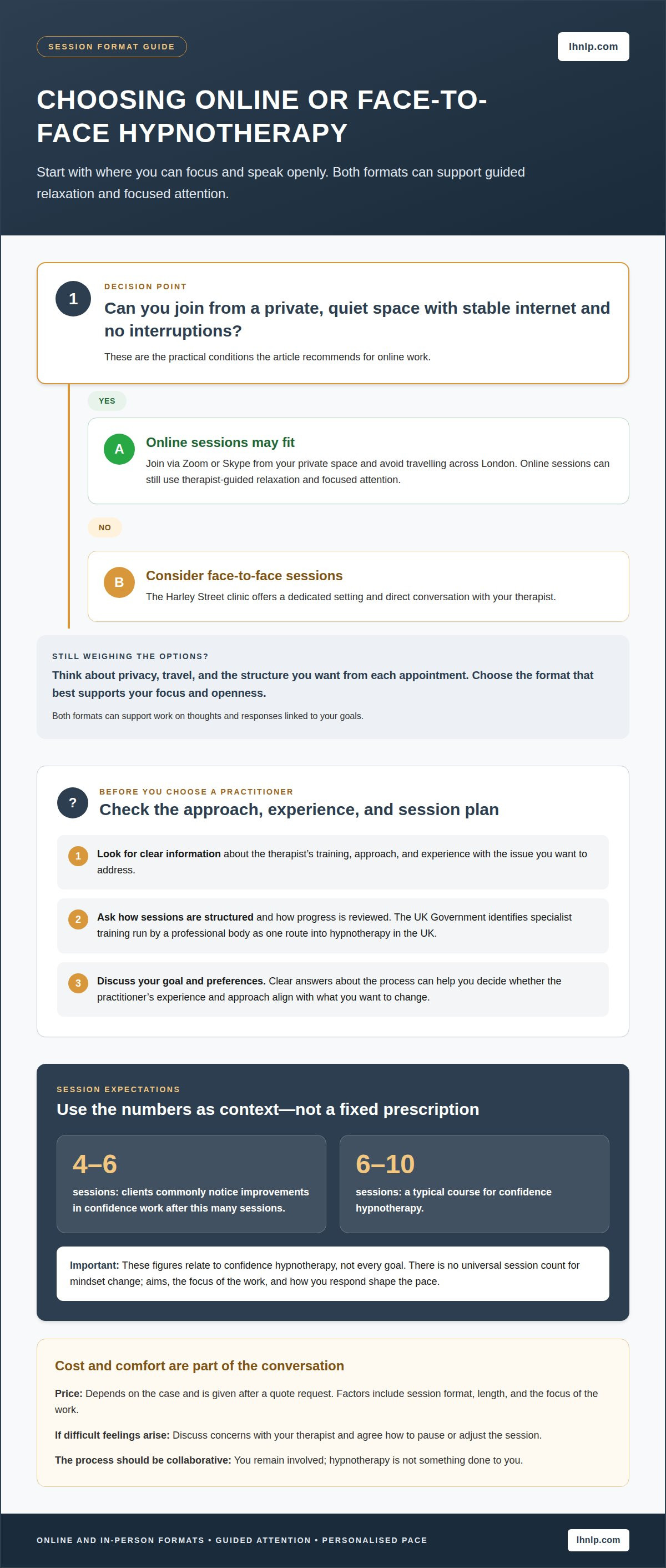
Choosing a format comes down to where you can focus and speak openly. Consider privacy, travel and the structure you want from each appointment.
Online and In-Person Session Options
Face-to-face sessions at London Hypnotherapy & NLP’s Harley Street clinic offer a dedicated setting and direct conversation with your therapist. Online sessions via Zoom or Skype let you join from a private space, avoiding travel across London. Both formats can support guided relaxation and focused attention as you explore thoughts and responses linked to your goals.
For online work, choose a quiet room, a stable internet connection and a time when you won’t be interrupted. A course may involve a series of sessions, with the work shaped around your aims. Price depends on the case and is given after a quote request; factors include session format, length and the focus of the work.
Choosing a Qualified London Hypnotherapist
Before booking, look for clear information about the therapist’s training, approach and experience with the issue you want to address. For example, ask how a session is structured and how progress is reviewed. The UK Government identifies specialist training run by a professional body as one route into hypnotherapy in the UK.
Read the practitioner’s profile and consider whether their experience and approach align with your goal, such as confidence or anxiety. A useful first step is to discuss what you hope to change, what the process involves and how your preferences can guide the sessions. Clear answers help you make an informed choice.
Effectiveness, Session Needs and Risks
Online and in-person sessions use therapist-guided attention and relaxation; the format that supports your focus and openness is likely to suit you best. Confidence work commonly involves a course rather than a single meeting: clients often notice improvements after 4-6 sessions, while a typical course is 6-10 sessions. These figures describe confidence hypnotherapy, not a fixed prescription for every goal.
There’s no universal session count for mindset change. The focus of the work, your aims and how you respond all shape the pace. Exploring difficult experiences may bring up strong feelings, so discuss concerns with your therapist and agree how to pause or adjust the session. Hypnotherapy should be collaborative, not something done to you.
How Does Hypnotherapy Work?
Hypnotherapy for confidence uses focused attention and guided relaxation to explore responses linked to self-esteem. A therapist may invite you to picture a familiar situation, such as speaking in a meeting, and notice the thoughts that arise. If you’re considering hypnosis for a positive mindset in London, this can offer a structured way to practise a different response. You remain involved throughout.
Hypnotherapy and CBT approach mindset work differently. CBT commonly helps people identify and examine thought patterns, while hypnotherapy may use relaxation, imagery and therapeutic suggestions to explore responses. Neither method is automatically the right fit for everyone. Your goals, preferences and the difficulties affecting daily life can help shape the approach and your conversation with a therapist.
For confidence hypnotherapy, children and teenagers need an approach suited to their age and developmental needs. One London practice works with children from age 8 and with teenagers; this is not a universal age threshold. A child who feels anxious about a school presentation, for example, may need a different pace and language from an adult facing a work-related challenge.
Solution-focused hypnotherapy directs attention towards the changes you want to make and the steps that could support them. Instead of treating a negative thought as a permanent truth, sessions can explore when it appears and what a more useful response might sound like. If you’re exploring hypnosis for a positive mindset in London, you could rehearse a specific intention, such as preparing and speaking up once.
Can hypnotherapy help with confidence, self-esteem and negative thinking? It can provide a structured way to explore these patterns and practise alternative responses, including where anxiety affects relationships or behavioural choices. A therapist can use different tools according to the focus of the session; one practitioner describes using between 1 and 5 hypnotherapeutic tools, depending on what is needed.
Identifying limiting beliefs and negative self-talk
A useful starting point is to notice when a thought appears. After a difficult conversation, for example, you might think, “I always say the wrong thing.” Write down the situation, the thought, the feeling it brings and what you do next. This sequence can reveal patterns: perhaps criticism triggers shame, followed by avoiding the next conversation. The aim is to observe, not judge.
Self-esteem can be affected when one setback becomes a rule about your whole identity. “I made a mistake” describes an event; “I’m incapable” turns it into a fixed conclusion. Ask what evidence supports the thought, what evidence complicates it and what you would say to a friend in the same situation. This reflection creates space between an automatic judgement and your next choice.
In hypnotherapy, a practitioner may use relaxation and focused attention to explore how a belief connects with memories, expectations or present-day behaviour. You might picture an upcoming work presentation and notice the thought, “Everyone will see I’m nervous.” The session can then help you rehearse a more balanced response, such as focusing on the first point you want to communicate. The process is collaborative, not a command to think positively.
Self-hypnosis can support self-exploration through a quiet pause, steady breathing and a chosen image, such as calmly entering a room. Keep the focus specific: notice the feeling that arises, then imagine one manageable action you could take. These techniques are not a substitute for tailored help with persistent distress. Phobias, for instance, can involve strong reactions that deserve careful, appropriate support rather than pressure to confront them alone.
How hypnotherapy works
A session begins with a conversation about the change you want to make. You might describe feeling tense before meetings or reaching for a cigarette during stressful moments. This helps the therapist understand the situation, your aims and any concerns. At London Hypnotherapy & NLP, clinical hypnotherapy can be integrated with counselling where it suits the work.
Next, the therapist guides you towards a more settled, focused state. You remain aware and can respond throughout. With attention less divided by everyday distractions, you can consider suggestions, images or rehearsal linked to your goal. Someone preparing for a presentation might imagine entering the room, breathing steadily and delivering their opening sentence.
The session then connects that mental rehearsal to a practical response. A suggestion might invite you to pause before reacting, notice a familiar cue or picture handling a difficult moment differently. The aim isn’t to erase every uncomfortable feeling. It’s to explore a response you can practise in daily life, such as using a calmer routine when stress prompts a smoking urge.
Hypnotherapy isn’t mind control, and a therapist can’t make you accept an idea against your wishes. Your attention, willingness to engage and the relevance of the session’s focus all matter. You can speak up, ask to pause or discuss what feels uncomfortable. Talking about trauma may require particular care, so share your concerns with the therapist before agreeing on an approach.
Afterwards, reflection helps connect the session with everyday situations. You might identify one moment to practise a new response, then discuss what happened at a later appointment. This makes the work specific rather than a vague instruction to “think positively”. To understand the treatment areas this approach can support, explore hypnotherapy treatment options and consider which goal best describes your needs.
London Hypnotherapy & NLP
At London Hypnotherapy & NLP, clinical hypnotherapy and NLP can help you explore how recurring thoughts and emotional responses relate to the changes you want to make. If anxiety or negative self-talk affects your everyday choices, a tailored session can provide a focused setting to work towards more helpful responses. NLP Coaching can also support reflection on how you communicate with yourself and approach personal goals.
The next step is to describe the situations you want to handle differently, such as speaking up at work or responding more calmly under pressure. This gives the work a clear focus and helps shape an approach around your priorities. If you’re ready to discuss what you’d like to change, contact London Hypnotherapy & NLP.
Choose one small step towards change
Begin with one situation where you’d like to respond differently, rather than trying to change every thought at once. You might want to speak more kindly to yourself after a mistake or feel steadier before a challenging conversation. Naming the moment gives you a clear starting point for discussing what matters and what a more helpful response could look like in daily life.
If you’re considering hypnosis for a positive mindset in London, share the situations and goals you’d like to work on with London Hypnotherapy & NLP. The practice also offers Hypnotherapy for Anxiety, Hypnotherapy for Weight Loss and Hypnotherapy for Smoking Cessation, which may be relevant when these concerns connect with your wider aims.
Contact London Hypnotherapy & NLP to discuss your next step. A thoughtful beginning can help you move towards change with greater clarity and self-understanding.
Frequently Asked Questions
What happens in the first therapy session?
The first session usually begins with a conversation about what brings you to therapy and what you’d like to change. You can describe a specific situation, such as feeling anxious before a work meeting, and discuss how it affects you. The therapist uses this information to agree a focus and approach with you. You remain in control and can pause or end the session at any time.
Can everyone be hypnotised?
Hypnosis isn’t something a therapist imposes on you; it involves your attention and willingness to take part. People respond differently, and you can ask questions or decline a suggestion that doesn’t feel right. For example, if an image or exercise feels uncomfortable, tell the therapist so the approach can be adjusted. You stay aware throughout and remain in control of your decisions.
What Is Confidence Hypnotherapy?
Confidence hypnotherapy uses focused attention to work on responses that can make situations feel harder than they need to. For instance, someone who avoids contributing in meetings might explore what they expect to happen, then rehearse offering one clear idea. The work can focus on a personally meaningful goal, rather than treating confidence as a fixed trait you either have or lack.
What can Hypnotherapy help with?
Hypnotherapy can support work on concerns such as anxiety, phobias, smoking cessation and weight management. A useful starting point is the specific effect a concern has on your daily life. For example, someone seeking help with smoking may want to understand the situations that prompt cravings. A therapist can then shape the session around that goal and the responses you want to develop.
What can I expect from my Hypnotherapy session?
Expect a guided, collaborative session, not sleep or loss of awareness. You may listen to the therapist’s prompts, focus on a particular image or practise responding to a situation differently. If a suggestion doesn’t fit, you can say so; you remain in control and can end the session at any time. Afterwards, you can discuss what felt useful and what you’d like to focus on next.
What types of hypnosis help build a positive mindset?
Guided relaxation, visualisation and therapeutic suggestions can help you practise a more supportive response to a particular challenge. For example, you might imagine approaching a difficult conversation calmly, then identify words you could use to express yourself. The most relevant technique depends on your goal and what feels comfortable. A therapist can tailor the focus rather than relying on one method for everyone.