

NLP is more than repeating affirmations. It explores how thought, language and learned patterns shape responses, then uses practical exercises to practise alternatives. The term refers to neuro-linguistic programming. If you’re searching for an NLP therapist near me in London, understanding the approach and a practitioner’s background can help you decide what to expect.
You may be looking for support to shift a persistent habit, build confidence or respond differently in a challenging situation. NLP can provide a structured space to explore those goals, but it’s worth understanding the approach rather than expecting a quick fix.
This guide explains how NLP is used, what may happen in a session and what to consider when choosing a London practitioner. It also outlines how NLP relates to other forms of support, helping you assess whether it fits your goals. A useful first step is to understand the process.
Key Takeaways
- Expect an NLP session to begin with a clear goal, then use conversation and practical exercises to explore new responses.
- When assessing a practitioner’s training, look for relevant qualifications, realistic aims and an understanding of when other mental health support may be needed.
- Learn how NLP connects thought, language and learned patterns, and consider whether that approach fits the change you want to make.
- Explore whether NLP coaching or a related offering, such as confidence building, aligns with your personal goal.
What happens in an NLP session?
An NLP session may combine structured conversation, visualisation and practical exercises, guided by a clear goal. Evidence for NLP as a clinical treatment is mixed and varies by claim, so it shouldn’t replace evidence-based mental health care. If you’re searching for an NLP therapist near me, knowing how sessions are structured can help you decide what to expect.
Session Format and Online Options
The practitioner begins by clarifying what you’d like to change, such as anxious thoughts before speaking or a familiar response you want to handle differently. They may use guided imagery, reframing, language-based techniques or rehearsal to explore alternatives. Sessions can take place in person or online. Consider which format feels comfortable and suits your communication goals. For example, practising a presentation in a private session may feel different from working in a group.
Typical Course of Therapy
The number of sessions depends on your goal and how the work develops. Joy Gower says most of her clients have 3 or 4 NLP therapy sessions, with some exceptions. This is one practitioner’s experience, not a fixed course for everyone. Each session can review what you noticed, refine the outcome and practise a strategy between appointments. Progress is considered against your original goal, rather than a preset session count.
One-to-one clinical sessions last approximately 50 to 60 minutes. Price depends on the case and is given after a quote request; session format, length and work involved shape the cost. Group sessions can offer shared practice, while individual appointments allow more focus on personal thoughts, anxiety or confidence. The suitable format depends on whether you value individual attention or practising alongside others.
Practical exercises might involve rehearsing a conversation or imagining a calmer response to a trigger. These connect reflection in the session with actions in everyday life. If you’re choosing an NLP therapist near me for severe anxiety or another serious concern, remember that NLP shouldn’t replace appropriate evidence-based support.
NLP practitioner qualifications and training
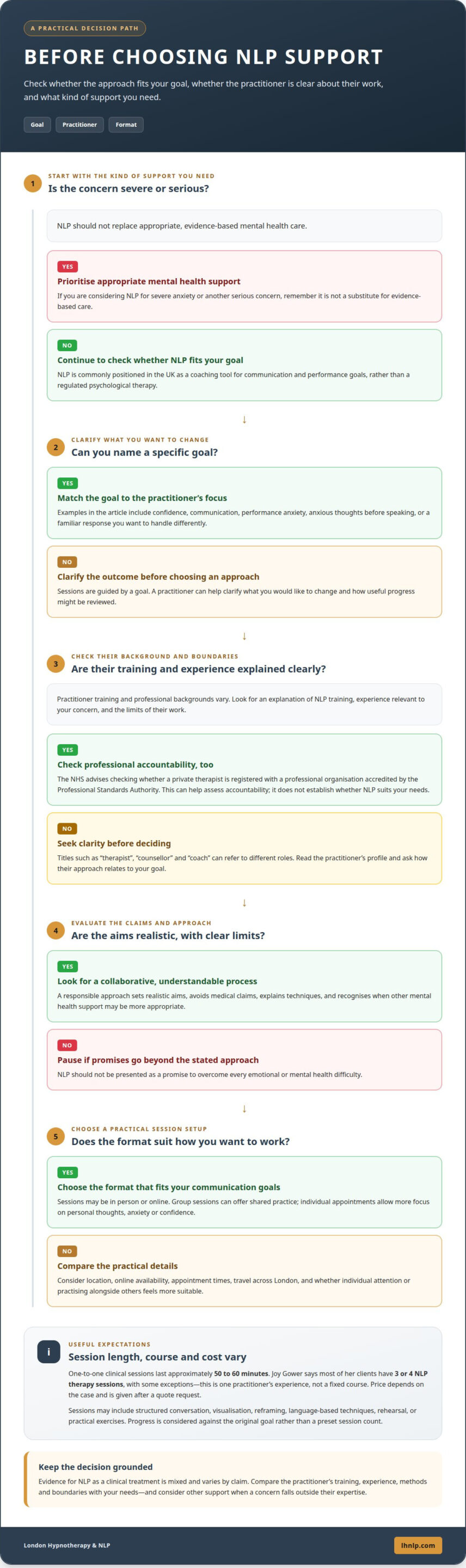
In the UK, NLP is commonly positioned as a coaching tool for communication and performance goals, rather than a regulated psychological therapy. Practitioners’ training and professional backgrounds vary, so look for someone who explains their NLP training, relevant experience and the boundaries of their work clearly.
Look for experience relevant to the concern you want to address. If recurring emotional patterns affect your confidence at work, for example, ask how the practitioner would approach that goal and review progress. A responsible approach sets realistic aims, avoids medical claims and recognises when another form of mental health support may be more appropriate. Interest in personal development matters, but it doesn’t replace relevant training or sound judgement.
The NHS advises checking whether a private therapist is registered with a professional organisation accredited by the Professional Standards Authority. This can help you assess professional accountability. It doesn’t establish whether NLP suits your needs, so also consider how the practitioner explains their methods, answers questions and responds when a concern falls outside their expertise.
Location and appointment times can affect how easily sessions fit around work, caring responsibilities and travel across London. Consider the journey to the practice and whether the available times support a consistent routine. Clear information about in-person and online sessions can help you choose a practical format.
Before starting, clarify the goal, the techniques involved and how the practitioner will recognise useful progress. A suitable NLP approach should help you examine patterns without promising to overcome every emotional or mental health difficulty. Notice whether the conversation feels collaborative and whether you can pause or raise concerns. For an overview of the NLP coaching approach, explore the information available here.
How does neuro-linguistic programming work?
When searching for an NLP counsellor in London, compare location, appointment format and approach with your needs. Directory labels such as “therapist”, “counsellor” and “coach” can refer to different roles, so read the profile rather than relying on the title alone. In the UK, NLP is commonly positioned as a coaching tool for communication and performance goals, rather than a regulated psychological therapy.
CBT, counselling, hypnotherapy and NLP use different methods and have different focuses. CBT works with links between thoughts, feelings and behaviour; counselling offers space to explore experiences; hypnotherapy uses hypnosis; and NLP may use reframing and rehearsal. The NHS says NLP and CBT don’t treat stammering directly, although they may help with related negative feelings.
When looking for an NLP practitioner in the UK, consider their training, relevant experience and whether they make realistic claims. The NHS advises checking whether a private therapist belongs to a professional organisation accredited by the Professional Standards Authority. Then see whether their stated areas of focus fit your goal, such as confidence, communication or performance anxiety.
Directory filters can narrow London results by location, online sessions and areas of focus. Treat labels such as anxiety, confidence or habit change as descriptions of a practitioner’s interests, not proof that a method suits every concern. If you want help with public speaking, for instance, look for a profile that discusses communication or performance goals and explains its approach clearly.
Before deciding, compare the practitioner’s training, areas of focus and appointment format with your needs. Look for an explanation of how sessions work and an understanding of when other mental health support may be appropriate. These details offer a better basis for choosing than a directory label alone and help you assess whether the approach feels relevant.
What neuro-linguistic programming therapy is
Developed in the 1970s, neuro-linguistic programming brings together three ideas: neuro, linguistic and programming. “Neuro” concerns the mind, “linguistic” looks at language and its effects, and “programming” refers to repeated behaviour patterns. Together, these ideas offer a framework for exploring how a person’s thoughts, words and learned responses connect. NLP uses that framework to help people examine limiting beliefs and practise different responses.
An NLP session may involve techniques such as reframing, guided imagery or rehearsal. For example, someone who expects to feel anxious before a presentation might practise a different response and notice how their language shapes expectations. The aim is to work with patterns of thought and behaviour, not simply repeat a positive affirmation. Exercises are shaped around the person’s goal.
NLP is used in coaching and therapeutic contexts, with sessions shaped around the individual. Goals might include confidence, performance anxiety, motivation, habit change or communication skills. These are goals to work towards, not a promise that NLP treats a diagnosed condition. Someone might want to communicate more clearly in a relationship or feel better prepared for a challenging situation. The work should begin with an outcome that matters to the person.
A useful takeaway is to view NLP as a set of strategies for exploring and rehearsing change, rather than a universal treatment. Evidence for NLP as a clinical treatment is mixed and varies by claim, so it shouldn’t replace evidence-based mental health care. If you’re considering a practical, goal-focused approach, explore how NLP can support personal change.
London Hypnotherapy & NLP: Confidence Building Sessions
London Hypnotherapy & NLP offers Confidence Building Sessions for people who want to approach everyday challenges with greater self-assurance. For clearer communication, more confidence when speaking or support with a persistent pattern, NLP Coaching offers a goal-focused approach.
If anxiety is your main concern, Hypnotherapy for Anxiety may be a more relevant starting point. The right approach depends on what you want help with and what you feel comfortable exploring. Sessions provide space to work towards personal change, though outcomes vary and are not guaranteed.
If you’d like to discuss whether confidence building or another relevant approach fits your goal, contact London Hypnotherapy & NLP.
Take a considered next step
Choosing an NLP therapist near me in London means finding an approach that fits the change you want to make. Before taking the next step, identify one situation you’d like to handle differently. A clear goal can make an initial conversation about suitable support more focused.
London Hypnotherapy & NLP offers Hypnotherapy for Anxiety, Hypnotherapy for Weight Loss and Hypnotherapy for Smoking Cessation. Each option focuses on a different goal, so consider which concern you’d like to discuss. NLP Coaching is another option for personal development goals.
You can share what you’re hoping to change and explore whether the available support feels relevant. There’s no need to have every answer before beginning a conversation. Contact London Hypnotherapy & NLP to discuss a suitable next step and move forward at your own pace.
Frequently Asked Questions
Can NLP help with anxiety, phobias, trauma patterns, self-esteem, and the inner critic?
NLP techniques may help explore responses connected with confidence, anxiety or phobias, but evidence for NLP as a clinical treatment is mixed and varies by claim. For trauma-related distress or serious mental health concerns, NLP shouldn’t replace evidence-based treatment. A focused discussion can distinguish a coaching goal, such as speaking up at work, from symptoms that call for broader mental health support.
Do online NLP sessions work as well as in-person?
Online NLP sessions can use conversation, guided imagery and verbal exercises, with the video format shaping how you communicate and practise. Choose a private space, a reliable connection and a setting where you can speak comfortably. There isn’t enough information here to claim online NLP is equally effective for every person or goal, so consider whether remote interaction suits the work you want to do.
How can NLP Therapy help me achieve my goals?
NLP can help turn a broad ambition into a specific situation to work on. For example, “feel more confident” could become “contribute one idea during a team meeting”. You and the practitioner can then explore the thoughts and responses linked to that situation and practise alternatives. This gives you a practical way to notice whether your everyday actions are moving towards your goal.
Is NLP therapy the same as NLP coaching?
The terms can overlap, but the purpose of the sessions matters. NLP coaching commonly focuses on goals such as communication, motivation or performance, while therapy language can suggest support for emotional or psychological difficulties. In the UK, NLP is commonly positioned as a coaching tool, rather than a regulated psychological therapy. Ask what the sessions focus on and how the practitioner describes their role.
What is NLP?
NLP stands for neuro-linguistic programming. It explores how a person’s thinking, language and learned responses relate to their actions. Practitioners use its models and techniques in coaching or therapeutic contexts, adapting them to individual aims. For instance, someone might examine how self-talk affects preparation for a difficult conversation.
What qualifications and experience should I check before choosing an NLP therapist?
Look for clear information about a practitioner’s NLP training, relevant experience and professional background. The NHS advises checking whether a private therapist belongs to a professional organisation accredited by the Professional Standards Authority. Also consider whether the approach is explained plainly, the goals are realistic and the practitioner recognises when regulated mental health support may be appropriate. These details help clarify the scope of their work.