

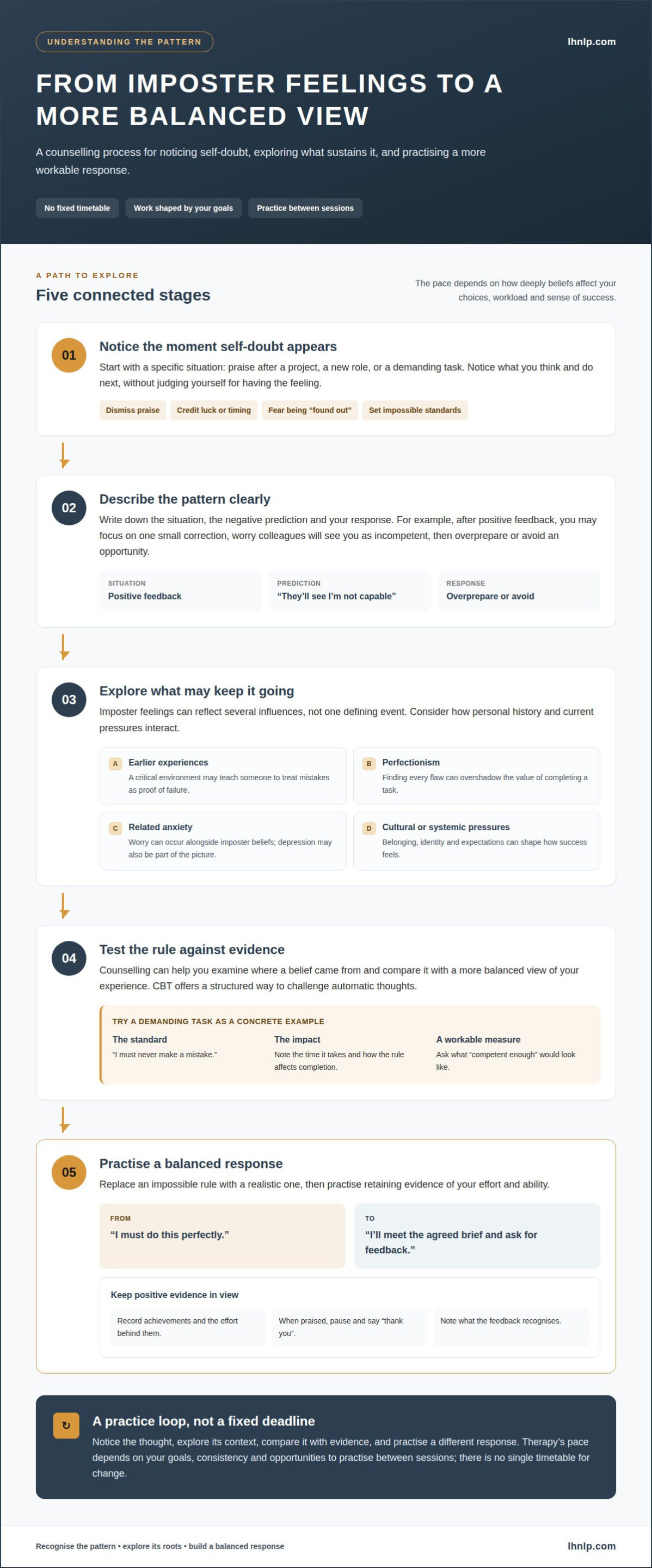
There’s no fixed timetable for working through imposter syndrome. Therapy for imposter syndrome in London may take different lengths of time depending on how these beliefs affect you and what keeps them going. Imposter feelings can show up as dismissing achievements, crediting success to luck, setting impossible standards or fearing others will discover you’re not capable. The first step is recognising the pattern, not judging yourself for having it.
If you tell yourself that your success doesn’t count or that you must keep proving you belong, those thoughts can feel convincing and exhausting. Counselling can give you space to examine them, explore where they came from and compare them with a more balanced view of your experience.
This article explains common signs of imposter syndrome, what can influence the timeframe for therapy and how counselling can help you explore negative thoughts. It also offers practical context on related anxiety and perfectionism, so you can understand what support may involve and consider a possible first step.
Key Takeaways
- Notice when you dismiss praise or explain away achievements; these patterns can reveal how self-doubt is shaping your view of your abilities.
- The time therapy takes depends on the beliefs and habits involved, including perfectionism, unattainable standards and overworking.
- Exploring earlier experiences and related anxiety can help make sense of where critical inner thoughts come from and what keeps them going.
- Counselling can help you examine negative thoughts and test them against evidence; anxiety-focused support may also be relevant when worry is part of the picture.
How does Impostor Syndrome manifest itself?
Imposter feelings can persist even when your achievements reflect skill and effort. Notice what happens when someone acknowledges your work.
Persistent Self-Doubt and Praise
You might meet a demanding goal, then credit luck, timing or a colleague rather than your own contribution. Praise can feel uncomfortable: instead of accepting “your presentation was clear”, you may think, “they haven’t seen my mistakes”. Look for recurring patterns, such as minimising achievements or fearing others will discover a supposed lack of ability. Naming the belief gives you a starting point for examining it.
Effects on Wellbeing and Self-Esteem
Persistent self-criticism can feed anxiety, lower self-esteem and make everyday decisions feel like tests. For example, you might spend an evening rechecking a completed report, then lose sleep before sharing it. Notice the effects on your concentration, rest and relationships, rather than judging yourself for feeling this way. Self-compassion means treating a mistake as information, not proof of personal failure. This can support resilience and confidence over time.
CBT provides a structured way to challenge automatic thoughts, while counselling offers space to explore their meaning and origins. In either approach, a therapist may help you compare a belief with evidence and practise a more balanced response.
In a first therapy session, expect to discuss what brings you in, how self-doubt affects daily life and what you hope will change. You could describe a recent example, such as dismissing praise after completing a project. This gives the conversation a concrete starting point and can help shape possible goals.
Private health insurance cover depends on your policy. Review its mental health and outpatient therapy terms, including any referral or pre-authorisation requirements.
A practical confidence-building step is to keep a record of your achievements and the effort behind them. When someone praises your work, pause, say a simple “thank you” and note what the feedback recognises. Repeating this practice can make positive evidence easier to retain.
How long will it take for therapy to help with imposter syndrome?
There is no single timetable for change. The work depends on how deeply negative rules shape your choices, workload and sense of success. A clinical conversation can help identify what keeps those rules in place and turn them into practical goals.
Unattainable standards often sound like “I must never make a mistake” or “I should work longer than everyone else”. These rules can drive overwork, delay completion and make success feel temporary. Track a demanding task this week: note the standard you set, the time it takes and what “competent enough” would look like instead. This gives you evidence to develop a more workable measure of achievement.
Asking for help is part of changing the pattern, not proof that you cannot cope. A therapist can help you identify where a rule came from, test whether it still serves you and practise a replacement. For example, change “I must do this perfectly” to “I’ll meet the agreed brief and ask for feedback”. Repeating a realistic rule can support self-esteem and a sense of personal agency grounded in authenticity, rather than approval alone.
In London, you can choose in-person sessions at Harley Street or online appointments. Online sessions can be as beneficial as face-to-face sessions. The pace of therapy depends on your goals, consistency and opportunities to practise new responses between sessions.
The price depends on the case and is given after a quote request; relevant factors include the type of support and the work involved. No fee or session total should be assumed before that information is provided.
The NHS provides support for mental health difficulties, while imposter syndrome is not recognised as a distinct psychological disorder in the DSM-5. If self-doubt is affecting your wellbeing, describe its impact and any related anxiety or depression when seeking help. For therapy for imposter syndrome in London, the focus can be on changing the patterns that keep overwork and negative self-beliefs in motion.
Related anxiety, perfectionism and earlier experiences
Imposter feelings can grow from several psychological influences rather than one defining event. Starting a new role may lead a capable person to question whether they belong, while a critical family environment can teach them to treat mistakes as evidence of failure. Perfectionism may reinforce that lesson: completing a task matters less than finding every flaw. These patterns can be difficult to shift because they may feel like familiar rules.
Anxiety and imposter beliefs can occur together, and depression may also be part of the picture. For example, you might receive positive feedback, focus on one small correction and worry that colleagues will see you as incompetent. Notice the sequence: the situation, the negative prediction and your response, such as overpreparing or avoiding a new opportunity. This makes the pattern more specific and easier to explore.
Cultural or systemic pressures can shape your sense of belonging, particularly if you feel expected to represent a whole community. A promotion, marginalised identity or move into private practice may intensify the belief that your success is undeserved. These contexts matter. A therapist should consider how your personal history and current pressures interact, rather than treating every moment of self-doubt as an isolated thought.
When considering a therapist, look for relevant training, clear professional credentials and experience with anxiety, perfectionism or self-esteem concerns. Clinical experience can help a practitioner recognise patterns and adapt the conversation to your needs. Dr Mariam Majid has over 20 years of experience working with people on mental health issues. That figure describes her experience, not a promised outcome or a fixed treatment timeframe.
In sessions, a therapist might explore how an earlier difficult experience affects your reactions today, then help you identify a more balanced interpretation. For instance, instead of concluding “I don’t deserve this role” after receiving feedback, consider what the feedback actually says. This can create space for confidence and a more grounded view of your achievements.
Counselling and exploring negative thoughts
Counselling can help you examine where imposter thoughts began and what keeps them active. Start with a recent moment, such as receiving praise and thinking, “They’ll find out I’m not capable.” A counsellor can help you separate the situation from the prediction, then consider evidence for and against it. This reality check makes the pattern visible without treating the fear of being exposed as fact.
Cognitive behavioural therapy offers practical ways to notice automatic thoughts and develop more balanced responses. If one mistake seems to prove you lack ability, identify what happened, what you concluded and what other explanations might fit. Reframing does not dismiss difficult feelings. It gives you room to consider the full picture, including skills, effort and positive feedback you may have overlooked.
A counselling conversation can also reduce isolation by giving you a private space to say what you may hide elsewhere. A survey found that 94% of employees reporting strong imposter feelings at work had never discussed those feelings at work. Speaking openly can help you recognise that the experience is not yours alone, while keeping attention on your own circumstances and needs.
Counsellors can experience similar patterns. They may undercharge, over-study or avoid visibility despite their abilities and professional work. For example, a counsellor might delay sharing a service for fear of criticism, or keep adding training before feeling ready. Exploring these responses can show how self-doubt affects decisions, boundaries and working relationships, not just private thoughts.
Between sessions, note a trigger, the thought that followed and the evidence that supports or challenges it. If praise feels difficult to accept, write down what was said and what you contributed. This record gives you something concrete to explore in later conversations. It can also help you practise a more compassionate response when the pattern appears again.
If anxiety is part of what you’re facing, support focused on anxiety may be a useful next step.
London Hypnotherapy & NLP: Hypnotherapy for Anxiety
London Hypnotherapy & NLP offers Hypnotherapy for Anxiety, which may be relevant if imposter feelings come with persistent worry or tension. Sessions can focus on anxiety patterns affecting confidence and everyday choices. If you want to work on goals and responses in a structured way, NLP Coaching is also available.
Consider support when anxiety makes it harder to manage work, rest or relationships, or when you want help building steadier responses to pressure. Start with the concern affecting you most, rather than trying to change every thought at once.
If you’d like to discuss your next step, contact London Hypnotherapy & NLP.
Take the next step towards a kinder inner voice
Change can begin with one small act of curiosity: notice when you dismiss your contribution, then ask what a fairer interpretation might include. You don’t need to silence every doubt before seeking support. The aim is to understand how these thoughts shape your choices and practise responses that reflect your values.
Choosing therapy for imposter syndrome in London gives you a place to explore what feels difficult and find a useful direction for your sessions. You might start by describing a recent situation where self-doubt affected a decision, relationship or opportunity. A specific example can make the first conversation clearer and more grounded.
If you’re ready to discuss support, contact London Hypnotherapy & NLP. Taking that first step can open space for a steadier, more compassionate relationship with yourself.
Frequently Asked Questions
How can counselling help me stop feeling like a fraud?
Counselling can help you respond differently to the fear of being exposed, even if the feeling doesn’t disappear straight away. You might agree on a small experiment with your counsellor, such as sharing an idea in a meeting without over-rehearsing it. Afterwards, reflect on what happened and what you learned. This turns an assumed threat into an experience you can assess.
Is imposter syndrome the same as low self-esteem?
No. Low self-esteem can affect how you value yourself across different parts of life, while imposter feelings often centre on whether you deserve a particular achievement or role. They can overlap: you might feel capable socially but doubt your professional success. Consider where the doubt appears and what triggers it. This distinction can help clarify what you want support to address.
What Can Be Done?
Choose a situation where self-doubt changes your behaviour, then set a manageable alternative response. If you usually stay silent in team discussions, contribute one considered point instead. You could also record what you learned and what you would repeat next time. Small, observable actions turn a broad wish for confidence into something you can practise.
Why do I feel I’m not good enough?
There may be no single cause. Imposter feelings can emerge when expectations, comparison or a change in responsibility clash with how you judge your abilities. For example, a new role may remove familiar measures of success, leaving you unsure what competence looks like. Notice when the thought appears, what happened beforehand and whether it changes across settings.
What therapies are effective for imposter syndrome?
Therapy may draw on cognitive behavioural therapy (CBT), cognitive analytic therapy (CAT) or eye movement desensitisation and reprocessing (EMDR), depending on your needs. CBT can focus on automatic interpretations; other approaches may explore relationship patterns or difficult experiences. Discuss what each method involves and how it connects with your goals, so the work has a clear purpose.
How can I find a therapist in London who treats imposter syndrome?
For therapy for imposter syndrome in London, look for a practitioner whose experience and approach fit the concerns you want to explore. Check their professional credentials, whether they work with anxiety or perfectionism, and whether in-person or online sessions suit you. In an initial conversation, describe a specific situation and ask how therapy might address your goals. Notice whether their explanation feels clear and collaborative.