

The habits that frustrate you may be attempts to avoid discomfort, not proof that you lack willpower. Self-sabotaging behaviour can obstruct everyday life and longer-term goals. Learning how to stop self-sabotaging behaviour starts with noticing what happens before you pull away from what matters.
If you’ve put off an important task, talked yourself out of an opportunity or repeated a pattern you hoped to change, it can be hard to trust your intentions. Recognising the pattern is a meaningful first step. Change also takes curiosity and practice, not self-blame.
This article explains what self-sabotage can look like at work, in relationships and in everyday routines. You’ll find practical ways to notice triggers, choose more helpful responses and build self-trust through self-esteem and self-compassion. Small, deliberate changes can help you move towards your goals with greater kindness and clarity.
Key Takeaways
- Notice the thoughts, feelings and situations that tend to come before actions that pull you away from your goals.
- Use smaller, realistic steps to make progress feel more manageable and build confidence through follow-through.
- Recognise how procrastination, perfectionism or people-pleasing may offer short-term relief while making life harder over time.
- Practise kinder self-talk after setbacks, and consider support when a pattern feels difficult to change alone.
1. What is self-sabotage?
Self-sabotage describes actions that disrupt daily life or obstruct goals you value. You might want to apply for a promotion, then delay updating your CV because you fear criticism. Avoiding the task can briefly ease anxiety, but it also blocks progress. The behaviour may feel automatic, so noticing the pattern matters more than blaming yourself.
Start by tracking a specific moment. After postponing a difficult email, note what happened, the emotions you felt, the first thought that came up and what you did next. Perhaps you thought, “I’ll get it wrong,” then scrolled social media. Mindfulness can help you notice this sequence as it unfolds instead of reacting immediately. Ask whether your response supports your longer-term goal.
To interrupt negative thought patterns and build healthier habits, identify a recurring trigger and plan a small alternative response. If perfectionism makes you delay a report, draft its opening paragraph before editing. Examine the belief behind the delay: does it reflect current evidence or an assumption about failure? Learning how to stop self-sabotaging behaviour begins with pausing between a thought and an action.
Cognitive approaches can help you examine unhelpful beliefs, while behavioural therapies can help interrupt repeated actions and strengthen self-regulation. A therapist or counsellor can help you explore how avoidance, anxiety and short-term relief reinforce a pattern. The right approach depends on what you’re experiencing and what you want to change.
Consider professional support when a pattern repeatedly affects your work, relationships or everyday wellbeing, or feels difficult to change alone. If you’re self-harming or thinking about self-harm, speak to your GP, as recommended for people in the UK.
A relapse doesn’t erase your progress. Note the trigger, thought and action without turning them into a judgement about yourself. Then choose one manageable next step, such as reopening the document you avoided or sending a brief, honest message.
2. Building self-esteem and self-compassion
Self-esteem grows through a balanced view of yourself, not by demanding constant positivity. Take one negative thought, such as “I always disappoint people,” and ask what evidence supports it. Then write a more accurate response: “I missed this deadline, but I can explain what happened and plan the next step.” This deliberate shift challenges harsh beliefs without pretending the setback felt comfortable.
Choose expectations that challenge you without demanding perfection. If you want to speak up in a meeting, set a small goal: share one relevant point rather than trying to impress everyone. Afterwards, record what you did, what you learned and what you might try next time. This helps you notice effort and progress that an all-or-nothing judgement might erase.
Self-compassion means responding to difficulty with the patience you’d offer a friend. When you make a mistake, pause and name the emotion before deciding what to do. You might say, “I feel embarrassed, and I can still take responsibility.” Kindness isn’t an excuse: apologise where needed, repair harm and choose a helpful action. Accountability is more sustainable when it doesn’t rely on self-punishment.
Practise this response after a setback, not just when you feel calm. Write down the critical thought, identify the expectation beneath it, then replace it with words that are both fair and constructive. If a painful past experience or trauma seems connected to persistent self-criticism, discussing it in therapy may help you explore it with support.
Confidence Building Sessions can offer structured support if low self-esteem makes it difficult to recognise your strengths or act on personal goals. This confidence-building support is one possible next step. Start with a kinder inner response today, then follow it with an action that reflects your values.
3. Common self-sabotaging behaviours
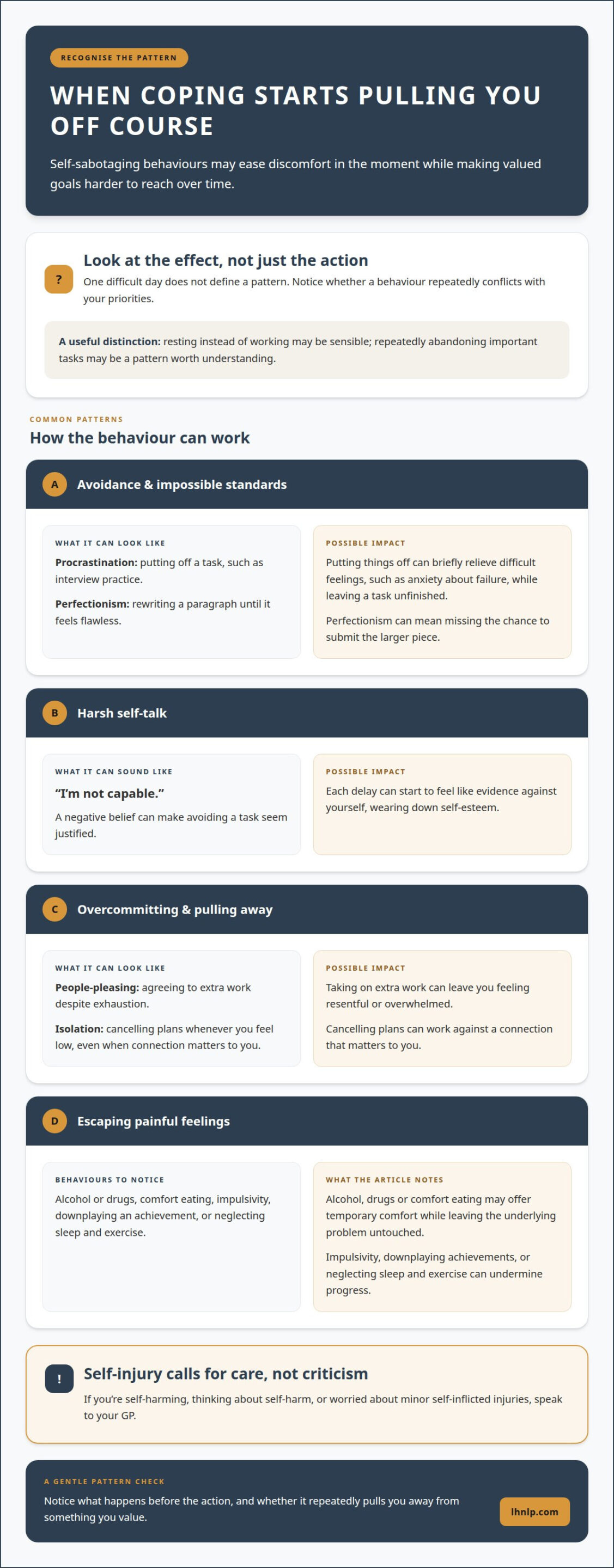
Self-sabotage can show up as repeated choices that make valued goals harder to reach. A common sign is a gap between what you intend and what you do: you want to prepare for an interview but keep avoiding practice. Look at the effect, not just the behaviour. Resting instead of working may be sensible; repeatedly abandoning important tasks may point to a pattern worth understanding.
Procrastination can bring short-term relief from difficult emotions, such as anxiety about failure, while leaving a task unfinished. Perfectionism can work similarly: you rewrite a paragraph until it feels flawless, then miss the chance to submit the larger piece. Negative self-talk, such as “I’m not capable,” can make avoidance seem justified. These patterns can wear down self-esteem, especially when each delay becomes evidence against yourself.
Other forms are less obvious. People-pleasing may mean agreeing to extra work despite exhaustion, then feeling resentful or overwhelmed. Isolation can mean cancelling plans whenever you feel low, even when connection matters to you. Impulsivity, downplaying an achievement, or neglecting sleep and exercise can also undermine progress. Notice whether these actions repeatedly conflict with your priorities, rather than judging yourself for one difficult day.
Some people use alcohol, drugs or comfort eating to escape painful emotions. The temporary comfort may leave the underlying problem untouched, while distorted beliefs about substance use can make change harder. Self-injury can also be part of a harmful pattern, but it calls for care, not criticism. If you’re self-harming, thinking about self-harm, or worried about minor self-inflicted injuries, speak to your GP. Compassion and accountability can go together: recognise the impact, seek appropriate support and choose a safer next step.
4. Examples of self-sabotaging behaviour
In relationships, self-sabotage can look like pushing a partner away after a moment of closeness. Someone might interpret a delayed reply as rejection, start an unnecessary argument, then withdraw instead of explaining their feelings. This can offer temporary protection from vulnerability while creating distance from the connection they want. Start by noticing the trigger and asking what else might explain the reply.
At work, fear of failure may lead someone to avoid sharing an idea until it feels perfect. They might miss a useful meeting, then tell themselves they weren’t ready. Another example is accepting every request from colleagues despite an already full workload, then becoming resentful or exhausted. In each case, compare the immediate choice with the longer-term aim: contributing ideas or working sustainably.
An unrealistic task list can create a cycle of pressure and disappointment. Imagine planning to complete 50 things in one day, falling behind early, and deciding the entire day is wasted. The list, rather than a lack of effort, set an impossible standard. Choose a smaller priority, break it into a first action, and leave room to rest. A workable plan supports habits; an overloaded one can reinforce avoidance.
Some examples are harder to spot because they resemble reasonable choices. Someone might continually doubt a caring relationship, test their partner’s commitment or create conflict before an important shared decision. Ask what happens just before the behaviour, what feelings follow and whether the response moves you towards the relationship you value. Writing down your observations can reveal recurring triggers without turning them into a verdict about yourself.
The key is to examine the sequence, not label yourself as self-destructive. Name the situation, identify the feeling, notice the action and consider its short-term comfort and longer-term cost. Then choose a different response, such as asking a partner for clarity or sharing a draft before it feels flawless. Repeated small choices can gradually interrupt an old pattern.
London Hypnotherapy & NLP
London Hypnotherapy & NLP offers NLP Coaching for people seeking support to understand recurring thoughts and behaviour patterns. If you’ve recognised a cycle but find it difficult to shift alone, coaching can help you explore what may be maintaining it and consider responses that better reflect your goals. The focus is on your experience and the changes you want to work towards, without treating a setback as a personal failure.
Support may be useful when self-sabotaging habits keep affecting your confidence, relationships or everyday decisions. You can discuss the pattern you’ve noticed and what you hope to change. For a conversation about working on these patterns, contact London Hypnotherapy & NLP.
Choose a next step that supports lasting change
Learning how to stop self-sabotaging behaviour isn’t about never struggling again. It’s about responding more thoughtfully when familiar habits return and recognising when support could help. Choose a next step that fits the challenge you want to address, rather than trying to change everything at once.
London Hypnotherapy & NLP offers Hypnotherapy for Anxiety, Hypnotherapy for Weight Loss and Hypnotherapy for Smoking Cessation. These services address specific concerns that may sit alongside patterns you’re trying to change. If you’d like to discuss whether support could fit your situation, get in touch with London Hypnotherapy & NLP.
Self-trust grows with each small choice to respond honestly and with care. Keep taking the next manageable step, and let progress build at a pace you can sustain.
Frequently Asked Questions
What is self-sabotage?
Self-sabotage is a recurring way of responding that interferes with something you want or need. One missed appointment doesn’t define a pattern; repeated choices and their consequences offer more useful clues. For instance, repeatedly cancelling career conversations because you expect criticism may limit opportunities. Looking at a pattern’s impact, rather than labelling your character, can help you decide what deserves attention.
How do I stop sabotaging my success?
Make success specific and easier to act on. If you want to develop a skill, choose a concrete next move, such as enrolling in a course or asking a colleague how they learned it. Before avoiding that move, write down what you expect could go wrong. Afterwards, compare your prediction with what actually happened. This helps separate a realistic obstacle from an assumption keeping you stuck.
How do I know if I’m sabotaging myself?
Look for recurring consequences, not one imperfect decision. You might notice that you repeatedly withdraw from opportunities, miss commitments you value or dismiss useful feedback without considering it. Ask whether the same response has appeared in different situations and what it costs you afterwards. A brief record of choices and outcomes can help you see whether there’s a pattern to address.
What causes us to do it?
Self-sabotaging responses can develop when an action seems to protect you from an uncomfortable feeling. Avoiding a difficult conversation, for example, may briefly reduce tension even if the unresolved issue grows. Negative beliefs about rejection or making mistakes can also shape decisions. Understanding what a behaviour does for you in the moment can reveal why it persists, without treating it as a deliberate wish to fail.
Why can’t I break my addiction?
Changing an addictive pattern can be difficult because a substance or behaviour may offer brief escape from distress, while its consequences create further strain. That cycle isn’t a character flaw, and self-blame alone doesn’t explain it. Notice the situations or feelings linked with use, and consider discussing the pattern with a qualified professional. If you feel unsafe or at immediate risk, seek urgent help through local emergency services.
Why do I always procrastinate?
Procrastination can become a default response when a task feels unclear, uncomfortable or burdened with expectations. “Write the report” may feel daunting, while “open the document and draft the first heading” gives you a clear starting point. Notice whether tiredness, distractions or fear of judgement tends to come first. That information can help you adjust the task or setting instead of relying on self-criticism.