

Changing a habit isn’t simply a matter of willpower. Hypnosis for healthy lifestyle changes in London can help you explore the beliefs and patterns shaping your choices around food, movement and self-image, so you can approach change with greater awareness and less self-criticism.
When familiar habits keep returning, it’s understandable to want a clear, practical way forward. In hypnotherapy, a practitioner guides you into a relaxed, focused state and offers therapeutic suggestions linked to goals you’ve agreed together. You remain fully in control, and the session is tailored to your experience rather than following a one-size-fits-all script.
This article looks at how hypnotherapy may support food habits, cravings, body confidence and a kinder relationship with yourself. It explains what sessions involve, what can affect their suitability and how hypnotherapy may complement other support, helping you decide on a next step that fits your needs.
Key Takeaways
- Understand how in-person and online hypnotherapy sessions can create space to explore personal goals and patterns.
- Learn how therapeutic suggestions may support more considered food choices by addressing habits, beliefs and cravings.
- See how emotional awareness and self-directed change can contribute to a more compassionate relationship with body image.
- Find out what hypnosis feels like, why you remain in control, and how the practitioner works with you throughout the process.
What Is Weight Loss Hypnotherapy?
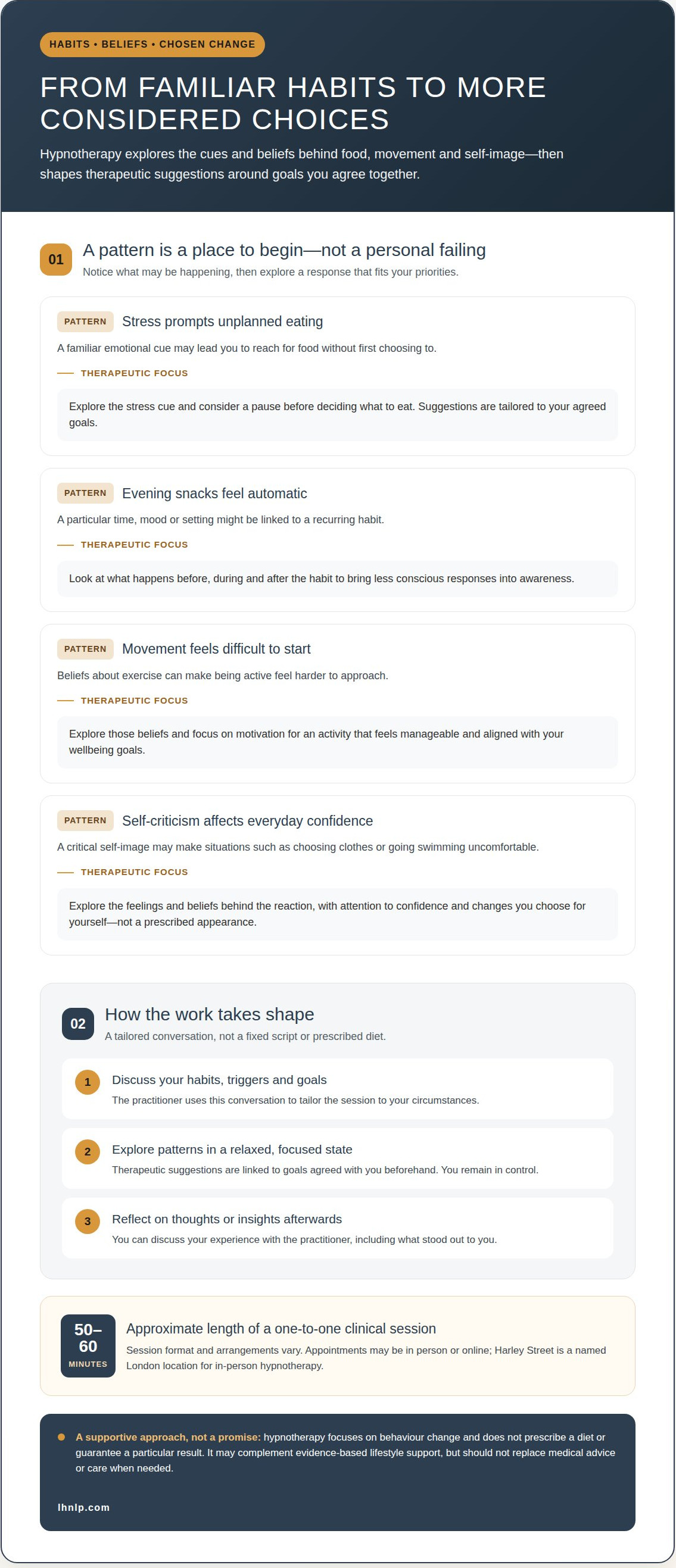
Weight-management hypnotherapy uses focused attention and therapeutic suggestions to explore patterns around eating. A tailored approach starts by discussing your habits, triggers and goals, then shapes sessions around that conversation. For example, if you tend to snack when stressed, you might explore that emotional cue alongside your food choices. The aim is to support considered decisions and lasting change, not prescribe a diet.
In a session, the practitioner guides you into a relaxed, focused state and uses suggestions agreed with you beforehand. You can discuss your experience afterwards, including any thoughts or insights that stood out. One-to-one clinical sessions last approximately 50 to 60 minutes. This gives the practitioner time to work with the goals and patterns relevant to your circumstances.
London appointments may be face to face or online, depending on the practitioner’s arrangements. Harley Street is a named London location for in-person hypnotherapy. Knightsbridge is a separate area, so the specific appointment address matters if you’re considering face-to-face support nearby. Online sessions can offer a different kind of comfort, such as joining from a familiar, private space. Details about online hypnotherapy sessions explain that format.
There isn’t one standard price for weight-management hypnotherapy. Fees depend on the individual case and are provided after a quote request; session format, duration and planned support influence the cost. Ask what a proposed programme includes, such as an initial assessment and follow-up sessions, before deciding whether it fits your needs.
Hypnotherapy explores habits, beliefs and responses through guided therapeutic work. NHS or other evidence-based lifestyle support may address health goals through structured behavioural or clinical care. Hypnotherapy can complement that support, but it shouldn’t replace medical advice or care when needed.
Hypnotherapy for food habits and beliefs
Food choices can follow familiar patterns, such as reaching for snacks when stressed or eating while distracted. Hypnotherapy can help you explore these behaviours and the beliefs connected to them.
Habits and Behavioural Patterns
A session can explore what happens before, during and after a recurring habit. For example, you might consider whether a particular time, mood or setting is linked to evening snacking. Noticing these patterns can bring less conscious responses into awareness. The focus is not just food, but also the emotional cues and learned behaviours that shape choices and weight-management goals.
Hypnotherapy for Habit Change
Once you understand a pattern, therapeutic suggestions can focus on a positive response that fits your goals. If stress tends to prompt unplanned eating, for instance, you might explore pausing before deciding what to eat. Suggestions can also be tailored to goals around healthy eating, cravings or exercise motivation. The work follows your priorities, not a fixed script or prescribed plan.
Exercise habits can be explored in a similar way. A session might address beliefs that make movement feel difficult and focus on motivation for an activity that feels manageable. The aim is to support choices aligned with your wellbeing and weight-management priorities.
Effectiveness for Weight Loss and Eating Habits
Hypnotherapy can support work on eating habits and weight-management goals by exploring beliefs, cues and motivation. Its practical focus is behaviour change, not prescribing a diet or promising a particular result. For example, a session may consider the urge to eat in response to stress and help you explore another response.
Quitting smoking is a separate goal requiring smoking-focused therapeutic work; changing eating habits calls for attention to food-related patterns. Both involve behaviour, but the session’s focus differs. If you’re considering support for food habits, hypnotherapy treatment options can help you understand the approaches available.
Body confidence and self-image
Body confidence can affect how you feel about eating, movement and everyday social situations. A critical self-image, for example, may lead you to avoid a swimming pool or feel uncomfortable choosing clothes. Hypnotherapy can explore the emotions and beliefs behind these reactions, supporting awareness and confidence. The focus is not on imposing a particular appearance, but on helping you make self-directed changes.
This work can also explore your relationship with food. If eating is tied to shame or harsh self-judgement, a session may consider those responses and what they mean to you. A more compassionate inner perspective can help you approach wellbeing goals without treating each choice as a test of your worth. Progress is personal, and the work should reflect your aims.
Some approaches involve practising self-hypnosis techniques, such as focused attention and personally meaningful suggestions. This differs from being guided by a practitioner during a therapy session. Any practice should support the goals you’ve discussed, rather than become another demand for perfection. For example, you might use a calming mental focus before a confidence-challenging situation, if this forms part of your work.
Change is more likely to feel sustainable when it grows from your own motivation and values. A practitioner can help you clarify what confidence would look like in daily life, such as accepting an invitation or walking along a busy London street without constant self-criticism about your appearance. This grounds the work in specific experiences rather than abstract ideals.
Body image can also affect relationships, including how you feel during shared meals or conversations about weight. Hypnotherapy can give you space to notice emotional patterns and consider different responses. It doesn’t replace medical or mental health care when needed. It may complement wider support by focusing on confidence, awareness and changes you choose for yourself.
How hypnosis affects awareness and control
Hypnosis involves focused attention, not giving up your choices. During a session, the practitioner guides you through an agreed process and offers suggestions related to your goals. You remain aware, can respond and can reject suggestions that don’t feel right. This collaborative approach may help you notice responses such as cravings that follow stress or boredom.
Greater awareness can create a pause between an urge and an action. For example, you might become more conscious of your appetite and choices instead of automatically reaching for a second portion. The aim isn’t strict control or a prescribed eating rule. It’s to explore your responses and support decisions that feel consistent with your weight-management goals.
Cravings can have different triggers, so the work should reflect the pattern you want to address. A session might explore whether a particular mood, place or routine is linked with wanting a specific food. Suggestions can then focus on an agreed goal, such as responding more calmly to a craving. Hypnosis doesn’t take away your ability to choose.
In a clinical hypnotherapy session, you and the practitioner work together. You agree on the therapeutic focus beforehand, then discuss what you noticed afterwards. This helps distinguish a useful insight from the expectation that hypnosis will make decisions for you. A structured programme works best when its goals are positive, realistic and meaningful to you.
For lasting change, the focus can extend beyond a single meal. The practitioner may help you consider how awareness could support choices in familiar situations, such as eating while watching television or responding to stress after work. Hypnotherapy can support weight-management work, but it doesn’t prescribe a diet or replace medical care. To explore hypnotherapy for weight loss, consider how your goals and recurring patterns could shape your sessions.
London Hypnotherapy & NLP
London Hypnotherapy & NLP helps you explore how habits, beliefs and emotional responses relate to your lifestyle goals. Its hypnotherapy and NLP coaching offer a structured space to clarify what you want to change and how that change could fit into daily life. This may suit you if food choices, confidence or motivation feel tied to recurring patterns and you’d value professional support.
Sessions are tailored to the concerns you bring, rather than following a single formula. You can discuss the changes that matter to you and decide whether this approach feels right for your needs. The next step is to talk through your goals and the support you’re seeking.
Contact London Hypnotherapy & NLP to discuss your lifestyle-change goals.
Choose a next step that reflects your goals
Sustainable change starts with a direction that feels personally meaningful. Rather than trying to change everything at once, identify one part of daily life you most want to approach differently. That intention can guide a purposeful conversation about support.
If you’re considering hypnosis for healthy lifestyle changes in London, reflect on what you want to feel or do differently, not just what you want to stop. Greater ease around food, more confidence in everyday situations or a calmer response to stress are examples of goals that can give the work a clear focus.
London Hypnotherapy & NLP offers hypnotherapy for anxiety, weight loss and smoking cessation. These services address different concerns, so start with the change that matters to you. A conversation with the practitioner can help you explore whether hypnotherapy suits that goal.
Start a conversation with London Hypnotherapy & NLP. A thoughtful first step can make change feel more considered and genuinely your own.
Frequently Asked Questions
How does hypnotherapy work?
Hypnotherapy uses guided attention and therapeutic suggestions to explore a chosen concern. For lifestyle goals, this might mean working on thoughts linked with skipping breakfast or losing motivation to exercise. You discuss the focus with the practitioner, who tailors the session to your aims. Hypnosis isn’t sleep: you remain aware of what’s happening throughout.
Do I have to travel to your London hypnotherapy clinic?
No. You can attend in person at 96 Harley St, London W1G 7HY, or choose an online appointment through Zoom or Skype. Online sessions are available to clients worldwide and can be as beneficial as face-to-face appointments. If travelling into central London doesn’t suit your routine, a virtual session lets you access support without making the journey.
Is hypnosis safe?
During hypnosis, you remain fully aware and in control. You can reject a suggestion or end the session at any time. If a suggestion about food choices doesn’t feel right, you can say so and the practitioner can adjust the session. Hypnosis doesn’t take away your ability to make decisions or require you to accept anything against your wishes.
What can hypnotherapy help with when making healthy lifestyle changes?
Hypnotherapy may help you explore concerns affecting lifestyle choices, such as anxiety, stress, eating habits or motivation. Hypnosis for healthy lifestyle changes in London might, for example, focus on feeling calmer around food or building confidence to return to exercise. The work is tailored to your concern and goals, rather than prescribing a diet or replacing medical care.
What does a hypnotherapy session involve and how many sessions are typical?
A session involves discussing your goals and agreeing on a therapeutic focus with the practitioner. The number of appointments depends on the concern, its intensity and your response. The practice advises three to six sessions for smoking cessation or mild anxiety; some issues may need one session, while others take several. There is no single session count for every lifestyle goal.
How much does hypnotherapy for lifestyle changes cost in London?
The fee applies to in-person and online sessions. If you’re planning support over several appointments, the practice also offers discounted rates for clients who pre-pay for a block of sessions. The appropriate approach depends on your concern and the goals discussed with the practitioner.