

A cigarette craving can feel urgent, but an individual craving usually passes within 3 to 5 minutes. Knowing how to deal with cravings after quitting smoking means having a few responses ready: pause, breathe slowly, change what you’re doing, and consider suitable nicotine replacement as part of your quit plan. The first week can be especially demanding, but cravings often become easier to handle with time.
It’s understandable if mornings feel difficult or worries about weight gain make quitting seem harder. Smoking can become part of daily routines, and appetite or eating habits may shift after you stop. Neither challenge means you’re failing. Having a plan gives an urge time to pass without letting it make the decision for you.
This guide covers practical ways to manage cravings, reshape your mornings, and consider nicotine replacement options. It also looks at weight changes after quitting and how mindful eating and steady habits can support your progress without making food another source of pressure. You can build a smoke-free routine one manageable choice at a time.
Key Takeaways
- Learn how different forms of nicotine replacement can fit together as part of a quit plan.
- Spot the daily routines and situations that trigger urges, then make a practical plan to change them.
- Choose simple ways to ride out a craving, from slow breathing to a brief change of activity.
- Respond to changes in appetite with mindful eating, while keeping weight concerns from pulling focus away from quitting.
1. Are nicotine replacement products safe?
Nicotine withdrawal can begin within a few hours of your last cigarette. Cravings may start after 30 minutes, while tension or agitation can appear within 24 hours. Symptoms are usually strongest during the first week, especially the first 3 days. They often ease over 3 to 4 weeks, although some people experience withdrawal for several months. This shifting pattern can help you understand why a difficult morning may feel more manageable later.
Nicotine replacement therapy (NRT) includes patches, gum, lozenges and nasal sprays. These products provide nicotine without the harmful chemicals found in cigarette smoke. A patch releases nicotine gradually, while gum, lozenges or a nasal spray offer a faster option for sudden cravings. Combining a slow-acting patch with a fast-acting product can help manage cravings throughout the day. Patches are typically used as part of an 8- to 10-week quit-smoking treatment.
How effective are nicotine replacement therapies for managing cravings? They can help reduce cravings, and combining stop-smoking treatments can improve the chance of quitting. A patch may provide steady support, while a fast-acting option can help when a trigger or difficult situation brings on an urge.
Seek medical advice if withdrawal feels severe, keeps worsening, or makes daily life difficult. A GP or pharmacist can discuss your symptoms and help you consider suitable stop-smoking medicines or NRT. If you’re unsure how to use a product, ask a pharmacist before changing its dose or combining treatments.
For example, nicotine gum can be used every 1 or 2 hours to maintain nicotine levels. It comes in 2 and 4 milligram strengths, as do nicotine lozenges. The right choice depends on your cravings, routine and how you respond to each option. Notice which situations bring urges on, then plan which support you’ll use at those moments. A local stop-smoking service can also help you find suitable quitting aids.
2. How can I start the day without smoking?
After 6 to 8 hours of sleep, nicotine levels fall, which can make mornings feel demanding. A familiar sequence, such as coffee followed by a cigarette, may also cue an urge. Changing that sequence gives your morning a different shape. For the first 28 days after quitting, avoid places or situations that trigger smoking where possible. Have breakfast in another room, or take your coffee on a short walk instead.
Smoking cravings can be triggered by nicotine withdrawal, routines, places, people, or feelings. Identify your own triggers by noticing what was happening just before an urge: the time, activity, company, and emotion. For example, an urge after breakfast may be linked to your usual cigarette, while stress before work may be the stronger cue. Naming the pattern helps you prepare a response.
Make a simple morning plan the night before. Put cigarettes, lighters, and ashtrays out of sight, and set out clothes for a walk. If you usually smoke with coffee, switch to tea, drink it somewhere different, or have breakfast first. These changes interrupt the familiar link between a situation and smoking. Remind yourself why you chose to quit, and keep that reason somewhere visible.
Plan for moments you expect to be difficult. If a commute, break, or particular conversation triggers cravings, choose an alternative in advance. Walk a different route, call someone supportive, or have a prepared snack instead of stopping where you used to buy cigarettes. If nicotine replacement is part of your quit plan, include it in your morning routine and follow its instructions. Preparing consistently can make the first decision of the day easier.
During the first 28 days, review which situations still bring strong urges and adjust your routine. A morning plan isn’t a test of willpower; it’s a practical way to reduce reminders and make room for a new habit. If one change doesn’t help, try another. Preparing for triggers helps you respond deliberately rather than automatically.
3. What can I do about nicotine cravings after I quit?
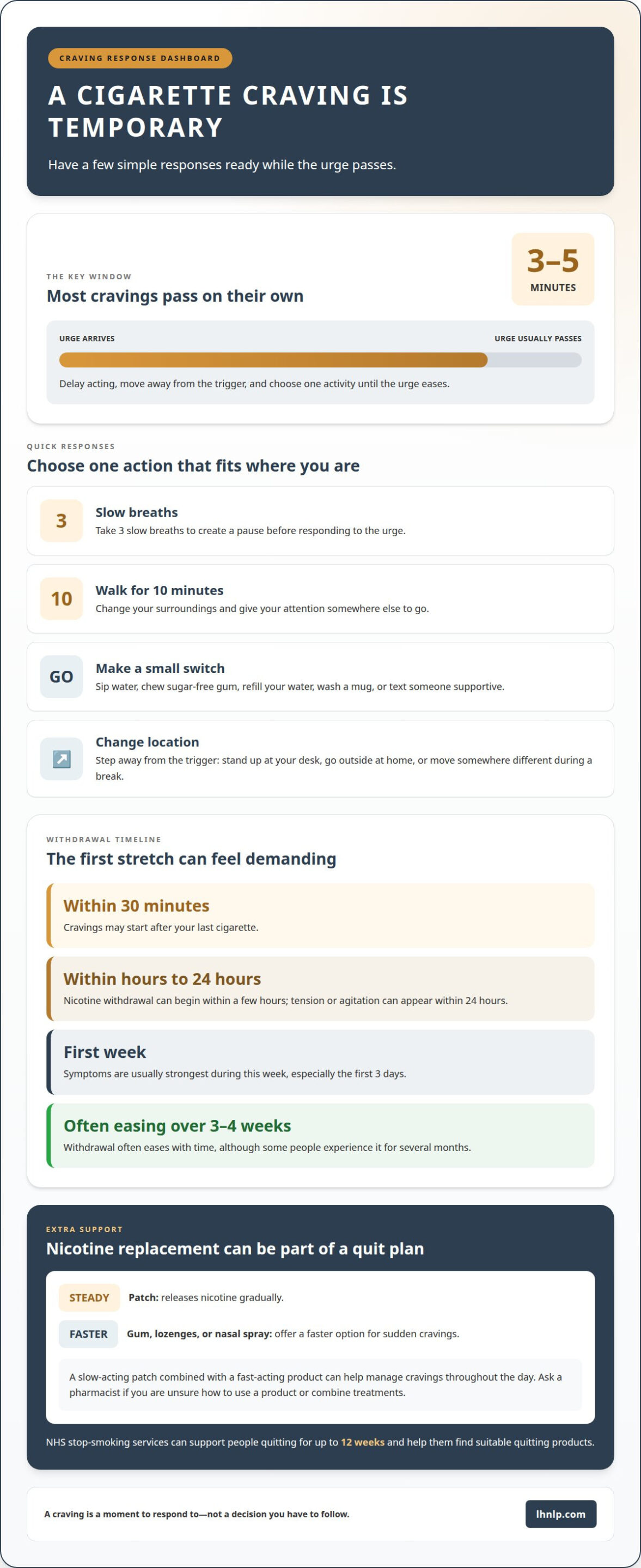
A cigarette craving usually passes within 3 to 5 minutes, even without smoking. The urge can feel pressing, but it is temporary. Start by delaying action: set a timer, move away from the trigger, and choose one activity until it rings. A brief pause creates space between feeling the urge to smoke and acting on it.
What are quick ways to cope with a cigarette craving? Take 3 slow breaths, sip water, chew sugar-free gum, or walk for 10 minutes. You could also phone someone supportive or focus on a small task, such as washing a mug. Choose an action that suits where you are, so it’s ready when stress or a familiar situation brings an urge.
NHS stop-smoking services can support people quitting for up to 12 weeks and help them find suitable quitting products. The NHS Smokefree app can be used alongside that support as a prompt to follow your quit plan. If cravings feel difficult to manage, a local service can offer practical guidance and discuss options such as nicotine replacement.
Use distraction deliberately rather than trying to fight every thought. At your desk, stand up and refill your water. At home, step outside or prepare carrot sticks. If a craving arrives during a break, change location and text a friend. Small shifts redirect your attention and interrupt the familiar pattern linking a situation with smoking.
Notice what helps after each urge passes. You may find a short walk works better than breathing exercises, or that calling someone eases stress more than being alone. Therapy can also offer space to explore feelings and patterns connected with smoking. Treat each craving as a temporary wave: respond, let it crest, then return to what matters to you.
4. Weight gain after quitting smoking
Some people gain weight after quitting smoking, often because nicotine had been suppressing their appetite. That possibility can feel unsettling, but fear of weight change doesn’t have to determine whether you stop smoking. Protect your smoke-free progress first, then build eating and activity habits steadily.
Cravings and withdrawal can make food feel like an easy substitute for a cigarette. Before reaching for a snack, pause and take a breath. Ask yourself whether you’re hungry, anxious, lonely, bored, or tired. If you’re genuinely hungry, choose something satisfying. If boredom or stress is behind the urge, try a short walk or another activity instead. This small check can help you respond to the feeling rather than eat automatically.
Make meals deliberate, not restrictive. Eat slowly and notice the food’s smell, texture, and taste. Prepare meals with plenty of vegetables and spices, and keep ready-to-eat options nearby, such as carrot sticks, celery, or apples. Sugary drinks, crisps, sweets, crackers, and cakes can be easy to reach for during cravings, so avoid making them your default snack. Nicotine replacement therapy can support quitting, while mindful eating helps you notice your appetite and habits.
Movement can support a new routine without making weight another source of pressure. Add a walk to a regular part of your day, such as after lunch, or take the stairs when it suits you. Focus on the activity and the satisfaction of completing it. If weight concerns make you consider returning to cigarettes, address those worries directly. Support for anxiety about weight gain can help you avoid going back to smoking.
Steady changes matter more than trying to control everything at once. If weight concerns are affecting your progress, explore support for weight-related habits as part of your plan to quit smoking.
London Hypnotherapy & NLP: Hypnotherapy for Smoking Cessation
London Hypnotherapy & NLP offers Hypnotherapy for Smoking Cessation for people seeking structured support as they work towards a smoke-free life. It may be a useful next step if familiar triggers, stress, or recurring urges make it difficult to put practical quitting strategies into action.
Sessions offer space to explore the habits and situations connected with smoking, then focus on responses that fit your goals. This support complements practical quit aids rather than replacing nicotine replacement or medical advice. If anxiety or concerns about eating habits are also affecting your progress, related support can help you address those challenges alongside smoking cessation.
Consider this support when you’re ready to examine the patterns behind smoking and develop a more deliberate way forward. To discuss your next step, contact London Hypnotherapy & NLP.
Build a smoke-free routine that feels like your own
Understanding how to deal with cravings after quitting smoking is less about demanding perfect control and more about building responses you can return to. Each time you notice an urge and choose what to do next, you build a different relationship with situations that once led automatically to smoking. Progress can be gradual and still meaningful.
If smoking feels tied to anxiety or weight concerns, support can help you work through these connected challenges. London Hypnotherapy & NLP offers Hypnotherapy for Smoking Cessation, Hypnotherapy for Anxiety, and Hypnotherapy for Weight Loss. These are options for readers seeking focused help as they decide on their next steps.
Choose the kind of support that feels relevant to your circumstances. Contact London Hypnotherapy & NLP to explore a way forward. You can take the next step at your own pace.
Frequently Asked Questions
What can I do about nicotine cravings after I quit?
Change your surroundings when an urge appears: move to another room, step away from a smoking area, or start a brief task. If you’re wondering how to deal with cravings after quitting smoking in a social setting, tell someone you trust that you’ve stopped and ask them not to offer you cigarettes. A written reminder of why you quit can also help refocus your attention.
What is nicotine withdrawal?
Nicotine withdrawal is your body and mind adjusting after regular nicotine use stops. You might notice irritability, restlessness, difficulty concentrating, low mood, or changes in sleep and appetite. These feelings can make familiar routines, such as driving or taking a work break, harder. Recognising them as possible withdrawal symptoms can help you plan support rather than treating a difficult moment as a reason to smoke.
Are nicotine replacement products safe?
Nicotine replacement products provide nicotine without the harmful chemicals found in cigarette smoke. Options include patches, gum, lozenges, and sprays. They can be part of a stop-smoking plan, but use each product according to its instructions. A pharmacist can explain how to use a product and whether combining options suits your needs. Keep treatment decisions focused on stopping smoking, not returning to tobacco.
How can I resist the urge to smoke when I’m around smokers?
Before meeting friends who smoke, decide how you’ll respond if someone offers you a cigarette. A simple “No thanks, I’ve stopped” can spare you from having to improvise under pressure. Choose a seat away from smoking, hold a drink or keep your hands occupied, and have a reason ready to step away briefly if needed. If the setting feels too difficult, suggest meeting somewhere smoke-free instead.
How can I start the day without smoking?
Make your first morning activity something that doesn’t involve tobacco, such as showering, opening the curtains, or preparing breakfast before checking your phone. If coffee is linked with smoking, change where or when you drink it. Put your quit reminder beside your kettle or alarm, and decide the night before what you’ll do during your usual cigarette break.
Should I quit smoking cold turkey?
You can quit smoking without nicotine replacement, but you don’t have to manage the change without support. The NHS recommends combining stop-smoking treatments to improve the chance of quitting. Consider whether nicotine withdrawal made previous attempts difficult, and discuss options with a pharmacist or local stop-smoking service. Your plan can include behavioural support, suitable quitting aids, and responses to situations that prompt you to smoke.