

A habit is not simply a failure of willpower. Hypnosis for breaking bad habits in London can help you explore the triggers behind an unwanted behaviour and practise a different response in a relaxed, focused state. The aim is not to erase a habit by force, but to make space for a new pattern.
If you’ve tried to stop before, you may know how easily an old behaviour returns when stress, routine or a familiar situation reappears. That doesn’t mean change is out of reach. It may mean the habit meets a need or follows a cue that has not yet been addressed.
This article explains what bad habits hypnotherapy involves, how a practitioner may work with thought patterns and triggers, and why pairing an unwanted behaviour with a positive alternative can create a sense of progress rather than loss. You’ll also learn what can shape the process, so you can consider whether this approach feels like a thoughtful next step for you.
Key Takeaways
- Understanding the trigger and the purpose a habit serves can reveal where a new response may fit.
- Hypnotherapy uses a relaxed, focused state to explore automatic behaviours and support positive suggestions.
- Pairing an unwanted behaviour with a constructive alternative can make change feel like progress, not simply giving something up.
- A practitioner can tailor the approach to the thoughts, situations and emotional cues connected with your habit.
How a hypnotherapist can pair unwanted behaviour change with positive habits
A hypnotherapist can help you explore what an unwanted habit does for you and develop a positive response to practise instead. This shifts the focus from simply resisting a behaviour to understanding its pattern.
Habit Triggers, Behaviours and Results
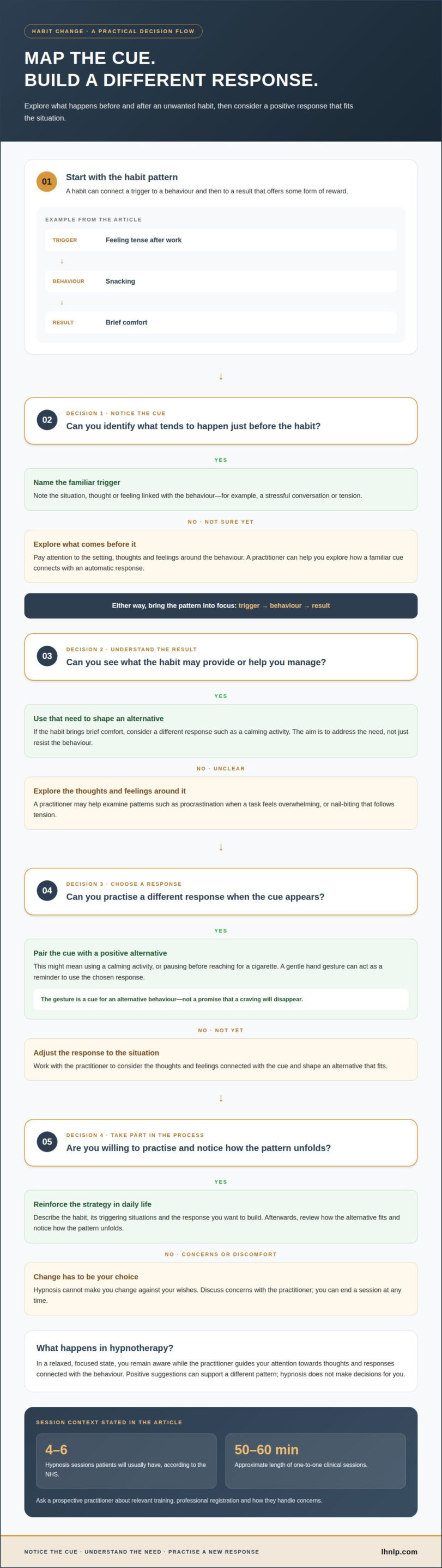
A habit can link a trigger to a behaviour and a result that offers some form of reward. For example, feeling tense after work might prompt snacking, followed by brief comfort. A hypnotherapist can help you identify each part of this sequence and consider a different response, such as a calming activity. Recognising the pattern helps you address the behaviour without overlooking the need it may serve.
Automatic Behaviour and the Subconscious Mind
Automatic behaviours can begin before you consciously weigh your options. Hypnotherapy uses a relaxed, focused state in which you may be more receptive to positive suggestions. A practitioner can help you explore how a familiar cue, such as a stressful conversation, connects with an automatic response. Changing that response may involve addressing the thoughts and feelings associated with the cue, rather than relying on willpower alone.
Anchoring Positive Behaviour
Anchoring uses a specific physical action as a reminder to avoid an unwanted behaviour or maintain a positive one. A hypnotherapist might help you pair a gentle hand gesture with a chosen response, such as pausing before reaching for a cigarette. The action becomes a cue for an alternative behaviour, not a promise that a craving will disappear. Practising this association during therapy can make the new response feel more familiar.
Commitment and Progress After a Session
Commitment means being willing to take part in the change process. Hypnosis can’t make you change against your wishes. To prepare for a session, your hypnotherapist can ask you to describe the habit, the situations that trigger it and the response you’d like to build. You can then review how the alternative fits those situations and reinforce the strategies discussed. Progress depends on engaging with the process and noticing how the pattern unfolds in daily life.
What Is Bad Habits Hypnotherapy?
Hypnotherapy for bad habits uses hypnosis to explore automatic responses and support positive change. A practitioner considers how a habit works in your life, rather than treating it as an isolated action.
Hypnotherapy and Automatic Habits
Hypnotherapy uses hypnosis to help address automatic habits and encourage positive suggestions. In a relaxed, focused state, you remain aware while the practitioner guides your attention towards thoughts and responses connected with the behaviour. This can bring a habitual reaction into focus and create space to consider another response.
For example, a practitioner might explore whether procrastination appears when a task feels overwhelming, or whether nail-biting follows tension. Addressing the cue and the response gives therapy a practical focus: understanding what happens before the habit, then considering a more helpful pattern. Hypnosis doesn’t make decisions for you or remove your ability to choose.
Online and in-person sessions both involve guided therapeutic work, but there’s no basis here to claim they’re equally effective for everyone. The better fit depends on whether you can focus comfortably, communicate openly and engage with the session format. Online hypnotherapy sessions can be considered if remote appointments suit your circumstances.
Relaxation Techniques and Habit Triggers
Relaxation techniques can help you respond to a trigger more calmly instead of moving straight into an unwanted habit. For instance, someone who drinks before social occasions because of nerves might work with a hypnotherapist on relaxation and a different response to anxiety. The aim is to address the stress linked with the behaviour, not simply suppress the action.
There’s no single UK qualification or registration to cite here as a universal requirement. As a practical measure, ask a prospective practitioner to explain their relevant training, any professional registration and how they handle concerns. For habit change, the NHS says patients will usually have around four to six hypnosis sessions. One-to-one clinical sessions last approximately 50 to 60 minutes.
Hypnosis can’t make you change if you don’t want to, and changing a habit takes time and effort. Your practitioner should explain the approach and respond to your concerns during a session. Discuss any discomfort, and remember that you can end the session at any time.
Changing thought patterns
Hypnotherapy may help you explore beliefs linked with a habit and practise more positive thought patterns. A practitioner might ask what goes through your mind before you procrastinate, overeat or bite your nails. Is the thought, “I can’t manage this,” or “I need relief now”? Naming that internal response gives therapy a specific focus, rather than treating the behaviour as an isolated failure.
During hypnosis, a hypnotherapist guides you into a relaxed, focused state and offers positive suggestions related to your goal. For example, if stress prompts smoking, suggestions might focus on pausing and choosing a different response when tension rises. The practitioner can tailor the language to the situation and thoughts you describe. This can help make a more useful idea easier to recall when a familiar cue appears.
Changing a thought pattern doesn’t mean pretending difficult feelings have disappeared. A therapist can help you notice the difference between an automatic judgement and a considered choice. If a missed deadline prompts the thought “I always fail”, the work might involve developing a more balanced response: recognising one setback without treating it as proof of permanent failure. That shift can support a practical next step, such as returning to the task.
The potential benefit is greater awareness of the link between thought, feeling and behaviour. A hypnotherapist may use guided imagery to help you picture a challenging situation and rehearse a response that fits your intentions. For instance, you might imagine feeling anxious at a social event while remaining present without relying on an unwanted coping habit. The aim is not to impose thoughts, but to help you engage with a positive alternative that feels personally meaningful.
Thought patterns are shaped by personal experiences, so a suggestion that suits one person may not suit another. In a session, the practitioner can use your examples to refine the focus, whether the central belief involves stress, self-criticism or an expectation of immediate comfort. The aim is to develop a response you can recognise and choose in the moments that matter.
Hypnosis for breaking habits
Hypnosis may help you notice an automatic response and practise changing it. For someone considering hypnosis for breaking bad habits in London, its value lies in exploring the behaviour’s context, not promising an instant reset.
Hypnotherapy Compared with Other Treatments
Hypnotherapy uses focused attention and suggestion, while cognitive behavioural therapy (CBT) examines links between thoughts, feelings and actions. Both can give habit change structure, but their methods differ. The right fit depends on your goals, preferences and whether the behaviour connects with wider concerns. The NHS says patients will usually have around four to six hypnosis sessions.
Evidence for Habit Change
Evidence varies by behaviour, so findings about one habit should not be treated as proof about every habit. A study in the Journal of Consulting and Clinical Psychology found that smokers who underwent hypnotherapy were more likely to quit than those using other methods. A study in the International Journal of Clinical and Experimental Hypnosis reported reduced nail-biting among people with chronic nail-biting habits.
These findings offer examples, not predictions for individuals. For smoking, the reported comparison concerns quitting; for nail-biting, the study concerns people with chronic habits. Neither result shows that hypnosis works equally well for procrastination, overeating or every other behaviour. The habit’s triggers, purpose and impact matter when considering an approach.
Hypnosis can also involve visualisation. A practitioner may guide you to imagine a challenging situation without performing the unwanted behaviour, then rehearse a different response. For example, you might picture an urge arising and practise responding in a way that fits your goal. This can make an alternative feel more familiar, while your willingness to engage remains central.
Hypnosis for breaking bad habits in London may be worth exploring when you want practitioner-led support tailored to your circumstances. If a habit is tied to anxiety or stress, those concerns may also need attention. Explore support for changing habits.
London Hypnotherapy & NLP
London Hypnotherapy & NLP provides personalised, solution-focused support for behavioural and psychological challenges. If you’re exploring habit change, NLP Coaching may help you consider how thoughts and responses relate to your goals. Where a habit is connected with anxiety, weight management or smoking, the practice also offers support focused on those concerns.
A session offers a structured space to discuss the behaviour, its context and the change you want to make. This approach may suit you if you’re ready to explore your patterns with a practitioner and take an active role in changing them.
Contact London Hypnotherapy & NLP to discuss your next step.
Choose a next step that feels right for you
Changing a habit can begin with a clearer understanding of what you want to do differently and what support may help. Hypnosis for breaking bad habits in London is one approach to explore if you’re ready to work with a practitioner on your patterns and goals. Change takes your participation, and small choices can help make a new direction more familiar.
London Hypnotherapy & NLP also offers hypnotherapy for anxiety, weight loss and smoking cessation. These services may be relevant if your habit is connected with anxiety, eating behaviours or smoking, rather than being an isolated concern.
If you’d like to discuss whether this kind of support suits your goals, contact London Hypnotherapy & NLP. A considered first step can help you move forward with greater clarity and self-trust.
Frequently Asked Questions
Where Do Bad Habits Come From?
Bad habits can develop as coping responses to stress, emotional discomfort or familiar situations. A behaviour that once offered relief may continue after the original circumstances have changed. For example, someone who began nail-biting during a stressful period may find the response still appears during quiet moments. Understanding when a habit began and what it seems to provide can clarify why it persists.
What bad habits can hypnotherapy help with?
Hypnotherapy may be used to address habits such as smoking, nail-biting, overeating and procrastination. The focus depends on the behaviour and the circumstances around it. For example, a practitioner might explore whether procrastination appears around a particular kind of task, or whether overeating is connected with a specific emotional situation. This helps define a relevant goal for therapy.
How does hypnosis help break habits and what does a session involve?
A hypnotherapist guides you into a relaxed, focused state and uses suggestions related to the change you want to make. A session may begin with a discussion of the habit and the situations where it occurs, followed by guided hypnosis. You remain aware and in control throughout, can reject suggestions, and can end the session at any time. Hypnosis supports your choices; it doesn’t make them for you.