

What if emotional balance begins not by forcing difficult feelings away, but by meeting them with greater calm and attention? Hypnosis for emotional balance in London uses guided relaxation, focused attention and therapeutic suggestions to explore patterns in thoughts, behaviour and emotional responses. One-to-one clinical sessions last approximately 50 to 60 minutes, giving time to understand your concerns and work towards a clear focus for the session.
It’s understandable to want to know what hypnosis actually involves, particularly if anxiety or stress is affecting everyday life. This article explains how hypnotherapy may support emotional balance, what to expect at a first appointment, and how session length and the number of sessions can vary according to your needs and goals. It also explains how this approach relates to anxiety and stress, and when another kind of support may be more appropriate.
Key Takeaways
- Understand how guided relaxation and focused attention may help you explore anxiety, stress and emotional responses.
- Consider what matters to you when choosing between online and in-person sessions in London.
- Know what to expect at a first appointment and how a 50 to 60-minute session can be structured around your goals.
- Learn how working with emotional patterns can support a steadier response to everyday challenges.
Hypnotherapy for anxiety and stress
Hypnotherapy is a complementary therapy that uses guided relaxation, focused attention and therapeutic suggestion to explore emotional responses. For example, a London professional who feels anxious before presentations might explore the thoughts and patterns linked to that reaction. The aim is to develop a more considered response, not to erase emotions.
Anxiety can affect thoughts, physical sensations and behaviour. Racing thoughts may make it hard to concentrate; physical signs can include tension or a pounding heart, while avoidance may lead someone to decline meetings or postpone tasks. Noticing these patterns can help clarify when pressure is building and which situations trigger it.
Sessions may use relaxation and focused attention to explore responses, then introduce suggestions connected to the person’s goals. A meta-analysis pooled results from 15 controlled studies on anxiety and hypnotherapy. That figure describes the studies included, not a forecast for an individual. The practical focus is identifying a pattern and working with it in a structured session.
How does hypnotherapy compare with CBT, counselling and mindfulness for emotional regulation? CBT commonly explores thoughts and behaviours, counselling offers space to consider experiences, and mindfulness practises attention to the present moment. Hypnotherapy uses focused attention and therapeutic suggestion. These approaches differ, and the right fit depends on a person’s needs.
When anxiety is connected with trauma, both the history and its current impact matter. Discuss your experiences and support needs before beginning. A mental health professional can help determine whether trauma-focused care is more appropriate. Hypnotherapy should not replace that assessment.
When should someone seek a GP or mental health professional instead? Seek clinical support when anxiety is severe, disrupts daily functioning, or includes thoughts of self-harm. In the UK, the NHS advises people experiencing severe anxiety or thoughts of self-harm to contact their GP or call NHS 111 for immediate support.
When choosing a UK hypnotherapist, ask about relevant training, professional registration, experience with anxiety and how they work within their competence. These details can help you understand the practitioner’s approach before discussing personal concerns.
Possible limitations include emotional discomfort when exploring difficult experiences and limited suitability as a stand-alone response to severe distress. Discuss your concerns, boundaries and support needs before a session, especially if trauma or ongoing mental health difficulties are involved.
Online and in-person hypnotherapy in London
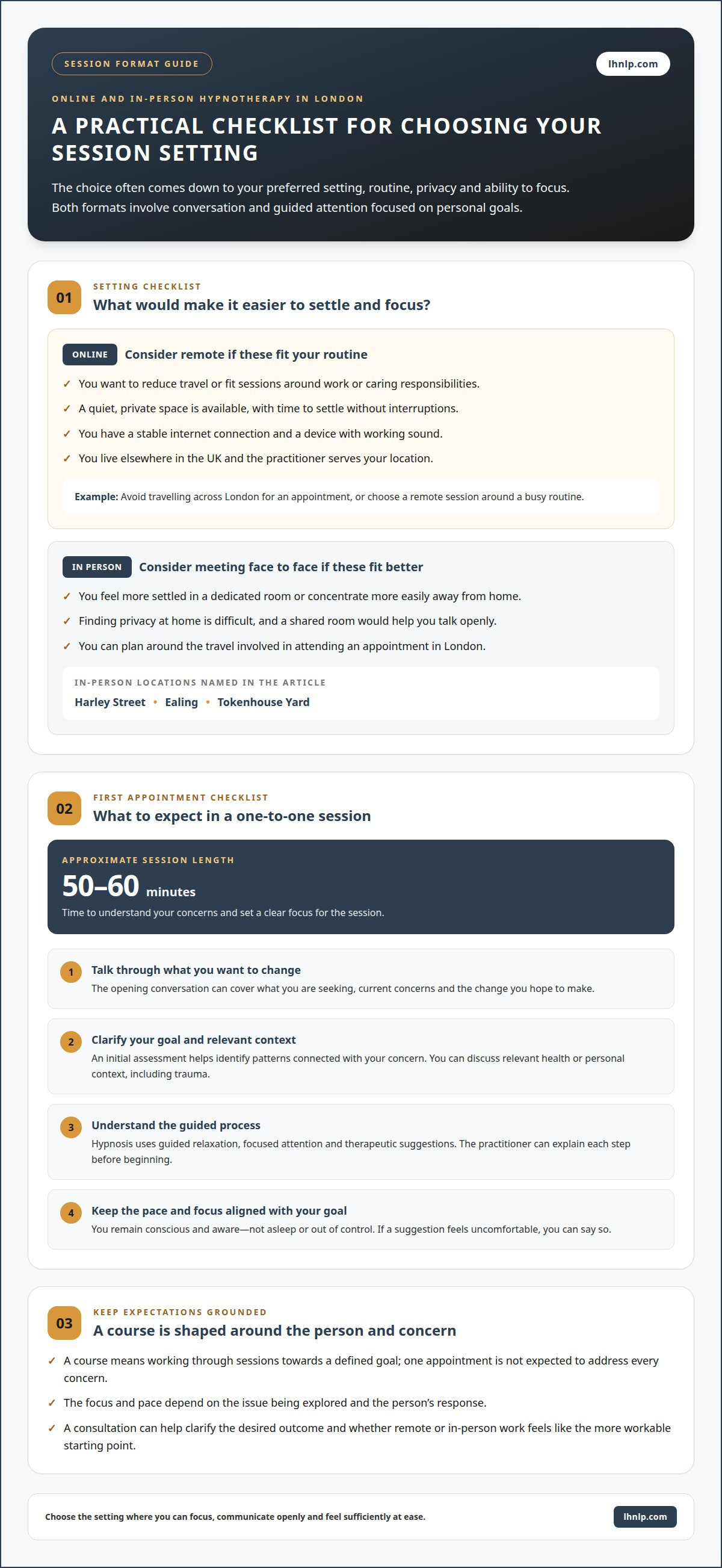
In London, choosing between online and in-person hypnotherapy often comes down to your preferred setting and routine. Someone with a long commute might prefer a remote appointment, while someone who feels more settled in a dedicated room may choose to meet face to face. Both formats involve conversation and guided attention, focused on personal goals.
Online hypnotherapy can reduce travel and make it easier to fit sessions around work or caring responsibilities. Before an appointment, choose a quiet, private space and allow time to settle without interruptions. A stable internet connection and a device with working sound help the consultation run smoothly. These practical steps create a more focused setting, though they don’t determine what someone will achieve.
In-person sessions in London offer a shared room and direct conversation with the practitioner. This may suit someone who concentrates more easily away from home or has difficulty finding privacy there. Online sessions offer a different kind of flexibility: someone in a busy part of the city can avoid travelling across London for an appointment.
Online access can also make hypnotherapy an option for people living elsewhere in the UK, provided the practitioner serves their location. The format itself is not limited to a London address. For phobias, anxiety or other symptoms, the relevant decision is whether the person can focus, communicate openly and feel sufficiently at ease in their chosen setting.
A course of hypnotherapy means working through sessions towards a defined goal, rather than expecting one appointment to address every concern. The focus and pace depend on the issue being explored and the person’s response. A consultation can help clarify the desired outcome and whether remote or in-person work feels like the more workable starting point. Details of online hypnotherapy sessions explain the remote format and how it can fit into a personal routine.
Session duration and first appointment
A one-to-one clinical hypnotherapy session lasts approximately 50 to 60 minutes. At a first appointment, the practitioner can use the opening conversation to understand what you’re seeking, your current concerns and the change you hope to make. For example, someone struggling with anxiety before work meetings might identify the situations and feelings they want to explore. This gives the session a focused direction.
An initial assessment helps clarify your goals and the patterns contributing to your concern. You can discuss relevant health or personal context, including trauma, so the practitioner understands what may affect the session. Hypnosis involves guided relaxation, focused attention and therapeutic suggestions. You remain conscious and aware, not asleep or out of control. The practitioner can explain each step before beginning.
During the hypnotic part, attention turns inward, and suggestions may support a different response to a familiar trigger. The subconscious is sometimes used to describe automatic patterns, but hypnosis doesn’t mean someone can make you act against your wishes. If a suggestion feels uncomfortable, you can say so. The pace and focus should reflect the goal agreed at your appointment.
For someone living in Camden, an in-person appointment elsewhere in London may involve planning around travel and work commitments. The practice has in-person locations in Harley Street, Ealing and Tokenhouse Yard. Consider which setting makes it easier to arrive settled and leave enough time afterwards. In-person work is one option; the appointment’s structure still begins with conversation and an agreed focus.
Training and experience shape how a practitioner assesses concerns and explains their method. Ask how the approach relates to your goal, particularly if trauma is part of your history. For long-standing or generalised anxiety, a series of four to eight sessions may be beneficial. The number depends on the patterns being explored and the work needed across sessions, rather than a fixed script.
Hypnotherapy for emotional balance
Emotional balance doesn’t mean feeling calm all the time. It means having more room to notice thoughts, understand feelings and choose a response. For example, someone who usually snaps after a difficult commute might pause, recognise their frustration and decide how to respond before going inside.
Hypnotherapy may support this process by exploring patterns and using therapeutic suggestions linked to your goals. In a focused state, you can turn your attention towards a specific concern, such as reacting strongly to criticism or avoiding a challenging conversation. Sessions can explore the response and practise a more useful way of approaching that situation.
When choosing a London hypnotherapist for emotional balance, stress, anxiety or mood regulation, look for someone whose work addresses your specific concern. Emotional balance may be a shared goal rather than a formal specialism, so discuss your aims and the practitioner’s approach during an initial assessment.
Practical progress can involve noticing a trigger, identifying the habit that follows and considering an alternative response. Someone who automatically postpones a task when overwhelmed might practise breaking it into a manageable first step. Hypnotherapy offers an opportunity to explore that pattern; applying a new response in everyday life helps connect session work with real situations.
Emotional wellbeing can also be affected by physical routines and relationships. Changes in sleep, work pressure or communication may influence how you feel and react. A useful focus is specific: identify the situation causing difficulty, the response you want to change and what a steadier reaction might look like. This gives sessions direction without treating every feeling as a problem.
For people seeking support with anxiety or stress, a clear conversation about goals can establish whether this approach suits their needs. Explore hypnotherapy treatment options to see how focused work may relate to a personal concern.
London Hypnotherapy & NLP
London Hypnotherapy & NLP offers personalised, solution-focused support for concerns such as anxiety, when emotional patterns may affect daily life. Hypnotherapy for Anxiety can help you explore a specific goal and consider responses you’d like to change. NLP Coaching offers another way to work with thoughts, behaviour and personal aims.
If you’re considering hypnosis for emotional balance in London, start by describing what you’re experiencing and what you hope to work towards. This conversation can clarify whether your focus is anxiety or another concern, and whether hypnotherapy or coaching suits your needs. The work is collaborative and tailored to your circumstances, rather than based on a one-size-fits-all plan.
If you’re ready to discuss your goals, contact London Hypnotherapy & NLP.
Take the next step towards steadier responses
Emotional balance can begin with a clear intention: notice one situation where you’d like to respond differently, and consider what a more grounded response would look like. That starting point can help shape a meaningful conversation about support. Hypnosis for emotional balance in London may be worth exploring if you want to work with recurring emotional patterns through a focused, individual approach.
London Hypnotherapy & NLP offers Hypnotherapy for Anxiety, Hypnotherapy for Weight Loss and Hypnotherapy for Smoking Cessation. These services address different concerns, so start by describing what you want help with and what change would matter in daily life. A conversation can help you consider whether hypnotherapy is suitable for your goal.
When you’re ready to explore that next step, contact London Hypnotherapy & NLP. Start with the concern that feels most important, and give yourself room to move forward thoughtfully.
Frequently Asked Questions
What is Hypnosis?
Hypnosis is a focused state of attention in which you can engage with therapeutic suggestions while remaining aware. It isn’t sleep, and the practitioner doesn’t take control of your decisions. You can question a suggestion, decline it or end the session at any time. For example, you might use this focused state to consider a different response to a familiar stressful situation.
Can I have hypnotherapy if I am taking medication for anxiety?
Taking medication doesn’t automatically rule out considering hypnotherapy, but tell the practitioner about your medication and care arrangements. Keep your prescribing clinician informed, particularly if your symptoms change or you’re considering an adjustment. Hypnotherapy isn’t a substitute for prescribed treatment, and you shouldn’t stop or change medication because of a session. Medication decisions belong in a discussion with your prescriber.
What is hypnotherapy for emotional balance and how does it work?
Hypnotherapy for emotional balance uses focused attention and therapeutic suggestions to explore how you respond to situations. The work can centre on an individual goal, such as feeling less overwhelmed during a difficult conversation or responding more calmly to a recurring trigger. Exploring the thoughts and habits around that moment can help you practise alternative responses relevant to everyday life.
What should I expect in a first hypnotherapy session for emotional balance?
Expect an initial conversation about what brings you to therapy, what you hope to change and any concerns about hypnosis. You can ask how suggestions will be used and agree what feels appropriate before the focused work begins. For example, you might set a goal around handling a particular social situation. The practitioner can then shape the session around that priority.
What evidence supports hypnotherapy for anxiety, stress, and emotional wellbeing?
Research includes a meta-analysis pooling controlled studies of hypnotherapy for anxiety, so there is clinical research to consider for that concern. Its scope matters: evidence about anxiety shouldn’t automatically be treated as proof for every aspect of emotional wellbeing or for every individual. Ask what outcome a study examines, and distinguish evidence about a specific symptom from broader claims about emotional change.
Are online hypnotherapy sessions available in London, and how do they compare with in-person sessions?
Yes. London Hypnotherapy & NLP provides online sessions via Zoom and Skype, as well as in-person appointments at its Harley Street clinic. The practice describes online hypnotherapy as potentially as beneficial as face-to-face sessions. For a remote appointment, choose a private space where you can speak comfortably and focus without interruptions. The best format is one that lets you participate openly.