
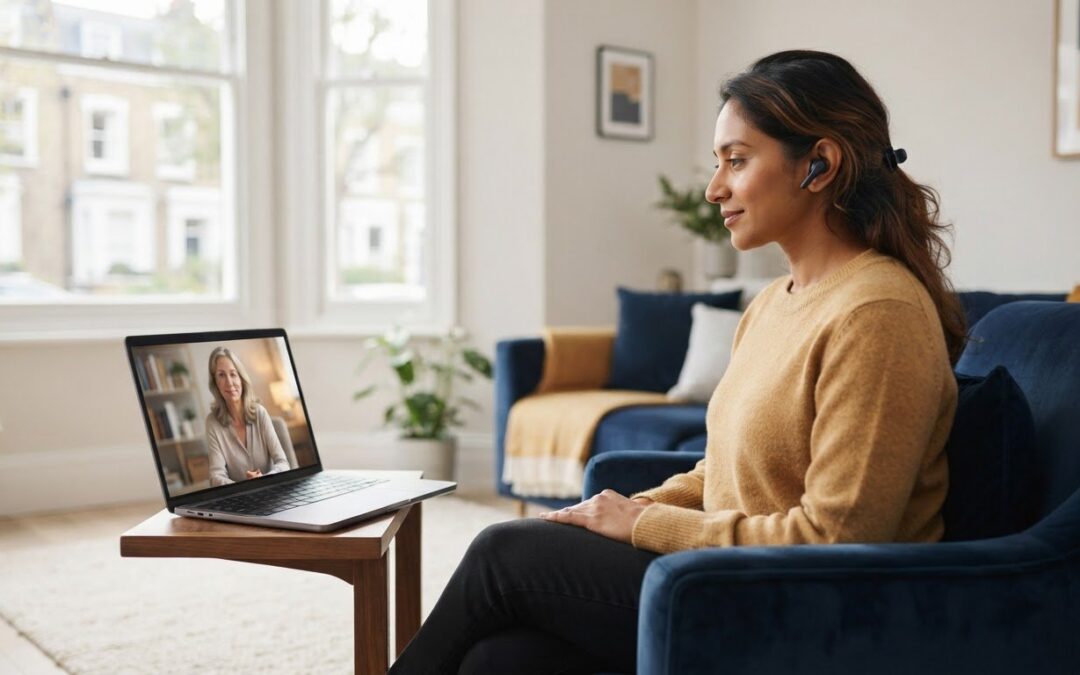
A session doesn’t need to take place in a consulting room to feel focused and personal. Remote hypnotherapy sessions in the UK can be just as beneficial as face-to-face sessions: your therapist guides you through the process online. A quiet, comfortable space and headphones can help you settle in and keep the session private.
It’s understandable to wonder how hypnosis will feel through a screen, especially if stress, anxiety or a phobia is making daily life difficult. The format is different, but you can still work with a therapist from a familiar place, without travelling to an appointment.
This article explains what happens in an online session, how to prepare for privacy and comfort, and how remote hypnotherapy may help with concerns such as stress, anxiety and phobias. It also outlines how to decide whether online support could suit you.
Key Takeaways
- Online hypnosis follows the therapist’s guidance much like an in-person session, so the format needn’t prevent focused therapeutic work.
- Prepare a quiet, private space, a reliable internet connection and a device with a working camera and microphone; headphones can add privacy and focus.
- Working from home can remove travel and make it easier to settle into a familiar environment, particularly when discussing sensitive concerns.
- Hypnotherapy may support work on stress, anxiety and phobias; consider how this approach fits your needs and the support you already have.
Does Online hypnosis work?
Online hypnotherapy follows a guided process similar to an in-person session. Whether it suits you depends on your needs, privacy and ability to connect reliably.
How Online Hypnotherapy Works
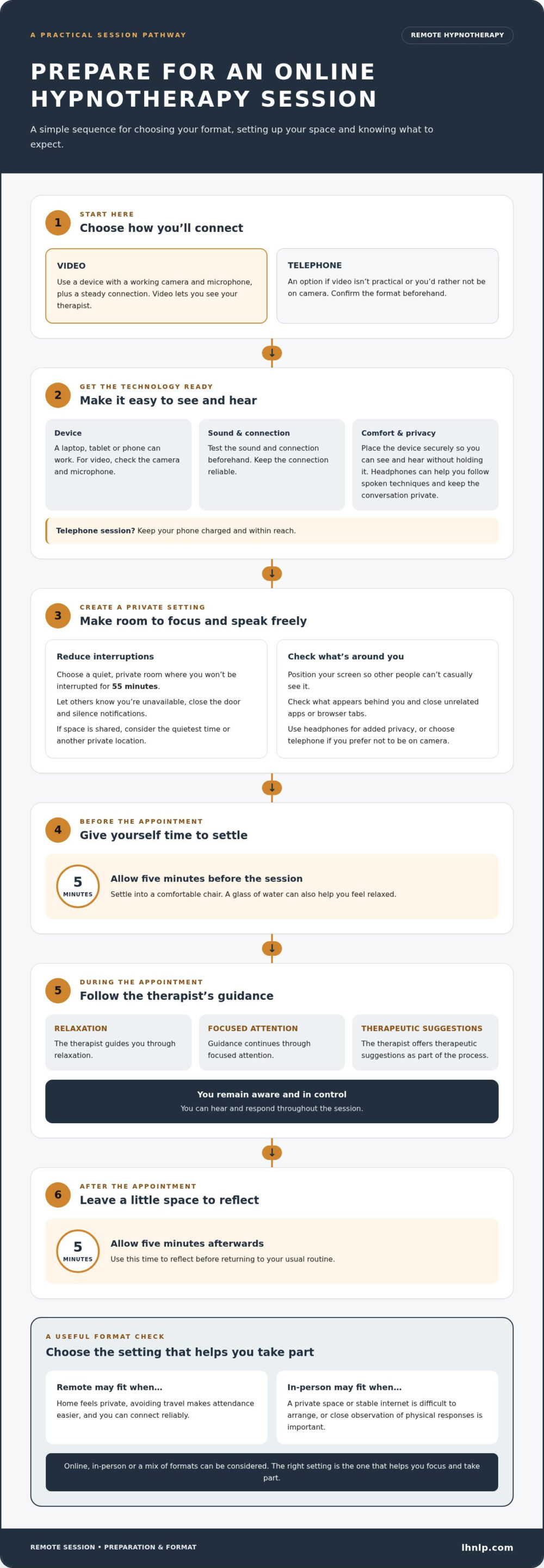
In an online session, your therapist speaks with you by video or telephone, guiding relaxation, focused attention and therapeutic suggestions. You remain aware and in control, able to hear and respond throughout. For video appointments, check that your camera and microphone work, and that your connection is steady. A quiet, private setting can help you concentrate and speak openly.
Online and Face-to-Face Effectiveness
Online and in-person therapy differ mainly in setting, not necessarily in how the therapist guides hypnosis. A systematic review in the Journal of Medical Internet Research, volume 14, number 4, found e-therapy seemed at least equivalent to face-to-face therapy. A 2019 study of Skype hypnotherapy for irritable bowel syndrome reported no discernible difference between online and in-person groups. These findings are encouraging, but they don’t prove identical results for every concern or person.
Choose online sessions if home feels private and avoiding travel makes attendance easier. A therapy room may suit you better if you need in-person support or close observation of subtle physical responses, such as during some pain-management work. A mix of formats can also be considered.
NHS access depends on local pathways, while private insurance cover depends on policy terms. Neither should be assumed; review the relevant service or policy details.
Qualifications, Safety and Suitability
Before booking, ask about the practitioner’s training, relevant professional membership, ethical code and experience with your concern. In the UK, check how they explain their approach, session boundaries and complaints process. These details help you assess whether their practice feels clear and accountable.
If considering therapy for a child, discuss their understanding and willingness to take part, parent or guardian consent, and safeguarding arrangements with the practitioner beforehand. Suitability depends on the child’s needs and the therapist’s approach.
Remote sessions aren’t suitable for every situation. Significant trauma, immediate risk or several complex difficulties may require support beyond hypnotherapy alone. For a reputable online therapist, look for transparent qualifications, relevant experience and clear communication about suitability and safety.
To book an online appointment with London Hypnotherapy & NLP, choose a remote session via Zoom or Skype. Online sessions are available across the UK and internationally, so you can attend without travelling to the Harley Street clinic in London.
Equipment and private space requirements
Prepare a suitable device, a reliable internet connection and a private place to talk. Setting these up beforehand helps you focus on the session rather than avoidable distractions.
Equipment for Remote Sessions
A laptop, tablet or phone can work for online therapy, provided its microphone and camera function for a video appointment. Test the sound and connection beforehand, and place the device securely so you can see and hear your therapist without holding it. Headphones can make spoken techniques easier to follow and help keep the conversation private.
If video isn’t practical, remote sessions may use a telephone instead. Confirm the format in advance, then keep your phone charged and within reach. Allow five minutes before the appointment to settle, and leave five minutes afterwards to reflect. A glass of water and a comfortable chair can also help you feel relaxed.
Privacy and Avoiding Interruptions
Choose a private room where you won’t be interrupted for 55 minutes. At home, let others know you’re unavailable, close the door and silence notifications. If you share a small space, consider when it’s quietest or whether another private location would work better. Your comfort speaking freely matters as much as the device you use.
For video, position the screen so other people can’t casually see it, and use headphones for added privacy. Check what appears behind you and close unrelated apps or browser tabs before joining. A telephone appointment may suit you if you’d rather not be on camera; video lets you see your therapist during the session.
These practical choices help create a clear boundary between home life and the appointment. To explore the remote format, see virtual hypnotherapy sessions.
Benefits of remote sessions
Remote sessions can make it easier to attend when travel complicates your routine. Being at home may also help you feel more comfortable discussing a concern such as anxiety. London Hypnotherapy & NLP offers online sessions via Zoom or Skype to clients across the UK, alongside in-person appointments at its Harley Street clinic.
Choosing online support doesn’t have to mean giving up in-person appointments. Consider which format helps you focus and take part, and choose the option that feels most comfortable. London Hypnotherapy & NLP offers both online sessions and appointments at its Harley Street clinic in London.
Some people prefer the dedicated setting of an in-person appointment, while others feel more comfortable speaking from home. If a stable internet connection or a private space is difficult to arrange, an in-person session at the Harley Street clinic may be a better fit. The right format is the one that helps you engage with the work.
Research since 2020 has examined online hypnotherapy for anxiety, pain management, insomnia and habit change. These topics show areas being explored, not proof that every method suits every person. Start with your preference, then weigh the concern, privacy, connection and need for observation. A video call may suit conversation-based work, while a physical therapy room may suit close observation. Because formats can be mixed, your choice can evolve as the work develops. Keep the decision practical: where can you speak openly, stay engaged and follow the therapist’s guidance?
For example, someone who feels self-conscious entering a clinic may prefer starting from home, while a person distracted by family routines might value an appointment at the Harley Street clinic. In either format, active participation and clear communication remain central to the work.
Hypnotherapy for stress, anxiety and phobias
Remote hypnotherapy can offer a structured way to work on stress, anxiety and phobias from a familiar setting. Your therapist guides focused attention and therapeutic suggestions, while you remain involved throughout. For example, someone anxious about travelling might explore the thoughts and feelings linked to a particular journey.
Anxiety can affect sleep, confidence and everyday decisions. Hypnotherapy may support work on these related experiences, including sleep and self-esteem. NICE recommends therapies such as cognitive behavioural therapy as first-line treatments for anxiety disorders, because they have the strongest research evidence. Hypnotherapy should be understood as a possible complementary approach, not a substitute for recommended care.
With a phobia, sessions can focus on a specific trigger and your response to it. Fear of lifts, for instance, gives you and your therapist a concrete concern to discuss. A remote appointment lets you talk from a familiar setting, which may feel comfortable when describing the issue. The work still involves your attention and active participation.
For stress, sessions can focus on situations that feel demanding, such as preparing for a presentation or managing a difficult routine. You and your therapist can identify what you’d like to approach differently, then use hypnosis to practise a calmer response. Your commitment matters: reflecting between appointments can help you notice how patterns arise in daily life.
A reliable internet connection supports clear communication, especially when discussing sensitive experiences. If anxiety or a phobia is affecting daily functioning, consider how hypnotherapy fits alongside other support. Explore anxiety treatment options to see how focused hypnotherapy may fit your goals.
London Hypnotherapy & NLP: Hypnotherapy for Anxiety
London Hypnotherapy & NLP offers hypnotherapy for anxiety through personalised, solution-focused sessions, both online and at its Harley Street clinic. You can explore what you’d like to change and work towards practical steps at a manageable pace.
Consider this approach if anxiety is affecting your confidence, routines or sense of calm and you’re ready to take an active part in the process. Hypnotherapy can complement other support, but it isn’t a replacement for recommended care or urgent help when those are needed. A useful next step is to discuss your concern and what you hope to achieve.
If you’d like to explore whether this support fits your needs, contact London Hypnotherapy & NLP.
Choose a next step that feels manageable
Change often starts with naming what you’d like to be different. Before arranging support, think about a moment you’d like to handle with greater calm, confidence or choice. A clear personal aim can give therapy direction, even if you don’t yet have every answer.
If you’re considering remote hypnotherapy sessions in the UK, a useful next step is to discuss what you’d like to work on and whether online support feels right for you. London Hypnotherapy & NLP offers hypnotherapy for anxiety, weight loss and smoking cessation, with a personalised approach to your goals.
There’s no need to wait until you feel completely ready to understand your options. A thoughtful first conversation can help you decide whether this kind of support fits your aims. Contact London Hypnotherapy & NLP to explore a possible next step.
Small, considered steps can make room for meaningful change.
Frequently Asked Questions
How can online therapy be so effective?
Online hypnotherapy can be as beneficial as face-to-face sessions: your therapist’s guidance and your active participation remain central, wherever you are. A familiar setting may help you speak comfortably about a personal concern, while video or telephone keeps the conversation direct. Your openness and commitment influence the work. Outcomes vary, and results are not guaranteed.
How do remote hypnotherapy sessions work in the UK?
Remote hypnotherapy sessions in the UK take place by private video call or telephone. You and your therapist can discuss your goals before moving into relaxation, guided imagery or therapeutic suggestions. For example, you might identify a situation that triggers anxiety and explore a different response. Your therapist will then talk through the session with you.
Is online hypnotherapy effective compared with in-person sessions?
Online hypnotherapy can be as beneficial as face-to-face sessions, though the best format depends on your circumstances and comfort. Online appointments may suit you if travel is difficult or your routine is busy. An in-person session at London Hypnotherapy & NLP’s Harley Street clinic may feel more comfortable if you prefer a dedicated setting. Discussing your goals and preference helps shape a suitable approach.
What conditions can UK hypnotherapists help with remotely?
Remote hypnotherapy may support work on anxiety, phobias, stress, sleep difficulties, smoking cessation and weight management. For example, someone anxious about public speaking could explore the thoughts and responses linked to that situation. Sessions are personalised rather than delivered as a fixed script. Hypnotherapy is complementary support, not a psychiatric diagnosis or medical prescription.
What happens during a first remote hypnotherapy session, and how should I prepare?
A first appointment begins with a conversation about your concern and what you’d like to change. Your therapist may then guide relaxation, such as focused breathing or progressive muscle relaxation, followed by imagery or suggestions and a debrief. Beforehand, note one situation you want help with and the change you hope to notice. This gives the conversation a clear starting point.
What UK qualifications, memberships or regulations should I check for a hypnotherapist?
Ask about the practitioner’s training, relevant professional membership, ethical code and experience with your concern. Check that they clearly explain their approach, session boundaries and complaints process.