
What if the persistent cough that often strikes days after putting down cigarettes isn’t a sign of lasting harm, but the first tangible proof that your body is repairing itself? If you’ve smoked for years, it’s entirely natural to dread that the damage is irreversible, or to feel an unsettling wave of worry when your chest feels heavier just as you decide to stop. Yet, looking closely at what happens to your lungs when you quit smoking reveals that true recovery isn’t passive waiting; it’s a profound, immediate cellular restoration.
In this guide, you’ll discover the exact biological timeline of how your bronchial tissues, dormant cilia, and oxygen levels actively regenerate from the very first hour. We’ll walk through the hour-by-hour and month-by-month milestones of pulmonary healing, demystify why your airways purge old debris, and explore grounded, practical ways to steady your nervous system as you reclaim your breath.
Key Takeaways
- Explore what happens to your lungs when you quit smoking, starting within twenty minutes as airway pressure stabilises and carbon monoxide begins to leave your bloodstream.
- Discover why the temporary increase in coughing between weeks one and three is a reassuring biological sign that your bronchial cilia are actively awakening and expelling accumulated debris.
- Understand the vital distinction between reversible tissue inflammation that naturally resolves and structural alveolar changes, helping you focus on preserving healthy lung capacity.
- Learn practical, somatic methods including purposeful hydration and targeted diaphragmatic breathing to regulate your nervous system and support respiratory recovery without relying on willpower alone.
What Happens to Your Lungs Immediately After Quitting Smoking? (The First 72 Hours)
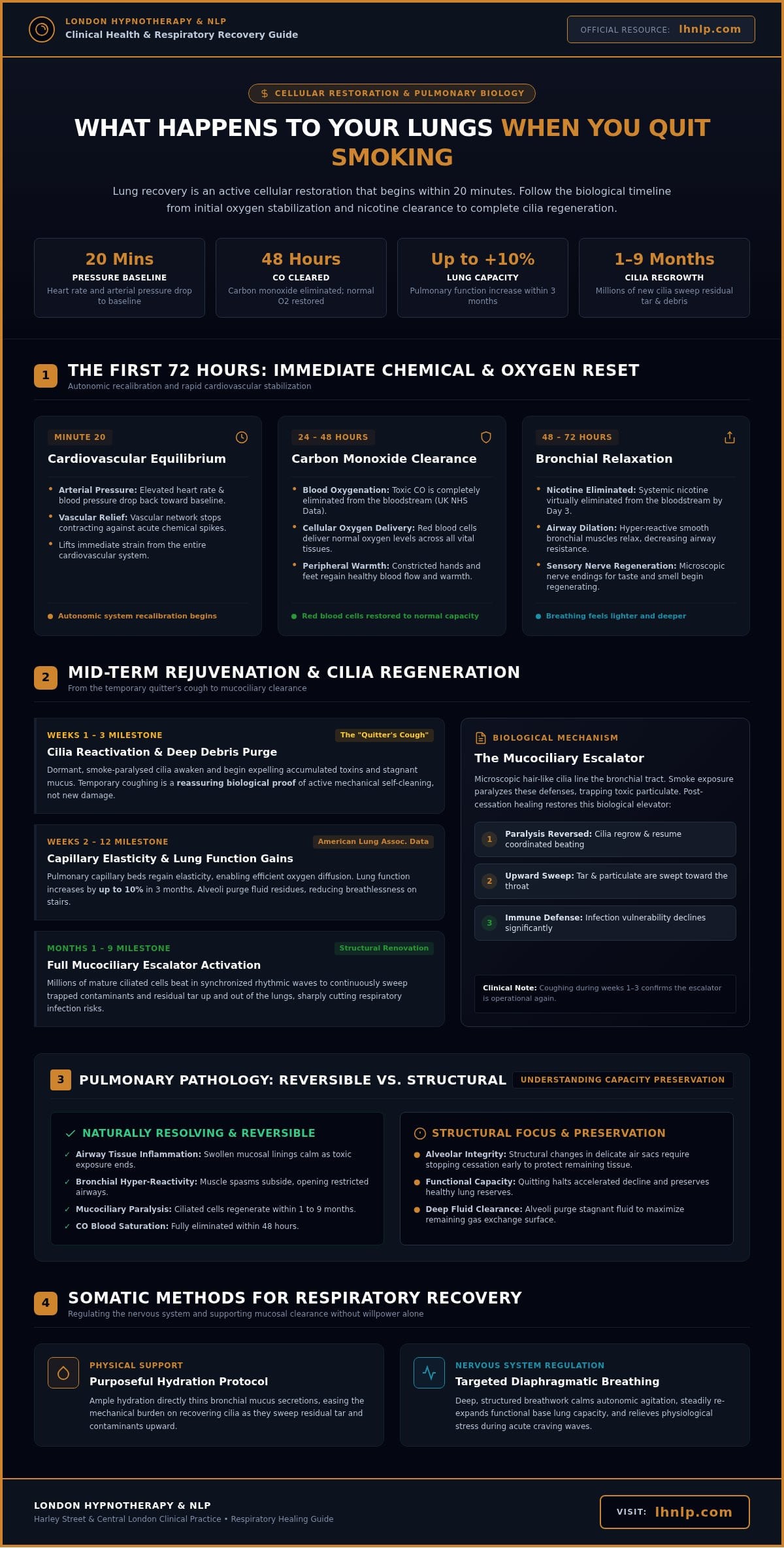
Healing doesn’t wait days or weeks to begin; your body initiates physiological repair within twenty minutes of extinguishing your final cigarette. Understanding what happens to your lungs when you quit smoking begins with observing how quickly the autonomic system recalibrates once toxic smoke clears your airway. Within those initial twenty minutes, elevated heart rate and arterial blood pressure drop back toward baseline levels, lifting an immediate burden from your cardiovascular system.
As you enter this early stage in the process of smoking cessation, your vascular network stops contracting against acute chemical spikes, restoring gentle equilibrium to your circulation. To understand how a pulmonary specialist visualises this rapid early transformation, watch this helpful medical overview:
The First 20 Minutes to 24 Hours: Oxygen Restoration
During active smoking, inhaled carbon monoxide binds to haemoglobin molecules over two hundred times more aggressively than oxygen, starving your vital tissues. According to UK NHS health data, toxic carbon monoxide clears the bloodstream within forty-eight hours, enabling red blood cells to deliver normal levels of oxygen throughout your body. Peripheral circulation quickly improves, warming previously constricted hands and feet. Deeper down, your bronchial tissue begins shedding surface irritants, preparing the delicate mucosal lining for structural renewal.
48 To 72 Hours: Bronchial Relaxation and Chemical Clearance
By day three, systemic nicotine is virtually eliminated from your bloodstream. While this drop can trigger acute cravings, it coincides with profound respiratory relief. The hyper-reactive smooth muscles wrapping your bronchial tree finally begin to relax and dilate, decreasing airway resistance. Breathing feels lighter, deeper, and noticeably easier as functional lung capacity expands. Meanwhile, microscopic nerve endings governing taste and smell begin regenerating, proving that subtle physical restoration is already underway.
The Mid-Term Lung Healing Timeline: From 2 Weeks to 9 Months
Once the initial chemical shock subsides, the respiratory system shifts from emergency stabilisation into deliberate, structural rejuvenation. Following what happens to your lungs when you quit smoking across these subsequent months reveals remarkable cellular resilience. As chronic airway irritation calms, your body systematically repairs its inner lining, making everyday movement feel vastly less taxing on your chest.
Weeks 2 to 12: Enhanced Circulation and Deep Lung Function
During these early weeks, pulmonary capillary beds regain elasticity, allowing oxygen to diffuse into the bloodstream with noticeably greater efficiency. According to the American Lung Association’s recovery timeline, overall lung capacity and systemic circulation begin a sustained upward climb during this period, with measurable pulmonary function increasing by up to ten percent within three months. Alveoli gently purge stagnant fluid residues that previously restricted air volume. Climbing a steep flight of stairs no longer triggers distressing breathlessness. Your stamina quietly returns.
Months 1 to 9: Cilia Regrowth and Structural Cleansing
Between one and nine months post-cessation, the most intricate phase of biological renovation unfolds along the respiratory tract. Cigarette smoke previously paralysed cilia, the delicate hair-like structures lining your bronchial passages, leaving toxic particles stranded in deep tissue. Over these months, millions of new cilia mature and orchestrate an elaborate purification protocol. As the mucociliary escalator reactivates, microscopic ciliated cells beat in coordinated rhythmic waves to sweep trapped contaminants, residual tar, and stagnant mucus upward toward the throat.
This dynamic cleansing process produces several noticeable improvements across your daily life:
- Fewer Respiratory Infections: Cleared airways dramatically decrease seasonal vulnerability to acute bronchitis, chest colds, and persistent winter chills.
- Decreased Cardiac Fatigue: Because your lungs process oxygen efficiently, your heart no longer overworks to fuel simple physical movements.
- Steadier Daily Breath: Lingering wheezing gives way to smooth, expansive inhalations during physical exercise.
Reclaiming physical vitality often requires synchronising physical healing with mental resolve. If residual triggers or old stress loops test your commitment during this transitional phase, exploring targeted smoking cessation hypnotherapy can help soothe subconscious tension and anchor your newfound breathing freedom.
Why Healing Can Feel Worse: Understanding the ‘Quitter’s Cough’
One of the most disorienting surprises on the road to recovery occurs when your chest feels more irritated after putting cigarettes down than it did while smoking. Many ex-smokers paradoxically cough far more during their first month of being smoke-free, which often sparks unnecessary worry that their lungs are deteriorating rather than mending. When examining what happens to your lungs when you quit smoking, the quitter’s cough represents a vital, temporary phase of mucociliary debris expulsion where dormant airways systematically purge built-up residue. Far from indicating tissue breakdown, this persistent reflex confirms that your natural pulmonary defence mechanisms have awakened from toxic sedation.
The Biology of Mucociliary Clearance
Every inhalation of cigarette smoke previously paralysed your bronchial cilia through heat and chemical toxicity, leaving stagnant phlegm and inhaled particulates trapped deep inside the respiratory tree. As these microscopic hairs recover their mobility, they begin synchronised wave-like motions toward your throat, mobilizing weeks or years of settled tar and cellular debris. The clinical literature detailing the health benefits of quitting tobacco highlights how this reactivation functions as an essential, mechanical ejection valve. The ensuing cough is simply the physical mechanism your body uses to sweep these cleared foreign materials out of your airways for good.
Normal Detox Symptoms vs. When to Consult a GP
Distinguishing harmless physiological clearing from symptoms requiring professional clinical support brings genuine peace of mind. While clearing old mucus is an integral milestone of your pulmonary restoration, certain red flags demand clinical evaluation.
- Expected Healing Signs: Producing clear, white, yellow, or grey-tinged mucus flecked with darker particles is common between days 3 and 14, generally peaking by week three and resolving within four to eight weeks.
- Soothing Recovery Measures: Drinking ample warm water throughout the day thins sticky mucus, gentle cardiovascular walking mobilises sluggish secretions, and inhaling steam relaxes constricted upper passages.
Reframing this coughing phase as active cellular renovation prevents the panic that frequently threatens early resolve. Your body is clearing old wreckage so fresh, healthy respiration can permanently take its place.
Long-Term Lung Regeneration: What Heals and What Leaves Permanent Scars?
A lingering dread among long-term smokers is the belief that past habits have caused irreversible damage, rendering recovery futile. Looking honestly at what happens to your lungs when you quit smoking requires acknowledging both the body’s extraordinary regenerative power and its natural biological boundaries. While certain microscopic scars remain fixed in place, eliminating toxic combustion immediately halts accelerated deterioration and unlocks decades of vital physiological protection.
Year 1 to 10: Slashing Cancer, Heart Attack, and Stroke Risk
The cumulative benefits of remaining smoke-free reshape your vascular and cellular profile over time:
- 1 Year Post-Cessation: Your excess risk of developing coronary heart disease drops by fifty percent compared to an active smoker, easing continuous pressure on pulmonary arteries.
- 5 Years Post-Cessation: Systemic arterial stiffness diminishes, reducing your stroke risk to levels that mirror a lifelong non-smoker in most epidemiological metrics.
- 10 Years Post-Cessation: The risk of dying from lung cancer falls to approximately half that of someone who continues smoking, as dormant precancerous genetic mutations steadily decline across bronchial tissue layers.
Reversible Changes vs. Permanent Pulmonary Scars
Gaining clarity on what repairs versus what endures provides profound mental peace. Chronic bronchial swelling and inflamed mucosal tissues resolve completely; hypertrophied goblet cells shrink back to healthy baseline proportions, ending the relentless cycle of daily phlegm production and morning throat clearing. Additionally, quitting smoking decisively halts the rapid decline of Forced Expiratory Volume (FEV1) associated with Chronic Obstructive Pulmonary Disease (COPD), resetting your annual lung volume loss from an aggressive 60 to 80 mL downward to the normal non-smoker curve of 25 to 30 mL per year.
Conversely, destroyed alveolar septa characteristic of emphysema cannot regrow. Once delicate air-sac walls rupture, those surface areas for gas exchange are permanently lost, leaving subepithelial architectural scars. Quitting smoking does not rebuild destroyed alveoli, but it permanently safeguards your remaining functional lung reserve. Every smoke-free day actively preserves the healthy tissue you rely on for vibrant, active aging.
Freeing yourself from smoking protects this vital respiratory reserve before permanent narrowing takes hold. If automatic cravings or habitual stress triggers make lasting cessation feel daunting, you can book hypnotherapy for smoking cessation to rewire these deep subconscious patterns and safeguard your pulmonary health for life.
How to Support Your Respiratory Recovery and Stay Smoke-Free for Good
Physical regeneration begins on a cellular level, but sustaining long-term healing requires harmonising bodily habits with mental calm. While appreciating what happens to your lungs when you quit smoking provides scientific reassurance, true freedom happens when you eliminate the internal friction that tempts people back to old coping mechanisms. By pairing practical physical care with focused subconscious habit alignment, you create the optimal environment for your airways to heal undisturbed.
Physical Habits that Accelerate Pulmonary Cleansing
Your respiratory system responds remarkably well to simple, everyday habits that aid tissue clearance and improve chest wall mobility:
- Targeted Hydration: Drinking plenty of water keeps bronchial secretions thin and fluid, making it easier for newly active cilia to sweep lingering mucus upward without harsh strain.
- Cardiovascular Movement: Engaging in brisk walking or cycling gently raises your breathing rate, recruiting lower alveoli that may have remained under-inflated during years of shallow smoking breaths.
- Diaphragmatic Breathing: Slow, deep belly breathing calms an overstimulated nervous system while stretching the ribcage and expanding functional breathing volume without needing nicotine to unwind.
Overcoming Mental Cravings with Hypnotherapy and NLP
Most quit attempts stumble not from biological failure, but because the subconscious mind still equates smoking with emotional relief, stress relief, or comfort. When everyday tension strikes, automatic neural loops urge you to reach for a cigarette out of conditioned memory rather than true physical need.
Solution-focused clinical methods bridge this gap directly. Exploring how stop smoking hypnotherapy in London works shows that addressing subconscious tobacco cues neutralises cravings at their mental origin. Through neuro-linguistic programming (NLP), automatic behavioural routines triggered by work deadlines or social situations are gently rewired. Rather than white-knuckling through withdrawal, you learn to access calm autonomy naturally.
Working alongside an experienced practitioner helps realign your mindset, letting your nervous system relax while your lungs complete their natural restorative work. To explore how tailored clinical treatments can help you break lifelong cycles, clinical hypnotherapy and NLP offer an empowering path toward lasting, comfortable change.
Embracing Your Body’s Remarkable Capacity to Heal
Understanding what happens to your lungs when you quit smoking transforms anxiety into quiet resolve. From the rapid clearance of carbon monoxide within forty-eight hours to the disciplined regrowth of bronchial cilia, your respiratory system initiates a methodical restoration the moment toxic inhalation ends. Even where structural alveolar changes remain, stopping today halts accelerated decline and preserves the vital breathing capacity you need for an active future.
Sustaining this physical renewal becomes infinitely easier when your subconscious thoughts align with your conscious goals. Led by specialist Kamalyn Kaur with over twenty years of clinical experience, our practice offers solution-focused care across comfortable London locations in Harley Street, Ealing, and Tokenhouse Yard, as well as via virtual consultations. When you are ready to let go of old triggers and support your body’s natural vitality, begin your smoke-free journey with London Hypnotherapy & NLP to breathe freely with enduring confidence.
Frequently Asked Questions
Can your lungs fully heal after 20 years of heavy smoking?
Lungs cannot replace permanently destroyed alveolar tissue, but their capacity for functional recovery remains remarkable. Quitting stops the accelerated decline of lung function and allows bronchial inflammation to recede entirely. Your cilia regrow, airway swelling subsides, and immune defenses reactivate. Understanding what happens to your lungs when you quit smoking reassures you that halting further damage protects vital respiratory reserve, enabling active, comfortable living even after decades of smoking.
Why do I cough up more brown mucus after quitting smoking?
Coughing up discoloured mucus is a direct sign that your respiratory cleaning system has turned back on. Smoke previously paralysed the microscopic cilia lining your airways, trapping old tar particles and secretions deep inside. Once smoke exposure ends, these cilia reactivate and sweep stagnant debris toward the throat. Expelling this brownish residue is healthy mechanical cleansing, clearing old deposits to allow clean airflow.
How quickly does lung capacity improve once you stop smoking?
Measurable improvements in lung capacity begin within two weeks to three months after your final cigarette. During this window, relaxed bronchial passages and shrinking airway inflammation allow pulmonary function to expand by up to ten percent. Capillary circulation operates more smoothly, meaning everyday activities like climbing stairs or walking around London no longer leave you gasping for breath.
Does vaping allow your lungs to heal the same way as quitting entirely?
Switching to vaping removes tar and carbon monoxide, but it does not permit complete pulmonary restoration. Inhaled vapour contains chemical flavourings and aerosol particulates that continue irritating delicate bronchial linings. This ongoing exposure sustains low-grade mucosal inflammation and delays full ciliary recovery. True tissue regeneration and unhindered cellular repair occur only when the lungs are free from all inhaled foreign irritants.
What are the earliest physical signs that your lungs are cleaning themselves?
The earliest signs include a temporary increase in coughing, deeper natural inhalations, and the loosening of chest tightness within seventy-two hours. You might notice subtle tingling as blood oxygen normalises and peripheral circulation improves. Within a week, as sensory nerve endings wake up, your sense of taste and smell sharpens, confirming that systemic physiological recovery has started.
Can hypnotherapy help with the physical anxiety of smoking cessation?
Hypnotherapy effectively calms the physical anxiety of withdrawal by regulating your autonomic nervous system. Rather than fighting bodily tension with willpower, clinical sessions guide the subconscious mind away from habitual fight-or-flight responses. At London Hypnotherapy & NLP, practitioner Kamalyn Kaur uses solution-focused hypnotherapy and NLP coaching across Harley Street, Ealing, Tokenhouse Yard, and virtual sessions to dismantle automatic cravings, replacing withdrawal anxiety with grounded physical ease.
How do I know if my post-quitting cough is normal or a chest infection?
A normal recovery cough typically produces clear, grey, or tar-flecked mucus without debilitating systemic symptoms, resolving within eight weeks. Conversely, a chest infection usually brings thick dark-green sputum, high fevers, sharp focal chest pain, and severe lethargy. If your cough worsens past two months or involves coughing up blood, schedule an assessment with an NHS GP to rule out underlying respiratory infections.