

What if your brain hasn’t actually forgotten how to sleep, but has simply become too proficient at staying on guard? For many professionals navigating the high-pressure environment of the capital, the bedroom has shifted from a sanctuary to a site of nightly struggle. You know the rhythm well; the racing mind that won’t quiet, the growing dread as the clock ticks toward 3:00 AM, and the heavy reliance on medication or a glass of wine just to find a few hours of fragile rest. If you’re searching for hypnotherapy for insomnia London, you’re likely exhausted by the cognitive fog that follows you into the office the next day. It’s a frustrating loop where the more you try to force sleep, the further it retreats.
You don’t have to remain trapped in this cycle of hyper-arousal. By combining clinical hypnotherapy with the strategic tools of NLP, it’s possible to retrain your nervous system to rediscover its natural capacity for deep, restorative rest. At my practices in Harley Street, Ealing, and Tokenhouse Yard, we focus on breaking the anxiety-insomnia loop at its source. This guide explores how we can bypass the subconscious barriers keeping you awake, helping you transition from a state of constant alertness to the quiet confidence of falling asleep naturally. We’ll examine the methodology of retraining your mind for safety, allowing you to wake up feeling genuinely refreshed and cognitively sharp.
Key Takeaways
- Understand how the high-pressure environment of London creates a state of hyper-arousal that disrupts your body’s natural ability to transition into rest.
- Learn how hypnotherapy for insomnia London utilizes clinical techniques and NLP to bypass the worrying mind and retrain your subconscious for deep, restorative sleep.
- Discover why addressing the psychological root causes of sleeplessness provides a sustainable path to rest without the chemical dependency or rebound effects of traditional aids.
- Explore the professional journey from analyzing your unique sleep architecture to achieving profound relaxation through expert-guided induction.
- Access flexible, premium support at prestigious locations including Harley Street, Ealing, and Tokenhouse Yard, or through convenient virtual sessions.
Understanding Insomnia in the Modern London Context
Insomnia is often misunderstood as a simple lack of sleep, yet for those living it, the reality is far more complex. It’s a persistent, draining inability to initiate or maintain rest that leaves you feeling like a ghost in your own life. When you search for hypnotherapy for insomnia London, you’re usually not just tired; you’re dealing with a system that has forgotten how to power down. This isn’t just about “not sleeping.” It’s about the exhaustion of being awake when the rest of the world is silent.
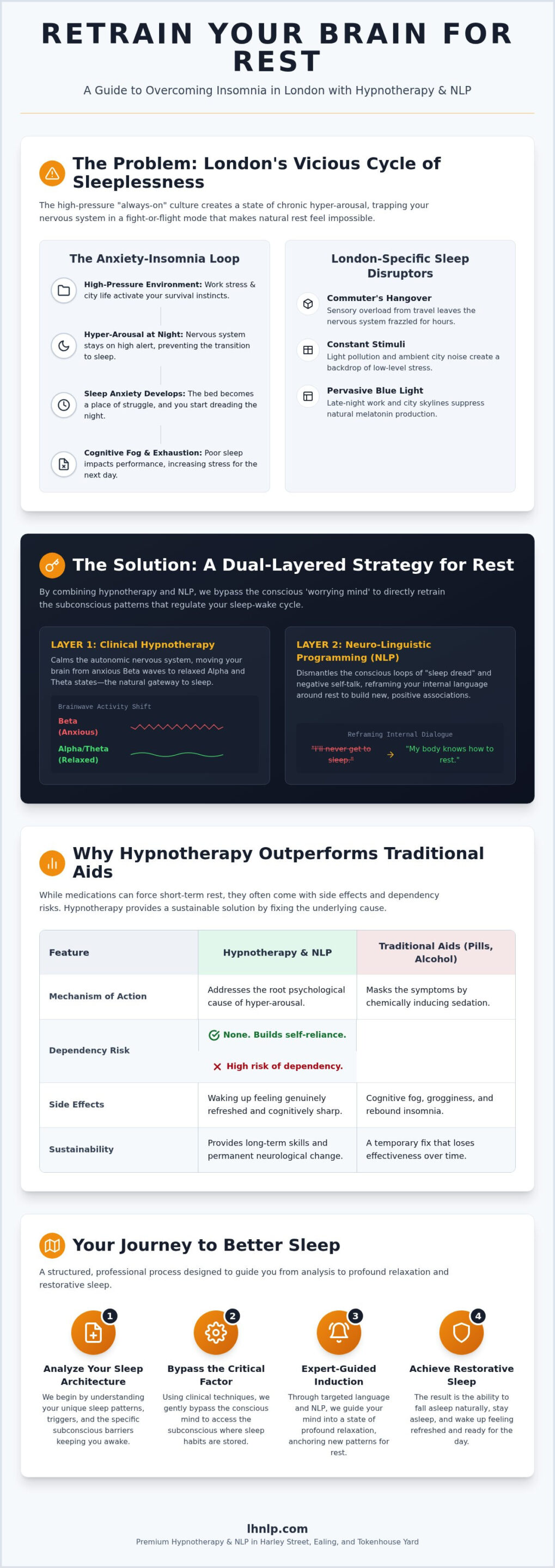
The London environment acts as a unique catalyst for this condition. For professionals in the City, the “always-on” culture creates a state of chronic hyper-arousal. Your sympathetic nervous system, designed for short bursts of “fight or flight” survival, stays active long after you’ve left the office. Your brain treats a pending deadline with the same urgency as a physical threat, keeping your heart rate slightly elevated and your mind scanning for problems. Even if you follow standard sleep hygiene like avoiding screens or keeping a cool room, these external fixes often fail because they don’t address the internal neurological noise. Finding effective hypnotherapy for insomnia London involves recognizing how the city’s pace impacts your biology.
The Vicious Cycle of Sleep Anxiety
The most painful part of insomnia is often the anxiety that develops around the bed itself. You begin to dread the sunset because you know the struggle that awaits. Your internal monologue starts to loop: “If I don’t sleep now, tomorrow’s meeting will be a disaster,” or “I only have four hours left before my alarm.” This pressure makes sleep impossible. Willpower is completely ineffective here because sleep is a passive process. You can’t “try” to sleep any more than you can “try” to be hungry. Understanding What is Hypnotherapy? can be the first step in realizing that these subconscious habits of wakefulness require a deeper, more rhythmic approach to resolve.
London-Specific Sleep Disruptors
Life in a global hub brings specific challenges that smaller cities don’t share. There’s the “commuter’s hangover,” where the sensory overload of the Underground leaves your nervous system frazzled for hours. Light pollution and the constant hum of traffic provide a backdrop of low-level stress. Late-night networking and the pervasive blue light from the Canary Wharf skyline further suppress your natural melatonin. Hyper-arousal is the primary neurological barrier that convinces a Londoner’s brain that staying awake is a necessary survival strategy in an environment that never truly sleeps.
The Science of Hypnotherapy and NLP for Sleep
Your conscious mind is a vigilant gatekeeper, often working overtime to protect you from perceived threats. While this alertness serves you well during a high-stakes board meeting, it becomes a barrier when you’re trying to drift off. Clinical hypnotherapy works by gently bypassing this “critical factor,” allowing direct communication with the subconscious mind. This is where your autonomic functions, including the sleep-wake cycle, are regulated. When you seek hypnotherapy for insomnia London, you aren’t just looking for a temporary fix; you’re engaging in a process that addresses the root neurological patterns of wakefulness.
The true power of this approach lies in the synergy between hypnotherapy and Neuro-Linguistic Programming (NLP). While hypnotherapy calms the subconscious autonomic response, NLP provides the tools to dismantle the conscious loops of “sleep dread” that many sufferers experience. It’s a dual-layered strategy. We use NLP to change the internal language you use about rest, while hypnosis anchors those changes at a deeper level. Because of neuroplasticity, your brain remains capable of “unlearning” the habit of insomnia at any age, replacing old patterns of hyper-vigilance with new, rhythmic pathways to rest.
How Hypnosis Changes Brainwave Activity
During a session, your brain moves from the high-frequency Beta waves of active anxiety into the slower Alpha and Theta states. These are the realms of deep relaxation and heightened receptivity. A comprehensive scientific review of hypnosis for sleep indicates that these shifts help facilitate the “hypnagogic state,” which acts as a natural bridge into deep REM and non-REM sleep cycles. Under the professional guidance of Kamalyn Kaur, this transition is a safe, controlled experience designed to restore your body’s biological rhythm. It’s a method of teaching your nervous system that it’s safe to let go.
NLP Techniques for Cognitive Restructuring
NLP allows us to perform “cognitive restructuring,” which essentially means changing how your mind perceives the act of going to bed. Many chronic sufferers have inadvertently turned their bedroom into a psychological battleground. Through reframing, we can transform that space back into a sanctuary of peace. We also utilize “anchoring,” a technique where we create a specific physical or mental trigger that your mind associates with immediate relaxation. This gives you a practical tool to use the moment your head hits the pillow. If you’re ready to explore these methods further, you can learn more about our treatments and how they can be tailored to your specific needs.
By addressing both the conscious narrative and the subconscious drive, hypnotherapy for insomnia London offers a path toward rest that is both scientifically grounded and deeply personal.
Why Hypnotherapy for Insomnia Beats Traditional Aids
When exhaustion reaches a breaking point, the temptation to reach for a chemical “off switch” is understandable. However, there’s a profound difference between being sedated and actually sleeping. Traditional aids often mask the symptoms of a restless mind without addressing the underlying psychological triggers. While medication may force the body into unconsciousness, it frequently bypasses the vital REM cycles necessary for cognitive recovery. By choosing hypnotherapy for insomnia London, you’re opting for a solution that works with your biology rather than overriding it, fostering a natural return to rest that feels authentic and sustainable.
One of the most significant drawbacks of pharmaceutical intervention is the “rebound effect.” This occurs when the brain becomes dependent on a substance to initiate sleep; once the medication is stopped, the insomnia often returns with even greater intensity. Clinical hypnotherapy avoids this chemical dependency entirely. Instead of providing a temporary crutch, it equips you with the internal resources to self-regulate. Many clients find that hypnosis serves as a powerful catalyst for Cognitive Behavioural Therapy for Insomnia (CBT-I). While CBT-I provides the logic for change, hypnotherapy accelerates the subconscious acceptance of those new habits, making the transition to better sleep feel less like a chore and more like a natural evolution.
Addressing the “Quick Fix” Myth
In a city that moves as fast as London, it’s natural to want immediate results. While some individuals experience a shift after a single session, chronic sleeplessness is usually a deeply ingrained habit that requires time to unlearn. A Multi-Session Therapy Package is often the most effective route to ensuring these changes are permanent. Generic sleep apps or “one size fits all” recordings lack the nuance of a bespoke treatment plan. Every person’s “sleep architecture” is unique, and professional therapy allows us to tailor the suggestions to your specific life stressors and history. The journey from chronic wakefulness to consistent rest is a process of building trust with your own mind.
Safety and Control in Clinical Hypnosis
A common barrier for those considering hypnotherapy for insomnia London is the fear of losing control. This misconception is largely fueled by “stage hypnosis” meant for entertainment. In a clinical setting, you remain fully aware and in total control throughout the process. You cannot be made to do or say anything against your will. At LHNLP, we maintain the highest professional standards, ensuring a safe and supportive environment at our locations in Harley Street, Ealing, and Tokenhouse Yard. For a deeper understanding of these professional boundaries, you may wish to consult Hypnotherapy London: The Definitive Guide. Ultimately, hypnotherapy is a collaborative partnership where you are the primary driver of your own healing.
What to Expect: Your Journey to Better Sleep
Most individuals seeking hypnotherapy for insomnia London have already exhausted the standard list of sleep hygiene tips. You’ve likely tried the blackout curtains, the herbal teas, and the digital detoxes, only to find that your mind remains stubbornly awake. Our process moves beyond these external adjustments to address the internal mechanics of your rest. During our initial consultation, we don’t just count the hours you’ve lost; we map your unique “sleep architecture.” This involves identifying the specific history of your wakefulness and the subconscious triggers that keep your mind in a state of high alert when it should be powering down.
The induction phase is where the rhythmic work of change begins. Kamalyn guides you into a state of deep, focused relaxation, a mental space where the frantic noise of the city starts to recede. In this receptive state, we use carefully crafted metaphors and suggestions to re-establish the natural habit of sleep. When you leave the Harley Street or Ealing clinic, you won’t feel dazed or disconnected. Instead, you’ll likely experience a sense of profound mental clarity and a quiet confidence, knowing that your body is rediscovering its innate ability to let go. This post-session integration is a vital part of the healing process, allowing the work to settle into your nervous system.
A Typical Three-Step Protocol
Change is most effective when it’s methodical. First, we focus on deconstructing the anxiety loop, clearing any past sleep traumas or negative experiences that have linked your bed with stress. Second, we work on installing new, positive sleep associations, using subconscious triggers to signal that your environment is safe for rest. Finally, we utilize future-pacing. This involves mentally rehearsing the experience of perfect sleep in your own bed. By the time you actually lie down at night, your mind has already successfully practised the process of drifting off, making the transition feel familiar and effortless.
Homework and Self-Hypnosis
The progress you make in the clinic is reinforced through daily practice at home. Personalized recordings are provided to solidify new neural pathways, making hypnotherapy for insomnia London a continuous journey of improvement rather than a series of isolated events. We also integrate simple NLP exercises designed to lower your overall cortisol levels throughout the day, preventing the build-up of stress that leads to nighttime hyper-arousal. The “Sleep Anchor” technique acts as a precise neurological trigger you can use at 3 AM to immediately signal your nervous system to return to a state of calm. If you’re ready to reclaim your nights, you can contact us today to discuss a bespoke treatment plan tailored to your life.
Booking Your Insomnia Hypnotherapy in London
Choosing to address your sleep patterns is a significant step toward reclaiming your vitality and mental clarity. For those seeking hypnotherapy for insomnia London, accessibility and professional excellence are essential to maintaining the consistency required for lasting change. Whether you prefer the clinical sophistication of a physical practice or the focused comfort of your own home, the booking process is designed to be seamless and supportive. We understand that by the time you reach out, you aren’t just looking for information; you’re looking for a partner in your recovery.
Kamalyn Kaur’s solution-focused methodology is specifically tailored for high-performing, time-poor professionals who cannot afford to lose another day to the fog of exhaustion. With over 20 years of experience, Kamalyn provides a space where the complexities of the human mind are met with both rational expertise and intuitive empathy. This approach ensures that every session moves you closer to the goal of natural, unassisted rest.
For those whose demanding schedules or travel constraints make city commutes difficult, Virtual Hypnotherapy Sessions offer the same clinical efficacy through secure Zoom consultations. This flexibility allows you to integrate your therapy into your life without adding the stress of a commute, ensuring that your journey to better rest remains a source of calm rather than another item on a frantic to-do list.
Our London Clinic Locations
Our Harley Street practice is situated in the heart of Marylebone, offering a world-class clinical environment synonymous with medical excellence. It provides a quiet, prestigious sanctuary where you can step away from the urban rush and focus entirely on your internal transformation. This location is ideal for those working in Central London who value a discreet and professional setting.
We also offer sessions at our Ealing and Tokenhouse Yard locations, providing accessible, high-quality care across the city. These clinics are designed to be professional havens of peace, ensuring that premium support is available regardless of where you are based in the capital. If your sleeplessness is closely tied to the pressures of a corporate career, you may also find value in our guide on Stress Management in London.
Next Steps to Reclaiming Your Energy
Investing in your sleep is an investment in every other aspect of your life, from your career performance to your emotional well-being. We offer bespoke packages for long-term behavioural change, which provide better value for those committed to a multi-session protocol. These pre-paid options allow you to focus fully on the therapeutic work, knowing that your path to recovery is structured and supported.
Preparing for your first session requires no special equipment or prior experience. You simply need an open mind and a willingness to explore the subconscious patterns that have kept you awake. We will guide you through the process, ensuring you feel comfortable and informed at every stage. Reclaiming deep, restorative rest is a methodical process that begins with a single conversation. Contact London Hypnotherapy & NLP today to schedule your initial consultation and discover how hypnotherapy for insomnia London can help you rediscover the quiet confidence of a good night’s sleep.
Reclaiming Your Natural Rhythm
The journey toward restorative rest isn’t about forcing sleep; it’s about removing the subconscious barriers that prevent it from occurring naturally. By shifting your nervous system from a state of hyper-arousal to one of deep safety, you can finally break the cycle of dread that has defined your nights. Whether you’re navigating the high-stakes environment of the City or managing a demanding personal life, the integration of clinical hypnotherapy and NLP provides a methodical way to unlearn the habit of wakefulness. We move beyond masking symptoms, addressing the root cognitive loops that keep your mind vigilant long after the lights go out.
With over 20 years of clinical experience, Kamalyn Kaur offers a bespoke, solution-focused approach that respects the complexity of your unique sleep architecture. From our prestigious practice in Harley Street to our accessible clinics in Ealing and Tokenhouse Yard, we’re here to support your transformation. If you’re ready to wake up feeling refreshed and cognitively sharp, explore the benefits of hypnotherapy for insomnia London. You don’t have to navigate this exhaustion alone. Take the first step toward lasting change and Book Your Sleep Consultation with Kamalyn Kaur today. A life of quiet confidence and deep rest is well within your reach.
Frequently Asked Questions
How many sessions of hypnotherapy are needed for insomnia?
Most clients find that a series of three to six sessions provides the most sustainable results for long-term change. While some individuals notice a shift after just one or two appointments, chronic sleeplessness is often a deeply rooted habit that requires methodical retraining. We offer bespoke packages to ensure you have the consistent support needed to fully integrate these new neurological patterns into your daily life and maintain them independently.
Can hypnotherapy help with chronic insomnia that I’ve had for years?
Yes, clinical hypnotherapy is highly effective for long-term sufferers because it addresses the subconscious root of the wakefulness habit. Even if you’ve struggled for decades, your brain retains the capacity for neuroplasticity; this means it can unlearn hyper-arousal and rediscover its natural ability to rest. We work to clear the past sleep traumas and anxieties that have kept your nervous system on high alert for so long, replacing them with safety.
Is hypnotherapy for sleep safe if I am already taking medication?
Hypnotherapy is a safe and complementary approach that works alongside any existing support you may be receiving from your GP. It’s important to continue any prescribed medication as directed by your healthcare provider; however, many clients find that as they regain their natural ability to sleep, they can discuss a managed reduction with their doctor. Our goal is to address the psychological triggers of insomnia, providing a natural alternative that focuses on internal regulation.
What happens if I fall asleep during the hypnotherapy session?
Falling into a light sleep during a session is perfectly natural and doesn’t diminish the effectiveness of the therapy. Your subconscious mind remains receptive to positive suggestions even when you aren’t consciously tracking every word. In fact, drifting into a deep, sleep-like trance is often a sign that your nervous system is finally feeling safe enough to let go of its habitual vigilance, which is a primary goal of our work together.
How does NLP differ from standard hypnotherapy for sleep issues?
NLP focuses on the conscious language and mental loops of sleep dread, while hypnotherapy addresses the subconscious autonomic response. By integrating both, we can dismantle the logical worries you have about your performance the next day while simultaneously calming the physical fight or flight response. This dual-layered approach is a core part of my hypnotherapy for insomnia London service, ensuring that both your thinking mind and your nervous system are aligned for rest.
Can I have hypnotherapy sessions for insomnia online via Zoom?
Virtual sessions are an excellent option for busy professionals and are just as effective as in-person appointments. Many clients prefer having their hypnotherapy for insomnia London sessions via Zoom because they can remain in the comfort of their own environment. This often facilitates a deeper state of relaxation, as there’s no need to navigate the city’s noise or traffic immediately after a session, allowing the therapeutic work to settle more deeply.
Will I remember what happens during my sleep hypnosis session?
Most people remember the majority of their session, although it may feel similar to the hazy memory of a vivid daydream. You aren’t unconscious or “under” in a way that removes your awareness; rather, your focus is turned inward. Some details may fade as you transition back to full alertness, but the positive changes and insights gained during the process remain firmly rooted in your subconscious mind, ready to be utilized when you go to bed at night.
What is the success rate of hypnotherapy for insomnia?
While individual results vary based on commitment and the complexity of your history, clinical studies consistently show that hypnosis is a powerful tool for improving sleep quality. Success is often measured by a significant reduction in the time it takes to fall asleep and an increase in the feeling of being refreshed upon waking. By addressing the psychological hyper-arousal that affects many Britons, we help you move from chronic deprivation to a state of consistent rest.