

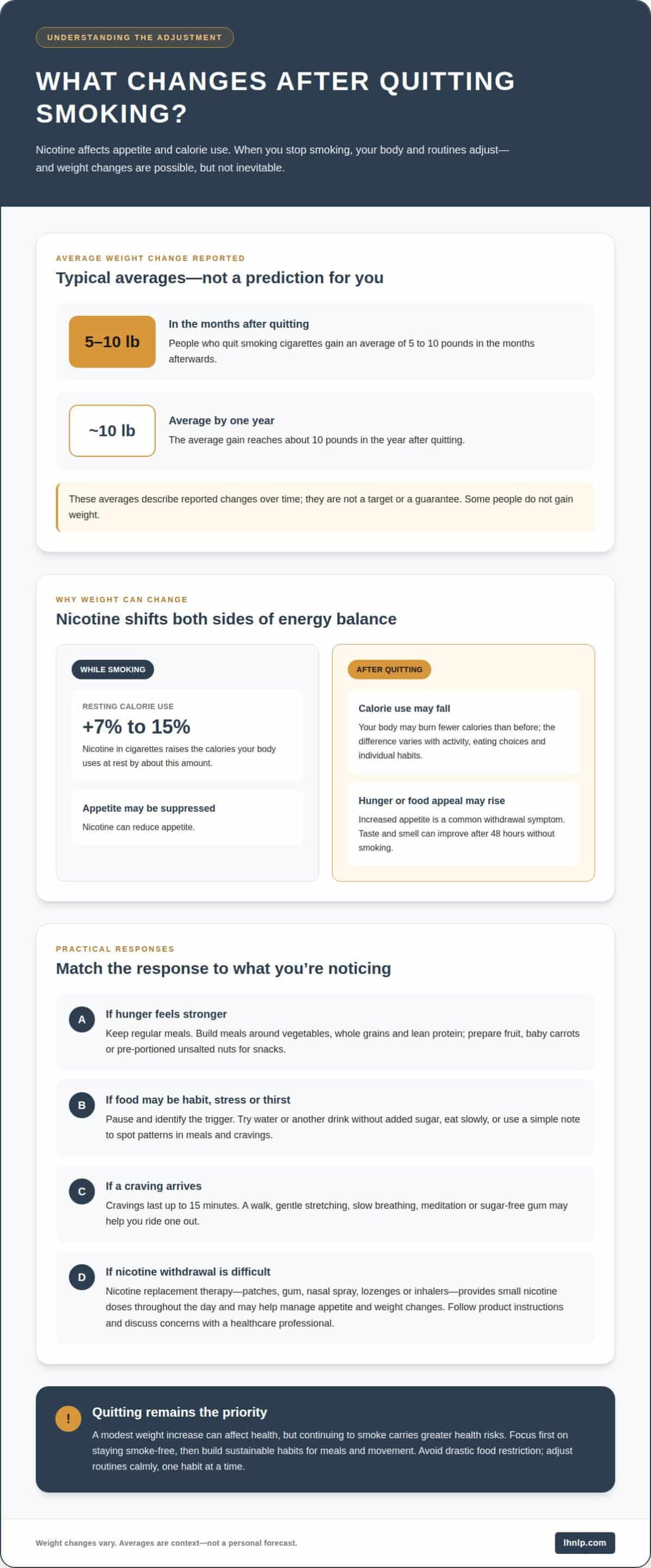
Quitting smoking can bring some weight gain, but it doesn’t happen to everyone. People who stop smoking cigarettes gain an average of 5 to 10 pounds in the months afterwards, with average gain reaching about 10 pounds in the year after quitting. Learning how to prevent weight gain after quitting smoking starts with understanding what changes, not blaming yourself for them.
It’s understandable to worry that a healthier choice for your lungs might affect your weight. Nicotine can suppress appetite and increase the calories your body uses at rest, so after quitting you may feel hungrier and burn fewer calories. Changes in taste and smell can also make food more appealing. This article explains how nicotine affects appetite and calorie use, what weight changes may follow, and practical ways to manage cravings, meals and activity. A little preparation can help you focus on becoming smoke-free while responding to your body with care.
Key Takeaways
- Plan balanced meals and ready-to-eat snacks so a sudden craving doesn’t automatically lead to less nourishing choices.
- Nicotine replacement therapy may help with appetite and calorie burning while you adjust to life without cigarettes.
- Notice whether you’re eating from hunger, habit or stress, then choose a response that fits the trigger.
- Understand how changes in taste, routine and activity can affect weight, and find manageable ways to support your wellbeing.
1. Will I gain weight?
Some people gain weight after quitting cigarettes, but it isn’t inevitable. Eating choices and activity both influence what happens. Plan meals before cravings arrive: include fruit, vegetables, whole grains and lean protein. Keep sliced apples, baby carrots or pre-portioned unsalted nuts ready. These give your hands something to do without turning every craving into a snack habit.
NHS stop-smoking support can help you plan and maintain a quit attempt. Weight-management advice can also address eating habits and activity during this transition. Ask for practical guidance on meals, cravings and movement as part of your support. Nicotine replacement therapy is available as patches, gum, nasal spray, lozenges or inhalers. Each provides small nicotine doses throughout the day.
Nicotine replacement therapy may help manage appetite and weight changes by reducing appetite and supporting calorie use. It doesn’t replace healthy routines, so pair it with planned meals and regular movement. Follow the product instructions and discuss any concerns with your healthcare professional.
Movement can support weight management and interrupt cravings. A 10-minute walk, gentle stretching or a short cycle ride can add activity without requiring a complicated plan. Cravings last up to 15 minutes, so walking or chewing sugar-free gum can help you ride one out. Choose an easy route or activity before the craving starts.
Stress can make cigarettes or food feel like quick relief. Try slow, deep breathing or meditation when tension rises; knitting, colouring or gardening can also keep your hands occupied. If stress repeatedly triggers cravings, note the situation and choose an alternative coping action. Small, repeatable steps make the change more manageable.
2. Nicotine’s effects on appetite and calorie burning
Nicotine can suppress appetite and increase energy use at rest. In cigarettes, it raises resting calorie use by about 7% to 15%. After quitting, your body may burn fewer calories than before. The difference varies with eating choices, activity and individual habits. Nicotine also affects appetite, so stopping can change both sides of energy balance.
Increased appetite is a common withdrawal symptom. Hunger may feel stronger as your body adjusts to being without nicotine. Taste and smell can improve after 48 hours without smoking, making familiar meals more appealing. Notice whether you want food because you’re hungry, or because a usual cigarette break has arrived. Naming the trigger helps you choose a response deliberately.
Portion awareness can help when your appetite feels unfamiliar. Start with a smaller serving, eat slowly, then pause before deciding whether to have more. Try eating at a table without your phone or television. This can make it easier to notice fullness and distinguish hunger from habit. Keep regular meals in your routine so intense hunger doesn’t drive rushed choices.
Thirst can sometimes feel like hunger. Have water or another drink without added sugar, then check whether you still want food. For a meal, combine vegetables, whole grains and lean protein. This offers a practical structure without treating every increase in appetite as a problem. A simple note of food and cravings can reveal patterns across the day.
Calorie use also depends on how active you are. If you already exercise, you may need longer or more frequent sessions after quitting. Increase movement in a manageable way, such as adding a walk to your usual routine. Focus on consistency rather than trying to compensate for every snack with exercise.
Nicotine can affect appetite and calorie use, but neither change dictates your choices. Use portion cues, planned meals and activity to build a new routine. If a craving arrives during a former smoking break, pause briefly and identify what you need: food, water, movement or another way to occupy your attention.
3. Average weight gain after quitting smoking
People who quit smoking cigarettes gain an average of 5 to 10 pounds in the months afterwards. The average reaches about 10 pounds in the year after quitting. These figures describe typical changes over different periods, not a weight target. Your own pattern reflects food choices, activity and how your routine changes after cigarettes stop.
Feeling hungrier? Increased appetite is a common withdrawal symptom, and smoking’s effect on calorie use also changes after quitting. These shifts can affect the scales, especially if cigarettes are replaced with frequent snacks. Looking at the overall pattern is more useful than judging one weigh-in. A salty meal, different clothing or weighing at another time can also affect a single reading.
Use a consistent approach to notice trends. Weigh yourself under similar conditions, then record the result alongside meals, cravings and activity. For example, note whether an afternoon snack follows hunger, boredom or a former cigarette break. This can show which routines are changing, rather than making every increase seem like a failure.
After quitting smoking, keep the priority clear: protect your progress away from cigarettes while building sustainable habits. Choose a planned snack instead of grazing, and add activity that fits your day, such as a walk after lunch. If your weight rises, review your routines calmly and adjust one habit at a time. Avoid drastic food restriction, which can make hunger harder to manage.
Seek medical advice if weight gain is rapid, continues despite changes, affects your wellbeing or worries you. A GP can discuss your health, eating patterns, activity and any other changes alongside your smoking cessation.
Weight changes don’t erase the value of quitting. The average provides context, while your own day-to-day choices offer useful information. Keeping a record of meals, movement and cravings can help you see what supports both smoke-free progress and weight management.
4. Why do people gain weight after quitting smoking?
The National Centre for Smoking Cessation and Training says most people gain some weight after quitting smoking. Several changes can contribute: appetite, food choices, cigarette-linked routines and activity levels. These factors may overlap, so the scales rarely point to a single cause. Understanding each one can help you respond without treating weight gain as a personal failure.
Food can become a substitute for smoking. A cigarette may have marked a coffee break, the journey home or a pause after work. Once the cue remains but the cigarette is gone, reaching for biscuits or crisps can fill the familiar gap. Notice when this happens. A short walk, sugar-free gum or a cup of tea can give that break a different shape.
Nicotine can suppress appetite, so hunger may become more noticeable after quitting. Food may also taste and smell more appealing as these senses improve. Together, these changes can make a usual portion feel less satisfying or prompt extra snacks. Plan meals and keep a satisfying option ready, such as fruit with yoghurt, rather than waiting until hunger feels urgent.
Stress and uncomfortable feelings can also make eating feel soothing. After a difficult conversation, for example, you might reach for food without feeling physically hungry. Pause and name what’s happening: hunger, stress, boredom or a craving. Then choose a response, such as drinking water, calling someone or taking a few slow breaths.
Daily movement may change too. A cigarette break can involve standing or walking, while staying indoors after quitting may reduce those small bursts of activity. Build movement into an existing routine, such as walking after lunch or taking the stairs. Regular activity supports calorie use and can ease stress, helping you replace old patterns with habits that serve your health.
London Hypnotherapy & NLP: Hypnotherapy for Weight Loss
London Hypnotherapy & NLP offers Hypnotherapy for Weight Loss for people who want to explore eating habits and the cues behind them. If stress, routine or cravings often lead you towards food, sessions can help you work towards more considered responses. Hypnotherapy for Smoking Cessation can also support your effort to remain smoke-free, while Hypnotherapy for Anxiety may be relevant if anxiety affects your eating or quitting experience.
This approach can complement practical habits such as planned meals and regular movement. It doesn’t replace medical advice about weight changes or smoking cessation. Consider support if you’re finding it difficult to change patterns alone or want help understanding what triggers them.
Contact London Hypnotherapy & NLP to discuss support that fits your goals.
Make your next step a sustainable one
Choose a next step small enough to repeat. Rather than trying to change every habit at once, focus on one pattern, such as eating in response to stress or returning to movement after a difficult day. A thoughtful approach to how to prevent weight gain after quitting smoking can support both smoke-free progress and a kinder relationship with food. Notice what helps, adjust what doesn’t, and focus on choices you can maintain.
Support can help when old routines feel difficult to shift alone. London Hypnotherapy & NLP offers Hypnotherapy for Weight Loss, Hypnotherapy for Smoking Cessation and Hypnotherapy for Anxiety. These services address different parts of the experience, from eating patterns to quitting and anxiety. Choose the support that fits the challenge you’re facing.
Contact London Hypnotherapy & NLP today to discuss your next step. You can move forward with patience, one considered choice at a time.
Frequently Asked Questions
Will I gain weight?
You may gain weight after quitting, but it isn’t inevitable. Your weight depends partly on how your food choices and daily activity change. For a practical starting point, notice when your usual cigarette breaks occurred and what now fills that time. This can help you identify a specific habit to adjust, such as eating automatically during a coffee break.
How much weight do people typically gain after stopping smoking, and over what period?
People who quit smoking cigarettes gain an average of 5 to 10 pounds in the months afterwards; the average is about 10 pounds in the year after quitting. These are averages across people and time periods, not a prediction for you. Focus on the direction of your own weight trend and the routines that may be influencing it.
What diet changes help prevent weight gain after quitting smoking?
A practical approach to how to prevent weight gain after quitting smoking is to build meals around fruit, vegetables, whole grains and lean protein, while limiting fried foods, fast food and foods high in added sugar. Plan what you’ll eat during a former smoking break rather than deciding when a craving is strongest. If you snack, serve a portion on a plate instead of eating from a packet.
Which exercise recommendations help manage weight after quitting smoking?
If you’re considering how to prevent weight gain after quitting smoking, choose regular movement that fits your routine. A brisk walk during part of your commute, taking the stairs or active household tasks can increase daily activity. If you already exercise, you may need longer or more frequent sessions after quitting. Increase activity gradually and choose something you can keep doing.
How can nicotine replacement therapy or stop-smoking medicines affect appetite and weight?
Nicotine replacement therapy may help manage appetite and weight changes by providing nicotine without continuing to smoke cigarettes. It can be used alongside practical routines, not as a substitute for balanced meals or activity. Discuss suitable stop-smoking medicine options with a healthcare professional, especially if you have questions about how a particular option may affect you.
Are e-cigarettes or nicotine products recommended to prevent weight gain when quitting smoking?
Nicotine products shouldn’t be treated as a weight-management plan. Nicotine replacement therapy may help with appetite or weight changes during quitting, but its purpose is to support stopping smoking. Don’t start or continue a nicotine product solely to control your weight. For help choosing a quit approach, discuss your options with a healthcare professional or NHS stop-smoking support.