
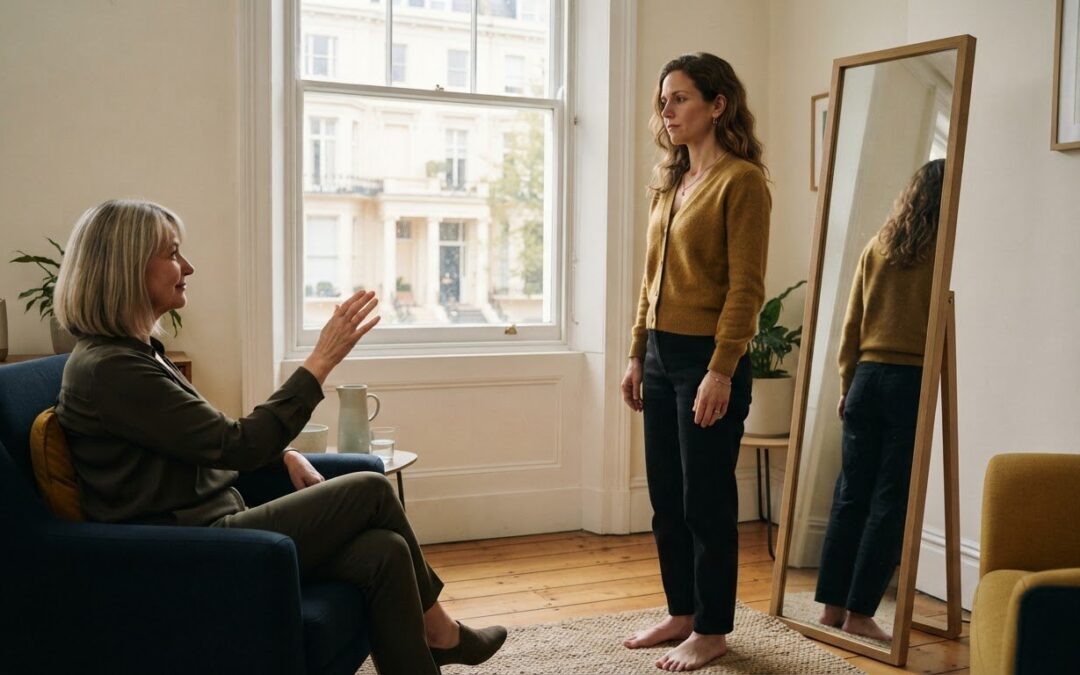
Your reflection is not the whole story. Body image includes the thoughts and feelings you have about your body; these can shift over time and may not match how you look. If you’re considering how to improve my body image, start by noticing those thoughts without treating them as facts. A practical answer to how to improve my body image is to practise self-acceptance while exploring what shapes your perceptions.
It’s understandable to compare your appearance with other people’s or focus on features you wish were different. But your worth isn’t measured by a reflection, photograph or clothing label. If you’re asking how to improve my body image, start by noticing how comparisons affect you and choosing small, steady ways to treat yourself with more kindness.
Key Takeaways
- Notice the thoughts and feelings that shape your body image, and remember they may not reflect how you actually look.
- Curate your social media feed by muting or unfollowing content that fuels comparison or self-criticism.
- Practise recognising qualities you value in yourself, and allow compliments to land without dismissing them.
- Shift attention from appearance alone to what your body helps you experience, do and enjoy.
1. What Does Body Image Mean?
Body image describes your thoughts and feelings about your body. It can be positive or negative, shift over time and differ from how you actually look. These feelings can affect self-esteem, self-acceptance, eating and exercise. Body-image concerns can affect people at any age and may influence mental health. Pay attention when they begin shaping everyday choices.
Parents and friends can help by listening without criticising someone’s appearance or rushing to offer fixes. Praise qualities unrelated to looks, such as kindness or persistence, and invite the person to talk about how they feel. If body-image stress is difficult to manage, bullying is involved or someone feels pressured into drastic decisions, encourage them to speak with a trusted person or health professional.
Consider professional support when distress about appearance disrupts daily life or affects eating, relationships or wellbeing. Negative body image can occur alongside an eating disorder, but it doesn’t establish a diagnosis. A persistent, distressing preoccupation with perceived appearance flaws also warrants discussion with a health professional, who can assess whether body dysmorphic disorder or another concern may be involved. Beat’s Helpline supports people of all ages affected by an eating disorder in the UK.
In the UK, a GP or other health professional can assess the concern and help identify suitable individual or group support. If body-image distress disrupts daily life, describe one concrete example, such as avoiding meals, social events or photographs because of appearance worries. This can help explain what is happening and what kind of support may be useful.
For medical help and advice that isn’t a life-threatening emergency, call 111, according to the NHS. Call 999 for a life-threatening emergency. For emotional support in the UK, Samaritans can be called on 116 123, 24 hours a day. Outside the UK, contact a local health professional or crisis service; use your local emergency number if someone faces immediate danger.
2. Social media and appearance comparisons
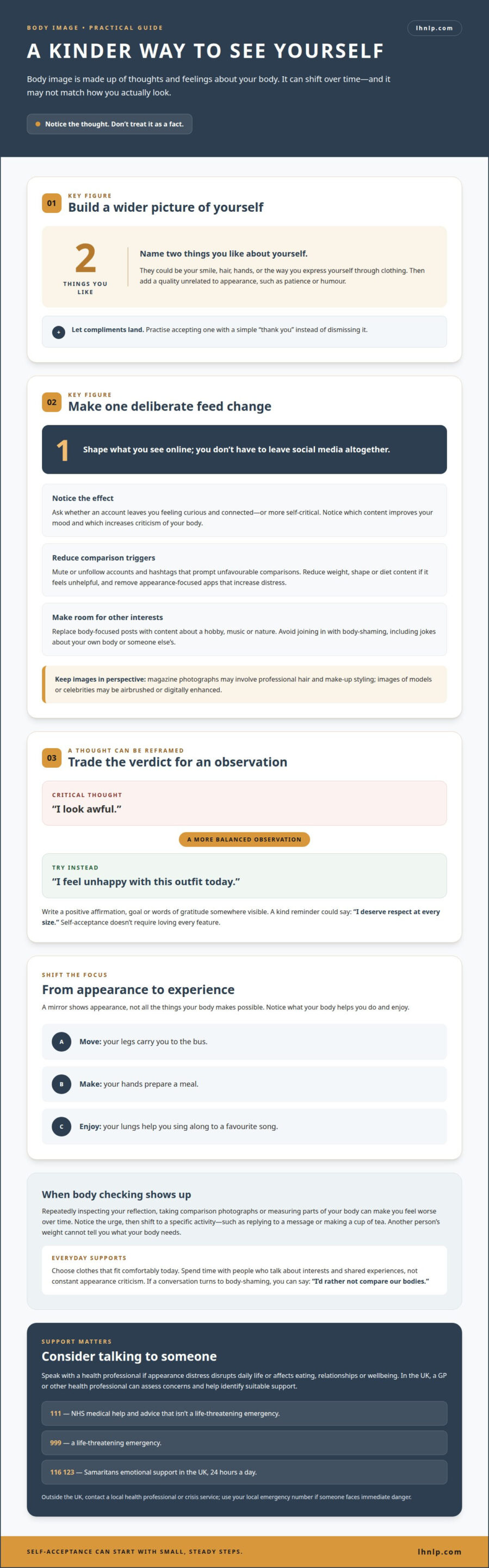
A social media feed can quietly become a measuring stick. A polished photograph may invite comparisons about weight, shape or skin, even though it shows only one selected moment. Notice how you feel as you scroll: does a particular account leave you curious and connected, or more self-critical? NHS inform recommends noticing which content improves your mood and which increases criticism of your body. That gives you a practical place to begin.
Make one deliberate change to your feed. Mute or unfollow accounts and hashtags that prompt unfavourable comparisons, and reduce weight, shape or diet content on your phone if it feels unhelpful. Review apps that focus your attention on appearance, then remove any that increase distress. You don’t have to leave social media altogether; the aim is to shape what you see. For example, replace a stream of body-focused posts with accounts about a hobby, music or nature.
Images can also create an unfair standard. Magazine photographs may involve hours of professional hair and make-up styling, while images of models or celebrities may be airbrushed or digitally enhanced. Repeated messages that equate youth and slimness with beauty can affect how people feel about themselves. Mean comments about someone’s appearance can also damage body image. Avoid joining in with body-shaming, including jokes about your own body or someone else’s.
Pay attention to body checking, too. Repeatedly inspecting your reflection, taking comparison photographs or measuring parts of your body may seem like a way to gain certainty, but NHS inform says these habits can make you feel worse over time. Notice the urge, then shift to a specific activity, such as replying to a message or making a cup of tea. Avoid comparing your weight with someone else’s: bodies differ, and another person’s number cannot tell you what your body needs. Small changes to your online habits can give your attention more room to rest.
3. Finding things to like about your looks
Start with a small, specific exercise rather than demanding instant confidence. NHS inform recommends naming 2 things you like about yourself. They might be your smile, hair, hands or the way you express yourself through clothing. Write each one down, then add a quality unrelated to appearance, such as patience or humour. This widens the picture you hold of yourself.
When critical thoughts arise, notice them without treating them as a verdict. Replace “I look awful” with a more balanced observation, such as “I feel unhappy with this outfit today”. NHS inform recommends writing positive affirmations, goals or words of gratitude somewhere visible. A note by your mirror could say, “I deserve respect at every size.” Accepting yourself now doesn’t mean you must love every feature; it means your worth needn’t wait for your body to change.
Making peace with your current size can begin by choosing clothes that fit comfortably today, rather than keeping uncomfortable items as pressure to change. A clothing label is not a measure of character or value. Body shape, including height, muscle and bone structure, is influenced by genes. You can acknowledge a wish to change while treating your present body with care. If weight concerns affect your health, speak with a doctor before changing your diet.
Notice which people and places make self-acceptance easier. Spend time with friends who discuss interests, ideas and shared experiences, not constant criticism of appearance. If a conversation turns into body-shaming, say, “I’d rather not compare our bodies,” then change the subject. Practical steps can support body image and self-esteem: name 2 valued qualities, keep a kind reminder visible, and accept a compliment with a simple “thank you”. These small practices help your attention make room for more than appearance.
4. Appreciating what your body can do
A mirror tends to show appearance, not the work your body makes possible. NHS inform recommends shifting attention towards what your body can do. Notice practical moments: your legs carry you to the bus, your hands prepare a meal, or your lungs help you sing along to a favourite song. Naming these functions can widen the way you see yourself, without requiring you to feel confident about every feature.
Choose movement for the experience, not as punishment for how you look. A walk through a local London park, dancing at home or gentle yoga can help you notice how your body feels and moves. Enjoyable activity can support body image, mood and stress, while exercise shouldn’t become excessive. Light exercise and yoga have also been shown to help with mental health issues. Let comfort, enjoyment and your own needs guide the activity.
Set goals around wellbeing rather than fixing a disliked feature. For example, you might walk because fresh air helps you unwind, or practise yoga to feel more connected to your breathing. These intentions keep the focus on lived experience, rather than a changing reflection or a number on the scales. If movement leaves you feeling driven to push past your limits, pause and reconsider what the activity is meant to support.
Try a brief daily reflection: write down one thing your body helped you do, however ordinary it seems. Perhaps it let you hug a friend, finish a task or rest after a demanding day. Over time, this practice can give your attention a fuller picture than appearance alone. If building self-belief feels difficult, explore Confidence Building Sessions as a way to work on confidence alongside these everyday shifts.
London Hypnotherapy & NLP
London Hypnotherapy & NLP offers NLP Coaching and Hypnotherapy for Anxiety for people seeking support with unhelpful thought patterns or anxiety affecting their confidence. If appearance concerns are taking up significant mental space, personalised sessions can help you explore the feelings and habits connected with them and work towards more supportive responses. This may be a useful next step when self-guided changes feel difficult to sustain; it isn’t a substitute for medical assessment or eating-disorder care when those are needed.
You can discuss what you’re experiencing and whether this support feels relevant to your goals. To explore the next step, contact London Hypnotherapy & NLP.
Let self-acceptance shape your next step
Learning how to improve my body image can begin with a different kind of progress: treating yourself with respect while confidence grows. In daily life, choose one response that feels kinder and more grounded than self-criticism. You don’t need to feel positive about every feature before making choices that support your wellbeing.
Let your next step reflect what matters to you, rather than pressure to meet someone else’s standard. If you’d like support exploring the thoughts and feelings behind your goals, London Hypnotherapy & NLP offers Hypnotherapy for Anxiety, Hypnotherapy for Weight Loss and Hypnotherapy for Smoking Cessation. These are distinct areas of support; consider which, if any, relates to your needs.
Contact London Hypnotherapy & NLP to discuss your next step. Change can begin with one thoughtful decision, made with care for yourself.
Frequently Asked Questions
What Does Body Image Mean?
Body image is your personal experience of having a body, including the meaning you attach to its appearance and presence. It can shape choices such as joining a swimming trip, accepting a photograph or wearing a particular outfit. Two people can look similar yet feel very differently about their bodies. Noticing where these feelings affect your decisions can help you understand what support or changes might be useful.
How Can I Accept the Way I Look?
Acceptance can begin with making room for your appearance as it is today, without requiring yourself to feel delighted by every feature. For example, choose an outfit that lets you attend a gathering comfortably, rather than waiting to feel different first. You can also ask what you’d say to someone you care about in the same situation, then offer yourself the same respect and consideration.
How Can I Take Care of My Body?
Care for your body through steady, nourishing routines rather than punishment or rigid rules. Regular meals with a balance of nutrients can support health and mood; taking time to enjoy your food can make eating feel less rushed. Protect your sleep by winding down before bed, and choose everyday movement that feels manageable. If you’re considering a diet change because of weight concerns, discuss it with a doctor first.
What does a healthy body image mean?
A healthy body image doesn’t require constant satisfaction with your appearance. It means your view of your body can include its needs, abilities and place in your life, rather than letting appearance decide your worth. You may still have moments of discomfort. A useful sign of balance is being able to continue with meaningful activities, such as seeing friends or pursuing a hobby, without appearance worries taking over.
How can I reduce negative self-talk about my body?
Try catching a harsh thought and identifying it as a thought, not a fact. Then ask whether it’s fair, useful or based on one difficult moment, such as disliking a photograph. You might replace “I can’t go out looking like this” with “I feel uncomfortable, but I can still choose whether to go.” If self-criticism becomes relentless or disrupts daily life, talk with someone you trust or a health professional.
How does social media affect body image, and how can I manage its impact?
Social media can repeatedly show appearance-focused posts, making a narrow standard seem more common than it is. Set a boundary that fits your routine, such as keeping your phone away during meals or before bed. After scrolling, notice whether your mood has shifted and choose a grounding activity, such as chatting with a friend or returning to a hobby. If an app consistently leaves you distressed, take a break from it.