

What if the hardest part of being alone isn’t the silence, but the thoughts or feelings that arrive with it? If “fear of being alone therapy London” is the phrase that brought you here, you may know how quickly unease can become dread, repeated checking or an urgent need for reassurance. That experience deserves curiosity, not a label chosen in haste.
It can be hard to know whether your fear is linked to separation-related anxiety, a phobia, past experiences or something else. You don’t have to work that out alone or self-diagnose before seeking support. A useful starting point is to consider what being alone means for you and what kind of help feels appropriate.
This guide explores possible patterns beneath the fear, compares counselling, CBT and hypnotherapy, and suggests questions to ask before choosing a practitioner. It also covers practical points to weigh when choosing between in-person support in London and online sessions. The aim is to help you take a considered next step at a pace that feels right for you.
Key Takeaways
- Notice how distress, avoidance or reassurance-seeking around time alone affects your everyday choices. You can explore these patterns without self-diagnosing.
- Fear of being alone therapy London should begin with your experience and goals, rather than an assumption that one approach suits everyone.
- Compare support by its aims, session structure, practitioner training and whether the approach feels right for you. CBT is one option to ask a suitably qualified professional about.
- Before choosing a therapist, clarify what you want help with, check relevant credentials and scope, and ask how they would approach your concern.
- London Hypnotherapy & NLP offers one-to-one hypnotherapy and NLP sessions of approximately 50 to 60 minutes to enquire about, with in-person and virtual appointment options.
What does fear of being alone feel like, and when might therapy in London help?
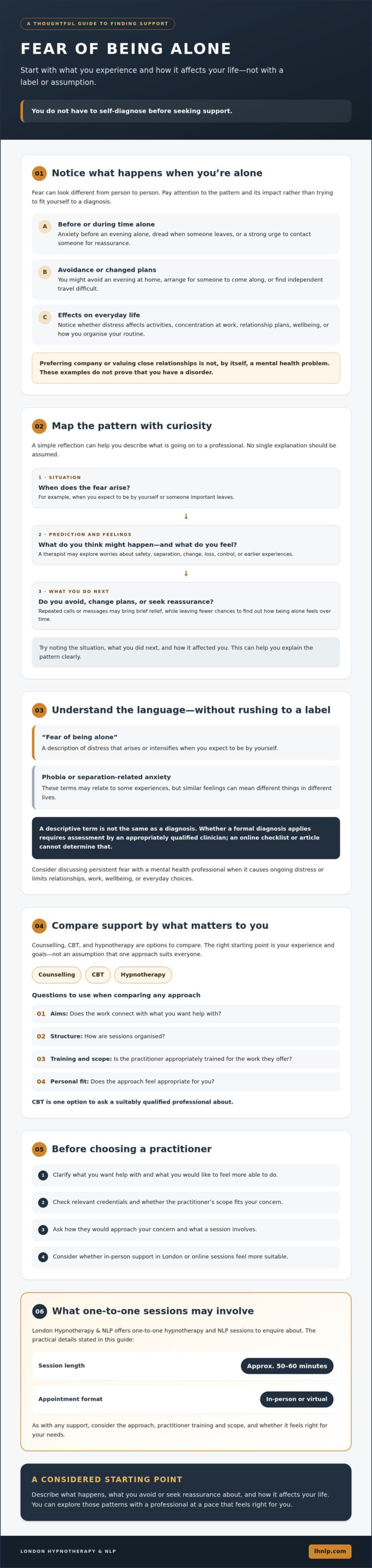
Fear of being alone describes distress that arises, or intensifies, when you expect to be by yourself. It might feel like anxiety before an evening alone, dread when someone leaves or a strong urge to contact another person for reassurance. The experience varies from person to person. Preferring company or valuing close relationships is not, by itself, a mental health problem.
You may see the phrase Autophobia used for fear of being alone, but a descriptive term is not the same as a diagnosis. Similar feelings can have different meanings in different lives. If you’re exploring fear of being alone therapy London, focus first on what happens for you and how much it affects your choices, rather than trying to fit yourself to a label.
A short reflection on solitude, loneliness and personal growth may offer another perspective:
How can fear of being alone affect everyday life?
For one person, unease may be uncomfortable but manageable. For another, it may mean avoiding an evening at home, changing plans so someone can come along or finding independent travel difficult. Repeatedly calling or messaging for reassurance can bring brief relief, but leave little room to discover how being alone feels over time. These examples don’t prove that you have a disorder.
Instead, notice the impact. Are you missing activities, struggling to concentrate at work, changing relationship plans or organising your routine around avoiding solitude? Writing down the situations that trigger distress, what you do next and how it affects you can help you describe the pattern clearly to a professional.
Is fear of being alone the same as a phobia or separation anxiety?
Not necessarily. Fear may relate to worries about safety, separation from someone important, previous experiences or other concerns. “Phobia” and “separation anxiety” can describe relevant experiences, but deciding whether a formal diagnosis applies requires assessment by an appropriately qualified clinician. An online checklist or article cannot make that determination.
Persistent fear may be worth discussing with a mental health professional when it causes ongoing distress or limits your relationships, work, wellbeing or everyday choices. You can begin by explaining what you avoid, what reassurance you seek and what you would like to feel more able to do. You don’t need to arrive with a diagnosis.
What may sit beneath fear of being alone, and how can therapy explore it?
There isn’t one explanation for fear of being alone. A therapist might gently ask whether the fear appears after a change or loss, during relationship uncertainty, or when you feel less safe or in control. They may also explore whether it connects with current pressures, earlier experiences or a particular worry about what could happen while you’re alone. These are questions to explore, not assumptions about the cause.
Some responses are attempts to feel safer. You might avoid plans that involve time alone or contact someone repeatedly for reassurance. That contact can bring relief in the moment, but if it becomes the only way to settle, the fear may stay prominent and there may be fewer chances to find out what you can manage. This isn’t a reason to blame yourself; it’s a pattern worth understanding.
In fear of being alone therapy London, the focus should be on understanding your particular experience, not imposing a ready-made explanation. Support should be informed by your individual circumstances rather than assumptions based on a label.
What patterns can a therapist help you notice?
It may help to observe the sequence: when does the fear arise, what do you predict will happen, what feelings or sensations follow, and what do you do next? For example, you might cancel an evening plan, keep a conversation going to avoid being alone or seek repeated confirmation that someone will be available. These are possible patterns, not a checklist or proof of a disorder.
Try noting what happened with curiosity rather than criticism. “I felt unsafe when plans changed” offers more useful information than “I’m being irrational.” A compassionate account can help you and a therapist identify what you need and what you might want to approach differently.
What happens when a therapist explores the fear with you?
An initial discussion may cover your personal context, what tends to trigger the fear, how you currently cope and what you hope will change. You can ask how the practitioner would work, what an approach involves and how you’ll agree on a manageable pace. You don’t have to share more than feels appropriate or accept a method before your questions have been heard.
Exploration doesn’t mean searching for a single hidden memory or cause. It means making sense of how thoughts, feelings and responses fit together in your life. The NHS outlines free talking therapies like cognitive behavioural therapy (CBT) on the NHS among support options related to loneliness. If you’re considering private support, you can ask London Hypnotherapy & NLP whether its services may be appropriate for your concern.
Which therapy options for fear of being alone should you compare in London?
Choosing support is less about finding a universally “best” therapy and more about finding an approach that fits your needs, preferences and circumstances. For fear of being alone therapy London, compare what sessions involve, what goals they work towards, how the practitioner is trained and whether you feel listened to. You can also ask whether the approach is suitable for the level of distress you’re experiencing.
Counselling or psychotherapy may offer space to explore feelings and personal context through conversation. Cognitive behavioural therapy (CBT) often takes a more structured approach, helping people examine links between thoughts, feelings and actions. It may include skills or practice between sessions, depending on the practitioner. For broader information, see the practice’s anxiety and phobia treatment options.
How might counselling or CBT differ from hypnotherapy?
Counselling sessions may centre on talking through your experiences and what they mean to you. CBT may focus on identifying patterns and trying practical strategies. Hypnotherapy can involve guided techniques, while NLP coaching may use structured exercises to explore thoughts, language or responses. These are general descriptions, and practitioners may adapt or combine approaches. Hypnotherapy or NLP may not suit everyone, so discuss your circumstances and goals before deciding. No approach should be presented as a guaranteed solution.
Consider what feels manageable: would you prefer a reflective conversation, a structured plan or guided techniques? Ask how a practitioner might adapt their method to goals such as feeling more at ease during time alone or relying less on reassurance. If you have concerns about hypnosis, raise them before agreeing to any technique.
What questions help you judge whether an approach fits?
A first conversation can help you understand what you’re agreeing to. Ask clear questions and notice whether the answers feel respectful and specific to your needs:
- What happens in an initial session, and how would we agree on goals?
- How do you review progress and decide whether the approach remains useful?
- What training and experience do you have that are relevant to this concern?
- What are the boundaries of your service, and when might another type of support be more appropriate?
- Can you explain any technique before using it, and adapt the work if I feel uncomfortable?
A suitable practitioner should be able to explain their approach without promising a particular outcome. Take time to compare your options. Feeling informed and able to ask questions is part of choosing well.
Choosing a therapist for fear of being alone in London
A thoughtful choice can make support feel more approachable. Start by clarifying what you’d like help with, such as understanding your triggers or feeling more able to spend time alone. Then check the practitioner’s relevant training and experience, ask how they work, and consider whether their answers leave you feeling respected and able to speak openly. A good fit matters, as does clarity about what the service can and can’t offer.
Check credentials and professional scope rather than relying on a title alone. Depending on the practitioner’s role, you may be able to verify registration through a relevant professional register, such as the BACP, UKCP or HCPC. Ask what their qualifications cover and whether they have experience with concerns like yours. Registration doesn’t guarantee a particular outcome, but checking it can help you make a more informed decision.
What should you ask before arranging a first appointment?
Before booking, ask whether the practitioner works with concerns like yours and how they decide if their approach is suitable. Find out what a first session involves, how confidentiality works and what techniques might be used. You can also ask how goals are agreed and reviewed. Confirm the fee and cancellation terms directly, so you understand the practical arrangements before committing.
Should you choose in-person therapy in London or online sessions?
Consider what would help you feel settled and able to focus. In-person appointments may suit you if travelling feels manageable. Online sessions may reduce travel and fit more easily around your routine, but you’ll need a private space and a reliable connection. Neither format is automatically better. Think about accessibility, privacy and personal comfort, then ask what’s currently available.
London Hypnotherapy & NLP lists in-person appointments at Harley Street, Ealing and Tokenhouse Yard, as well as virtual sessions through Zoom and Skype. Confirm current availability and arrangements before making plans. You can review the details of its online hypnotherapy services. For related reading, look for the practice’s London phobia-treatment guide and FAQs, and check whether the practitioner accepts enquiries about fear of being alone specifically.
Choosing fear of being alone therapy London isn’t about finding a perfect promise. It’s about finding support whose approach, boundaries and practical format make sense for you. If you’d like to ask whether the practice’s services may be suitable, contact London Hypnotherapy & NLP with an enquiry.
What can you expect from fear of being alone therapy with London Hypnotherapy & NLP?
London Hypnotherapy & NLP offers one-to-one hypnotherapy and NLP sessions that you can enquire about as possible options for your concerns. They aren’t a guaranteed fit or a specialist treatment for fear of being alone, so start by discussing what you’re experiencing and whether the practitioner’s approach is appropriate. No particular outcome or number of sessions can be promised.
Sessions last approximately 50 to 60 minutes. The practice lists in-person appointments in London and virtual consultations through Zoom and Skype. Because locations and arrangements can change, confirm current availability directly before planning a visit or choosing an online appointment.
How can a first enquiry establish whether the service is suitable?
You don’t need to explain everything at once. A brief description can open the conversation: what being alone brings up, how you respond and whether it affects your routines or relationships. You can ask what approach might be considered, how suitability is assessed and what the practitioner can reasonably support. This helps you make an informed decision without assuming hypnotherapy or NLP is necessarily the right route.
It’s also reasonable to ask what happens if your needs fall outside the practitioner’s scope. A practitioner should be able to discuss that boundary and whether another professional or service may be more appropriate. The aim is to find support that fits, not to commit to a particular method.
How can you take a low-pressure next step in London?
Before contacting the practice, you might write down a few questions so you can compare the practical details clearly:
- Does the practitioner currently work with people seeking help with this concern?
- What would the sessions involve, and how would we agree on goals?
- Are in-person appointments currently available at Harley Street, Ealing or Tokenhouse Yard?
- Are virtual sessions available through Zoom or Skype, and what arrangements should I know about?
- What are the session fee, cancellation terms and booking arrangements?
The practice lists these locations and online options, but current availability should be confirmed. If you’re exploring fear of being alone therapy London, an enquiry can simply help you understand the approach and practical arrangements. You don’t need to have every answer before you ask. If you’d like to discuss your goals and whether the service may be suitable, contact London Hypnotherapy & NLP at your own pace.
Take a considered step towards feeling more at ease
Fear of being alone can mean different things to different people. Rather than relying on a label, notice how the fear affects your choices and what you hope might change. Support options also differ, so compare their approach, practitioner training, session structure and how comfortable you feel asking questions.
If you’re exploring fear of being alone therapy London, London Hypnotherapy & NLP offers one-to-one hypnotherapy and NLP sessions to enquire about, though suitability depends on your needs. Sessions are approximately 50 to 60 minutes. The practice lists in-person London appointments and virtual consultations through Zoom and Skype. Confirm current availability and arrangements before deciding.
An initial enquiry can give you a chance to discuss your goals, ask how the practitioner works and establish whether the service may be a suitable fit. You don’t need to have everything figured out first. You can learn more about London Hypnotherapy & NLP before deciding whether to make an enquiry.
A thoughtful next step, taken at your own pace, can help you move towards a clearer understanding of what you need.
Frequently Asked Questions
Can therapy help with fear of being alone?
Therapy can offer space to understand what being alone brings up and how you respond, then consider ways to manage distress that fit your needs. The aim isn’t to assume a cause or impose a label. If fear is limiting your relationships, work or daily routines, you could discuss it with a mental health professional. The right support depends on your circumstances and the practitioner’s scope.
Is fear of being alone the same as autophobia?
Autophobia is a term commonly used to describe a fear of being alone, but seeing the term doesn’t mean you have a formal diagnosis. Similar feelings can arise for different reasons, and an online article can’t determine what applies to you. A suitably qualified clinician can assess your experience if a diagnosis is relevant. You can seek help to discuss the distress without first deciding which label fits.
What type of therapy is best for fear of being alone?
There isn’t one approach that’s best for everyone. Counselling or psychotherapy may provide space to explore personal context, while cognitive behavioural therapy (CBT) may focus on links between thoughts, feelings and actions, sometimes using practical exercises. Ask a suitably qualified professional what sessions involve, how goals are set and reviewed, and whether their approach fits your preferences. Your individual needs should guide the choice.
Can hypnotherapy help with fear of being alone?
Hypnotherapy may be an option to discuss, but suitability depends on your needs, and no particular outcome should be assumed. London Hypnotherapy & NLP offers one-to-one hypnotherapy and NLP sessions, including support for anxiety and phobias. Ask whether the practitioner works with this specific concern and how they would approach it. Raise any questions or discomfort about hypnosis before deciding, and consider other support if it better fits your needs.
How do I find a therapist for fear of being alone in London?
Start by clarifying what you want help with, then check the practitioner’s relevant training, experience and professional registration where applicable. You can check suitable registers, such as those of BACP, UKCP or HCPC, and ask how the practitioner would work with your concern. Discuss session format, confidentiality, fees and cancellation terms before booking. For fear of being alone therapy London, personal fit and clear boundaries matter as much as approach.
Can I have therapy online instead of in person in London?
Yes, online sessions may be an alternative to travelling to an appointment, provided the format suits your needs and you have a private space. London Hypnotherapy & NLP lists virtual consultations through Zoom and Skype, as well as in-person appointments in London. Confirm current availability and practical arrangements directly. Compare privacy, accessibility, travel and comfort before choosing. Neither online nor in-person support is automatically right for everyone.
When should I seek urgent mental health support?
Seek urgent help if you feel unable to keep yourself or someone else safe, or your distress becomes overwhelming. If there’s immediate danger, call 999 or go to A&E. In England, you can call NHS 111 and select the mental health option for urgent mental health support. If it’s not an emergency but you’re struggling, contact your GP or NHS 111 to discuss what help is available.