

Confidence isn’t something you either have or lack. It’s a capacity you can strengthen through practice. If self-doubt makes a meeting, presentation or social occasion feel daunting, you may be wondering whether hypnotherapy could help and whether you’d remain in control. When researching hypnotherapy for confidence London, consider whether the approach could help you work towards a specific goal, rather than expecting an instant transformation.
Confidence-focused hypnotherapy may help you explore patterns of thought and feeling, then connect that reflection with practical steps outside the session. You won’t be made to do anything against your wishes. This article explains how hypnotherapy and NLP may relate to individual goals, what a session might involve and how to decide whether the approach feels right for you. It also covers practical options, including in-person appointments in London and virtual consultations, so you can consider your next step without pressure to commit.
Key Takeaways
- Identify the specific work, social or performance situation where you’d like to feel more confident, then set a practical goal you can revisit.
- Understand how focused attention and guided relaxation differ from sleep or mind control, and ask how NLP may relate to your goal.
- When exploring hypnotherapy for confidence London, ask how sessions are tailored, how progress is reviewed and what happens if an approach doesn’t feel suitable.
- Use the questions in this article to decide whether confidence-building support feels right for you, without expecting an instant or guaranteed change.
Hypnotherapy for Confidence in London: What Does It Aim to Change?
Confidence-focused hypnotherapy is goal-led support that explores how you respond in a particular situation and helps you work towards a personal change. It is not a clinical diagnosis, personality makeover or guaranteed cure. The aim isn’t to become fearless in every part of life. It’s to identify what gets in the way in a situation that matters to you, then consider how you might respond differently.
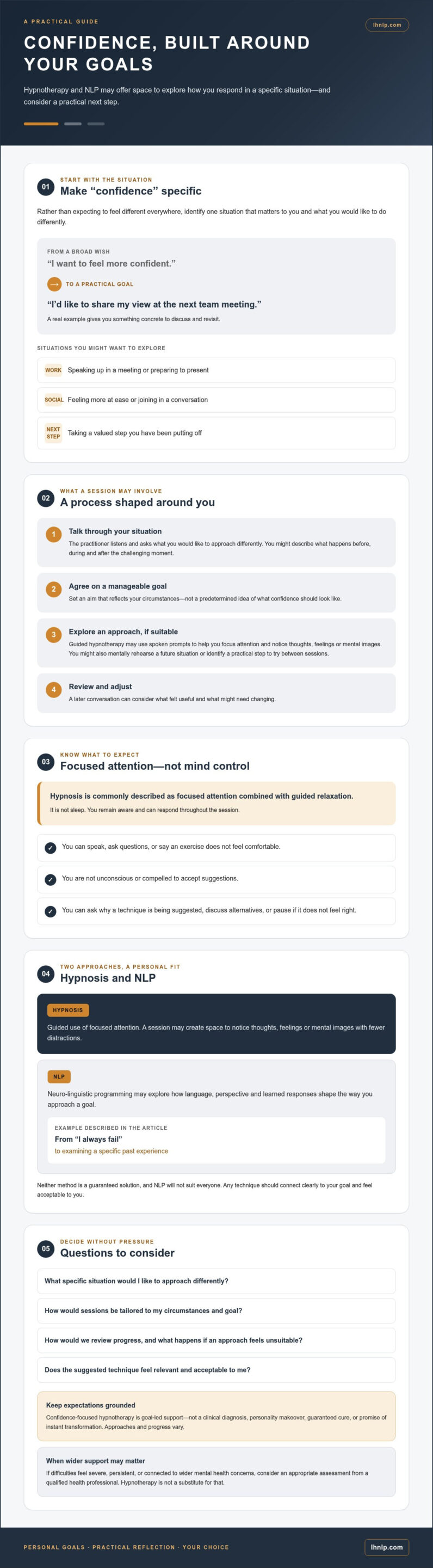
A specific goal gives the work a practical starting point. “I want to feel more confident” can be difficult to assess. “I’d like to share my view at the next team meeting” describes a particular situation and action, making it easier to reflect on what progress might look like. Hypnotherapy is a broad practice with different approaches and applications. What is Hypnotherapy? offers background on the subject. Any confidence work should be shaped around your circumstances.
What can low confidence look like in everyday life?
Self-doubt might lead you to stay quiet in meetings even when you have something useful to contribute, avoid an important conversation, turn down a chance to present or delay a decision because you fear getting it wrong. In social situations, you might rehearse what to say so much that it becomes harder to join in. Instead of asking “What’s wrong with me?”, try noticing what happens for you in that situation.
Occasional uncertainty is part of being human and doesn’t automatically indicate a mental health condition. Notice the situation, the thoughts that arise and what you do next, without judging yourself. This can help turn a general concern into a goal you can discuss and revisit.
Which confidence goals can a London hypnotherapist explore?
Possible goals include speaking up at work, feeling more at ease socially, preparing to give a presentation or taking a valued step you’ve been putting off. Make the goal specific to your life: what would you like to do, in which situation, and what would count as a small sign of progress? Confidence doesn’t have to mean being outgoing or assertive in the same way as someone else.
If you’re seeking hypnotherapy for confidence London, you can start with a real example instead of a broad expectation that you should feel different everywhere. London Hypnotherapy & NLP lists individual Confidence Building Sessions, where you can discuss your circumstances and aims. The purpose is to explore what may suit you, not to promise a particular result.
How Can Hypnotherapy and NLP Support Confidence?
Hypnosis isn’t sleep or a state in which someone else takes control. It’s commonly described as focused attention combined with guided relaxation, giving you space to notice thoughts, feelings or mental images with fewer distractions. You remain aware and can respond throughout. For a medical overview of hypnosis and what a session may involve, see the Mayo Clinic’s guide to hypnosis.
What happens during a confidence-focused session?
A practitioner would first listen to what’s troubling you and ask what you’d like to approach differently. You might describe what tends to happen before, during and after a challenging situation, then agree on a relevant, manageable goal. This conversation helps shape the session around your needs rather than a predetermined idea of what confidence should look like.
If guided hypnotherapy is used, the practitioner may invite you to settle your attention and follow spoken prompts. You aren’t unconscious or compelled to accept suggestions. You can speak, ask questions or say that an exercise doesn’t feel comfortable. Depending on your aims, the session might explore a different way of responding, mentally rehearse a future situation or identify a practical step to try between sessions. A later conversation can review what felt useful and what might need adjusting.
How might hypnosis and NLP fit together?
Hypnosis generally refers to the guided use of focused attention. NLP, or neuro-linguistic programming, may involve exploring how language, perspective and learned responses shape the way you approach a goal. For example, a practitioner might help you move from “I always fail” to a more specific description of a past experience that you can examine. Neither method is a guaranteed solution, and NLP won’t suit everyone.
Any technique should have a clear connection to your goal and feel acceptable to you. Ask why it’s being suggested, discuss alternatives or pause if it doesn’t feel right. Approaches and progress vary, so a session shouldn’t promise a fixed result. If your difficulties feel severe, persistent or connected to wider mental health concerns, consider seeking an appropriate assessment from a qualified health professional. Hypnotherapy isn’t a substitute for that.
If you’re considering hypnotherapy for confidence London, learn about the methods a practitioner may use before deciding what suits you. You can explore available hypnotherapy and coaching treatments to prepare questions about the approach and how it might relate to your aims.
Does Hypnotherapy for Confidence Work? Is It Right for You?
Hypnotherapy may be worth exploring if you have a clear confidence goal and feel comfortable with the practitioner’s approach. It isn’t a magic switch, and no method can promise the same result for everyone. Progress may depend on your circumstances, what you hope to change and whether the work feels useful. A realistic aim could be to explore a challenging situation and practise responding differently, rather than expecting to feel confident in every part of life.
Can hypnotherapy make you lose control?
No. Hypnosis doesn’t mean giving up your will or being compelled to do something. You remain aware, can respond to the practitioner and can choose whether to engage with a suggestion. It isn’t the stage-show stereotype of someone being controlled for entertainment. If you’re unsure, ask what techniques the practitioner uses, how they check your comfort and what you can do if you want to pause or decline an exercise.
How can you tell whether this approach fits your needs?
Start by identifying the situation you’d like to approach differently and a realistic sign of progress. Before deciding, discuss your expectations, ask how the work will be tailored and mention any relevant support you already have in place. You should feel able to raise concerns without being pushed towards a particular choice.
It also helps to distinguish a personal development goal from distress that may need assessment. Wanting to contribute more in a meeting is a specific confidence aim. Severe or persistent distress, or difficulties affecting several areas of life, are reasons to speak with an appropriate healthcare professional. Hypnotherapy should not replace assessment or care when those are needed.
These approaches can have different emphases, and none is universally best. Use the comparison below to decide what you might ask about:
Hypnotherapy: May use guided attention to explore responses and consider alternatives related to a confidence goal.
NLP-informed work: May explore language, perspective or learned responses, depending on the practitioner’s approach and your preferences.
Coaching goals: May focus on clarifying an aim and identifying practical steps towards it.
If you’re considering hypnotherapy for confidence London, use an initial discussion to explain the situation you want help with and ask whether the proposed approach seems appropriate. A thoughtful practitioner should be able to explain the process and its limits, while leaving you free to decide whether to proceed.
How to Choose a Confidence Hypnotherapist in London
Choosing someone to work with is a personal decision. Look for a practitioner who explains their approach clearly, listens to your priorities and gives you room to decide. If you’re researching hypnotherapy for confidence London, this checklist can help you compare your options.
- Define your goal. Name the situation you want to approach differently and a small, observable sign of progress.
- Ask about the approach. Find out what a session involves, how techniques relate to your goal and how the practitioner adapts the work to individual needs.
- Discuss fit. Raise questions or concerns. Ask how progress is reviewed and what happens if an exercise or approach doesn’t feel suitable.
- Decide without pressure. Consider whether the conversation felt respectful, clear and relevant before choosing whether to proceed.
What should you ask before booking?
Ask how the practitioner works with confidence goals and what to expect in a session. You might also ask how to raise discomfort, whether you can pause or decline a technique, and how you’ll review whether the work is helping you move towards your stated aim.
Check relevant training and professional memberships directly, and verify any specific credentials or registration claims rather than relying on vague assurances. You can also read about the practitioner on the About Us page. Clear, considered answers can help you decide whether the practitioner’s style feels like a good fit.
In-person or online hypnotherapy in London?
Practicalities matter. London Hypnotherapy & NLP lists in-person appointments at Harley Street, Ealing and Tokenhouse Yard. Confirm current availability and which location suits your needs. Consider travel time, accessibility and whether you’d feel more at ease meeting in person or speaking from a familiar space at home.
Virtual consultations are available via Zoom and Skype. An online session may fit your routine and preferences, while you might prefer meeting in person. Neither format is automatically right for everyone, so ask what each involves before deciding.
If you’d like to find out whether a conversation about your confidence goal feels useful, contact London Hypnotherapy & NLP to ask about the approach and practical options. An enquiry gives you a chance to raise questions and consider fit. It doesn’t commit you to proceed.
Taking the Next Step with Confidence-Building Sessions in London
You don’t need to have everything worked out before making an enquiry. It may be enough to identify one situation you’d like to approach differently, learn how the practitioner works and ask questions before deciding whether to proceed. Exploring hypnotherapy for confidence London should give you space to consider your options, not pressure you into a predetermined course or promise a particular outcome.
How can you prepare for a first conversation?
A little reflection can make an initial conversation more useful. Consider noting:
- One or two situations where confidence feels especially important, such as contributing at work or taking a personal step you’ve been putting off.
- A small, realistic sign of progress you might notice in daily life, such as expressing your view or feeling more able to begin a conversation.
- Questions you want answered about the session format, the practitioner’s approach and how you’ll know whether the support feels right for you.
You don’t need to present your goal perfectly. Describing what happens, what you’d prefer to do and what you’ve already tried gives the practitioner a practical starting point. You can also mention any support you already have in place if it feels relevant.
What happens after you make an enquiry?
The next step is a conversation about your needs, preferences and possible options, not an automatic commitment to continue. Ask how confidence-building sessions are tailored, raise concerns and take time to consider whether the approach suits you. If it doesn’t feel like the right fit, you can decide not to proceed.
London Hypnotherapy & NLP offers in-person appointments at locations including Harley Street, Ealing and Tokenhouse Yard, as well as virtual consultations via Zoom and Skype. Confirm current location availability and practical details when you enquire. Consider travel and whether you’d feel more comfortable meeting in person or online. Your preference is part of the decision.
If you’d like to begin with a simple conversation, you can talk through your confidence goals and ask what options may suit your situation. To make an enquiry, visit the practice’s contact page. Take the next step at your own pace.
Take a Considered First Step Towards Greater Confidence
Confidence work is most useful when it starts with a situation that matters to you, rather than a demand to feel different everywhere. A clear, realistic goal can help you explain what you’d like to change, understand how a practitioner may approach it and decide whether the process feels right. Hypnotherapy and NLP aren’t guaranteed fixes, and your questions and preferences should shape the conversation.
If you’re exploring hypnotherapy for confidence London, London Hypnotherapy & NLP lists Confidence Building Sessions among its services. In-person appointments are offered across London, and virtual consultations are also available. You can consider the format that best fits your circumstances.
You can make an enquiry to talk through the situation you’d like support with and learn more about the approach. You don’t need every answer before you begin. Explore confidence-building support and take the time you need to decide whether it feels like a helpful next step.
Frequently Asked Questions
Can hypnotherapy help with confidence?
Hypnotherapy may support you in working towards a specific confidence goal, such as contributing in a meeting or approaching a social situation differently. It isn’t a guaranteed cure or a promise that you’ll feel confident everywhere. If you’re considering hypnotherapy for confidence London, look for an approach that takes your circumstances into account and connects session work with realistic steps in daily life.
What happens during hypnotherapy for confidence?
A session usually begins with a conversation about the situation you’d like to approach differently and what you hope to change. If guided hypnosis is used, the practitioner may invite you to focus your attention and relax while exploring thoughts or responses related to your goal. You remain aware and can respond. Ask how the approach is tailored and how you’ll review whether it feels useful.
Will I lose control during hypnosis?
No. Hypnosis doesn’t mean being asleep, unconscious or controlled by someone else. You remain aware during guided exercises and can speak, ask questions, decline a suggestion or pause if you feel uncomfortable. Before starting, ask the practitioner to explain what they’ll do and how you can communicate your preferences. Feeling informed and able to make choices is important when deciding whether the approach suits you.
How many hypnotherapy sessions might I need for confidence?
There’s no set number that applies to everyone. The amount of support may depend on your goal, circumstances and how you find the approach. Ask the practitioner what they’d suggest, how progress would be reviewed and when you could reconsider whether sessions are helping. Be cautious of promises of a guaranteed outcome or a fixed timeline before your needs have been discussed.
Is hypnotherapy for confidence available in London and online?
London Hypnotherapy & NLP offers in-person appointments at locations including Harley Street, Ealing and Tokenhouse Yard, as well as virtual consultations via Zoom and Skype. Confirm current location availability and practical details when you enquire. Consider whether you’d prefer an in-person setting or an online conversation from a familiar space. Choose the format that feels practical and comfortable for you.
Can hypnotherapy help with public speaking confidence?
It may be possible to explore a public-speaking confidence goal, such as preparing to speak in a meeting or presentation, but results can’t be promised. London Hypnotherapy & NLP lists both Confidence Building Sessions and Public Speaking Coaching. Explain what you find difficult, ask how the practitioner would approach your goal and discuss whether hypnotherapy, coaching or another form of support seems appropriate.
How do I choose a confidence hypnotherapist in London?
Start by defining one situation you’d like help with, then ask how the practitioner would approach it, what a session involves and how progress is reviewed. Discuss how to raise concerns or pause if something feels unsuitable. Check any relevant training or professional memberships directly, and take time to consider whether the conversation feels clear and respectful. You should be able to decide without pressure.