

What if the most profound shift after your last cigarette isn’t just the physical air in your lungs, but the quiet, steady restoration of your own inner agency? In a world that moves as fast as 2026, where a single pack in New York City now costs at least $15.44, the pressure to quit can feel like just another source of the very anxiety you’re trying to soothe. You’ve likely felt that familiar fear of failure or the sharp edge of withdrawal during previous attempts, wondering if your nervous system can truly handle the stress of modern life without its old companion. It’s a heavy burden to carry, yet it’s one you don’t have to navigate alone or without a clear sense of direction.
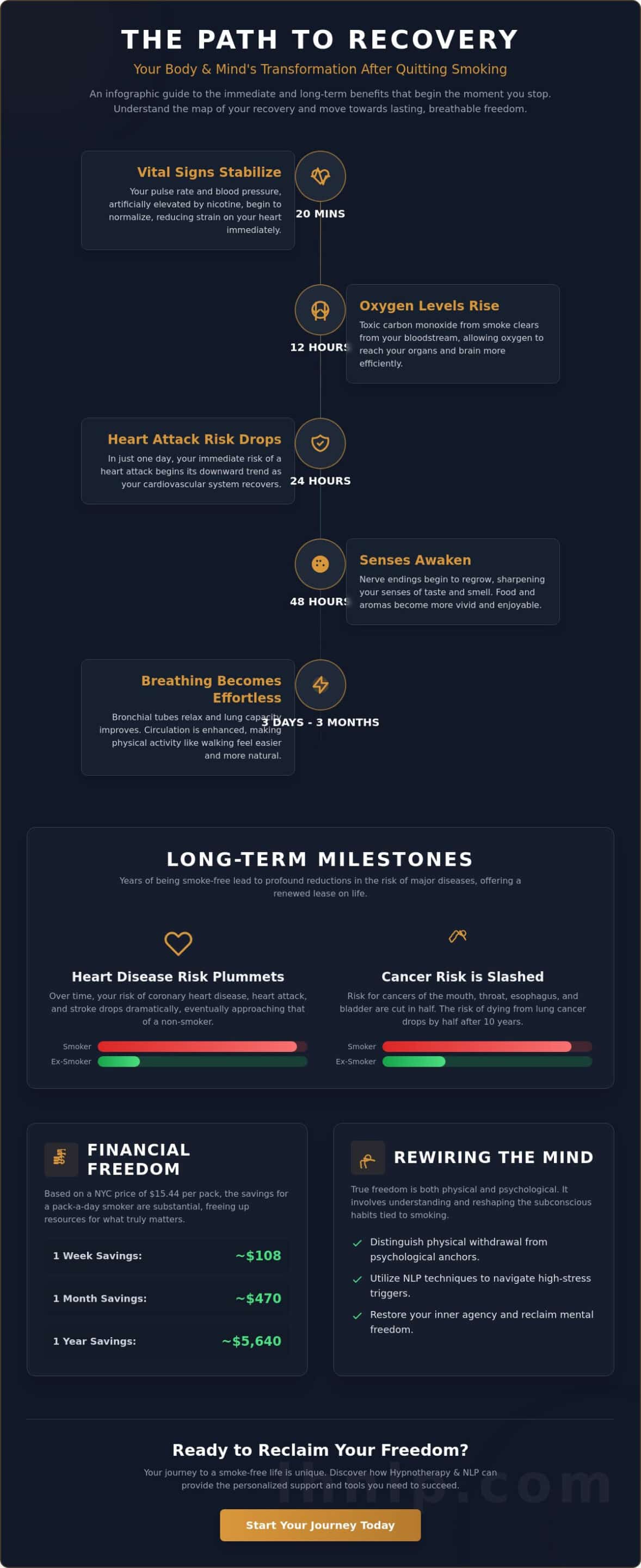
This article offers a comprehensive stop smoking timeline benefits guide, illuminating exactly how your body and mind transform from the first 20 minutes of silence to 15 years of sustained health. We’ll walk through the immediate physiological repairs, such as stabilized blood pressure, and move toward the deep psychological rewiring that allows you to manage cravings with confidence. You’ll discover that healing is a methodical, rhythmic process, proving it’s never too late to reclaim the vitality that tobacco use threatens for so many people today. By understanding the map of your recovery, you can move from a place of restriction to one of lasting, breathable freedom.
Key Takeaways
- Understand how your body initiates repair within minutes, stabilizing vital signs and clearing toxins before the first day ends.
- Explore the transition from labored breathing to effortless movement as your lung capacity and circulation begin to flourish within the first three months.
- Learn to distinguish between physical withdrawal and the psychological anchors that keep habits alive, utilizing the stop smoking timeline benefits to map your mental freedom.
- Gain clarity on how long-term milestones drastically reduce the risk of heart disease and various cancers, offering a renewed lease on life.
- Discover practical NLP techniques to navigate high-stress city triggers, ensuring you remain composed during commutes and social gatherings without relying on cigarettes.
The First 48 Hours: Your Body’s Immediate Recovery Phase
As you reach the eight to twelve-hour mark, a significant chemical transition occurs within your bloodstream. Carbon monoxide, a toxic gas that hitches a ride on your red blood cells, begins to dissipate. For more information on the broader context of these changes, you might explore this comprehensive guide to smoking cessation, which details the physiological hurdles many face. By the time you reach 24 hours, the immediate risk of a heart attack starts its downward trend. Your heart, no longer struggling against the constraints of constricted vessels and chemical interference, can finally beat with a more efficient, steady rhythm.
To better understand the immediate changes your body undergoes, watch this helpful perspective from a medical professional:
The Carbon Monoxide Shift
When carbon monoxide levels drop, oxygen finally regains its rightful place in your blood. This displacement means your heart no longer has to pump as hard to deliver vital oxygen to your organs. You might notice a subtle lift in the brain fog that often accompanies heavy smoking, as your brain receives the clean fuel it requires. Carbon monoxide displacement is the first step to cellular repair.
The Return of Senses
By the 48-hour mark, your world becomes more vivid. Nerve endings, once dulled by the heat and chemicals of smoke, begin to regrow. This physical repair manifests as a sharpening of your senses of taste and smell. Suddenly, the aroma of fresh coffee or the subtle flavors of a meal become accessible again. This sensory shift acts as an early motivational win, providing a tangible reward for your discipline and highlighting the immediate stop smoking timeline benefits you can enjoy.
Week One to Month Three: Lung Capacity and Circulation
By the time you reach the 72-hour mark, the physical grip of nicotine reaches its most intense peak. It’s during these critical days, specifically between day three and five, that the body screams loudest for its old habit, yet it’s also when the most rewarding stop smoking timeline benefits begin to manifest. Your bronchial tubes, the delicate passageways to your lungs, finally start to relax. This physiological opening allows for a deeper, more effortless intake of air, a sensation many haven’t truly felt in years. You’re no longer just surviving the day; you’re beginning to breathe through it.
Between two and twelve weeks, your internal landscape undergoes a quiet revolution. Circulation improves significantly, sending oxygen-rich blood to your extremities and vital organs with newfound efficiency. This surge in blood flow is why walking to the office or climbing a flight of stairs suddenly feels less like a chore and more like a natural expression of your body’s capability. According to the American Cancer Society’s timeline of health benefits, this period marks a fundamental shift in how your cardiovascular system supports your daily life. The persistent fatigue that many professionals attribute to a high-stress career often begins to lift, revealing a level of baseline energy that was previously suppressed by tobacco.
As you move into the second and third months, your lung function can increase by as much as 30%. While the physical repair is well underway, the psychological work of maintaining this change requires a different set of tools. If you find that the mental pressure of the city still pulls at your resolve, exploring professional Hypnotherapy for Smoking Cessation can provide the subconscious support needed to anchor these physical gains into a permanent lifestyle shift.
Clearing the Lungs
Within this window, the cilia in your lungs, tiny hair-like structures responsible for sweeping out debris, begin to recover from their long-term paralysis. You might find yourself coughing more frequently during this phase. Don’t be discouraged; this is your body’s way of clearing out accumulated mucus and tar. It’s an essential cleaning process that paves the way for the increased stamina you’ll need for the active life you’re reclaiming in 2026. This transient discomfort is the sound of your respiratory system coming back online.
The Circulation Surge
The benefits aren’t just internal. As blood flow to the skin improves, you’ll likely notice a visible “glow” returning to your complexion. Smoking deprives the skin of oxygen and nutrients, leading to a dull, weathered appearance and premature aging. Quitting reverses this process, restoring a healthier, more vibrant look to your face. This aesthetic shift serves as a daily, mirror-bound reminder that your choice to quit is working from the inside out, rewarding you with a vitality that matches your internal progress.
The Psychological Timeline: Rewiring the Subconscious Habit
While the physical stop smoking timeline benefits are often celebrated for their rapid physiological shifts, the psychological journey follows a more nuanced and often more challenging path. Physical nicotine withdrawal typically peaks within the first week, yet the mental architecture of the habit can persist far longer. Have you ever wondered why the urge to smoke returns during a stressful morning commute or after a quiet dinner, long after the nicotine has left your system? This is the core challenge of psychological habituation. It’s not a chemical need, but a deeply ingrained neural pattern that associates specific environments and emotions with the act of smoking.
By the 21-day mark, your brain begins a significant phase of neuroplasticity. This three-week milestone is a vital period where new neural pathways start to solidify, allowing a smoke-free identity to take root. During this time, the brain learns that it can process stress, boredom, or joy without the chemical crutch it once relied upon. It’s a methodical process of unlearning, where each resisted trigger weakens the old connection and strengthens your new, liberated self. This phase requires patience and a commitment to self-observation, recognizing that every moment of choice is an investment in your future mental clarity.
Breaking the Mental Anchor
Common triggers like your morning coffee, the act of driving, or a high-pressure meeting act as mental anchors, tethering your mind to your past identity as a smoker. These aren’t true physical cravings, but “false” signals triggered by environmental cues that your subconscious has been trained to follow. By identifying these triggers early, you can consciously choose to replace the old response with a new, healthier ritual. The mind often craves the “break” and the momentary pause in a busy day, not the cigarette itself. Recognizing this distinction is the first step toward total psychological freedom.
The Role of Hypnosis in the Timeline
Clinical hypnotherapy addresses the root cause of the urge by communicating directly with the subconscious mind, where these habits are stored. Rather than relying on willpower alone, which often feels like an uphill climb against your own instincts, hypnosis bypasses the conscious struggle. It aligns your deepest values with your health goals, effectively “cooling” the heat of the old habit. This reduces the perceived effort of staying smoke-free, making the transition feel like a natural evolution. To learn more about our approach and the team behind these methods, you can read About London Hypnotherapy & NLP and how we support this internal transformation.
Long-Term Milestones: Reducing Life-Threatening Risks
As the months turn into years, the stop smoking timeline benefits shift from the relief of immediate symptoms to the profound restoration of your life expectancy. It’s a journey of deep cellular patience. By the one-year anniversary of your last cigarette, the risk of coronary heart disease is halved compared to someone who continues to smoke. This isn’t just a statistic; it’s a testament to your body’s resilience. Your heart, once burdened by the constant presence of carbon monoxide and nicotine, now operates with a quiet efficiency that allows you to look toward the future with genuine confidence.
Halving the Risk of Heart Disease
In the first twelve months, the most significant change is the reduction of arterial inflammation. Smoking causes the lining of your arteries to swell and collect fatty deposits; however, once you stop, this inflammation begins to subside. As the blood vessels regain their flexibility, the heart muscle doesn’t have to work nearly as hard to circulate blood. This recovery of efficiency doesn’t just add years to your life, it improves the quality of every day by increasing your baseline stamina and reducing the physical toll of stress.
The 10-Year Cancer Milestone
It takes a decade for cancer risks to drop significantly because the body must painstakingly repair or replace cells with damaged DNA. This is a methodical, rhythmic process of biological housekeeping. Many people who have smoked for decades feel they’ve “smoked for too long” for it to matter, but the data suggests otherwise. Even after twenty or thirty years of tobacco use, the body immediately begins the work of DNA repair the moment the toxic intake stops. It’s never too late to start this clock.
If you’re ready to secure these long-term gains and move beyond the cycle of quitting and restarting, our Hypnotherapy for Smoking Cessation provides the psychological foundation to make these health milestones your permanent reality.
Navigating the Quit Journey in a High-Stress City
Living in a metropolis like London presents a unique set of psychological challenges that generic health guides often overlook. The rhythmic pressure of the city, from the crowded Underground platforms to the high-stakes boardroom, can turn a simple craving into an overwhelming urge. Here, the cigarette is often viewed as a survival tool for the morning commute or a social bridge during the traditional after-work drink. To truly realize the stop smoking timeline benefits, one must address these environmental anchors with a strategy that is as sophisticated and resilient as the city itself.
Most smokers believe the cigarette relieves stress, but as we have explored in previous sections, it actually spikes your heart rate and increases physiological tension. Replacing this habit requires more than just willpower; it requires a practical mental toolkit. NLP breathing techniques offer a way to hijack the nervous system’s stress response in real-time. By changing the pace and depth of your breath during a tense moment, you signal to your brain that you are safe, effectively neutralizing the trigger before it takes hold. This is how you begin to move through the city with a sense of calm that is independent of any external substance.
In our London clinics, we recognize that no two quit journeys are identical. Kamal’s approach provides a tailored exit strategy that accounts for your specific lifestyle, whether you are managing a global team or navigating a creative freelance career. This personalized support ensures that the mental map we build together aligns with the fast-paced reality of your daily life, making the transition feel less like a sacrifice and more like a long-overdue liberation. This bespoke focus is the key to ensuring that the physical repairs your body is making are supported by a mind that is equally strong.
Stress Management Without the Cigarette
Learning to stay calm during a busy commute or a difficult office transition is essential for long-term success. Instead of seeing the “work break” as a time to smoke, we reframe it as a true mental reset. This involves using specific cognitive shifts to detach from the pressure of the morning and reclaim your focus. For those seeking deeper resilience against the urban grind, our guide on Stress Management in London provides additional frameworks for maintaining composure in the urban landscape.
Finding Your Path to Freedom
Whether you prefer the focused environment of in-person London sessions or the convenience of Virtual Hypnotherapy Sessions, the path to a smoke-free life is entirely accessible. The next step is simply to map your personal timeline through a discovery call, allowing us to identify the specific anchors holding you back. You are only one decision away from a different life. The stop smoking timeline benefits aren’t just a distant promise; they are a series of daily victories that begin the moment you choose to reclaim your breath and your inner peace.
Your Journey Toward Lasting Vitality
The path from your last cigarette to total physiological and mental freedom is a methodical process of renewal. We’ve seen how the body begins repairing itself within minutes, how your lung capacity expands over months, and how the mind eventually learns to navigate the high-pressure environment of the city without old anchors. Understanding the full stop smoking timeline benefits provides more than just data; it offers the clarity needed to sustain your commitment when the urban landscape feels demanding. Every hour you spend smoke-free is an investment in a future where you are no longer defined by a habit, but by your own quiet strength.
True change occurs when you align your conscious goals with your subconscious patterns. With over 20 years of clinical experience and specialized smoking cessation protocols, I am here to guide you through this transition. Whether you visit our central London locations at Harley Street and Ealing or prefer a virtual approach, we can map out a bespoke strategy for your success. Book your bespoke Stop Smoking session in London today and begin the quiet, powerful work of reclaiming your health. You have the inner resources to succeed; it’s simply a matter of choosing to use them.
Frequently Asked Questions
What is the hardest day when you stop smoking?
Day three is typically the most challenging point for most people. This is the moment when nicotine has largely exited your system and the physical withdrawal symptoms reach their peak intensity. It’s a significant hurdle, but passing this mark signals that the most volatile part of the physical transition is behind you, opening the door to the deeper stop smoking timeline benefits.
How long does it take for your lungs to fully heal after quitting?
Significant respiratory repair begins within 72 hours as your bronchial tubes start to relax. While the cilia in your lungs recover and lung function increases over several months, the journey toward halving your lung cancer death rate takes approximately ten years. It’s a gradual, rhythmic restoration of your body’s vital capacity that rewards your patience with every passing year.
Will I gain weight if I follow the stop smoking timeline?
Weight gain isn’t an inevitable part of the quitting process. It often occurs when the mind seeks a dopamine replacement through food to compensate for the missing nicotine. By addressing the root psychological habit through hypnotherapy for weight loss or smoking cessation, you can manage these urges effectively, ensuring your body focuses on its internal healing without shifting the addiction elsewhere.
When do the mental cravings for cigarettes finally stop?
Physical cravings usually subside within the first week, but the mental associations can linger for several months. The 21-day milestone is a crucial period for forming new neural pathways that don’t rely on tobacco. After this three-week phase, the frequency and intensity of “mental anchors” like the need to smoke during stress or after a meal begin to fade significantly.
Can hypnotherapy really speed up the stop smoking timeline benefits?
Hypnotherapy doesn’t accelerate the biological rate of cell repair, but it significantly smooths the psychological transition. By reducing the internal friction and stress of quitting, it allows your body to focus its resources on recovery rather than managing constant anxiety. This mental alignment makes it much easier to reach the long-term health milestones without the risk of a relapse.
What happens if I slip up and have one cigarette during the first week?
A single cigarette resets your carbon monoxide levels and temporarily stalls the immediate physical progress your blood and heart have made. However, it doesn’t erase the psychological awareness you’ve gained. The key is to return to your smoke-free path immediately without allowing a single moment of choice to become a permanent reversal of your progress.
How much money will I save on the stop smoking timeline in London?
With the average price of a pack of cigarettes rising by $1.50 since 2018, the financial savings are substantial. A pack-a-day smoker can save thousands of dollars annually, providing a significant boost to their disposable income. This newfound capital can be reinvested into your well-being or experiences that support your new, healthier lifestyle in the city.
Is it better to quit cold turkey or use a gradual timeline?
Both methods have merits, but the best approach depends on your unique psychological makeup and stress levels. Cold turkey ends the chemical cycle quickly, while a gradual reduction can feel less jarring for those with high-pressure careers. Professional support helps ensure that whichever path you choose leads to a permanent result by addressing the underlying habituation.