

What if your next cigarette wasn’t just costing you your health, but a guaranteed, tax-free pay rise of over £6,000 every single year? As the average price of a 20-pack climbs toward £18, it’s natural to feel a growing sense of anxiety about your personal finances and the tightening grip of an expensive habit. You likely already know that the financial benefits of quitting smoking UK wide are substantial, but perhaps you feel trapped by the psychological cycle that makes spending this money feel like a necessity rather than a choice. It’s exhausting to watch your hard-earned income vanish into a cloud of smoke while the government prepares yet another duty increase for October 2026.
In this guide, you’ll discover exactly how much you’ll save by reclaiming your independence in 2026 and how to finally break the mental barriers that keep you reaching for your wallet. We’ll provide a clear financial roadmap that illustrates the path from tobacco dependency to material wealth, showing you how a 20-a-day smoker can recover up to £6,120 annually. Beyond the numbers, we’ll explore how shifting your internal narrative can lead to a profound sense of mental wellbeing and lasting freedom. By understanding the true cost of each puff, you can begin the methodical process of internal change that turns financial stress into a foundation for a more inspired life.
Key Takeaways
- Quantify the true “hidden tax” of 2026 tobacco prices and see exactly how much annual income you’ll reclaim by walking away from the habit.
- Uncover the financial benefits of quitting smoking UK residents often overlook, from lower insurance premiums to preserved property values.
- Gain insight into the stress-money-smoking cycle to understand why willpower alone isn’t enough and how to address the psychological roots of spending.
- Learn how to pivot your tobacco budget into high-value investments for your future, such as professional coaching or elite health memberships.
- Discover why smoking cessation hypnotherapy represents a high-yield investment that transforms a one-time cost into permanent financial freedom.
The 2026 Cost of Smoking in the UK: Calculating Your “Hidden Tax”
The financial weight of smoking has reached a definitive tipping point. For many, it feels like an unavoidable monthly bill, yet it functions more like a private, voluntary tax that yields no public benefit. In 2026, the average price for a 20-pack of cigarettes in the UK has climbed to between £16 and £18. With premium brands often exceeding the £18 mark, the simple act of lighting up has become a luxury expense that competes directly with essential household needs. Why do we allow a habit to command such a large portion of our labor?
To better understand this concept, watch this helpful video:
When we examine the smoking rates in the UK, we see a population increasingly squeezed by the tobacco duty escalator. This government policy ensures prices rise by inflation plus 2% every year, alongside specific one-off hikes like the £2.20 increase per 100 cigarettes scheduled for October 1, 2026. This means the financial benefits of quitting smoking UK residents experience are no longer just about “saving a bit of change”; it’s about reclaiming a significant portion of your disposable income that is being eroded faster than standard UK wage growth. You’re not just losing money; you’re losing the future purchasing power of your hard-earned salary.
The Daily Drain: What You Lose Every 24 Hours
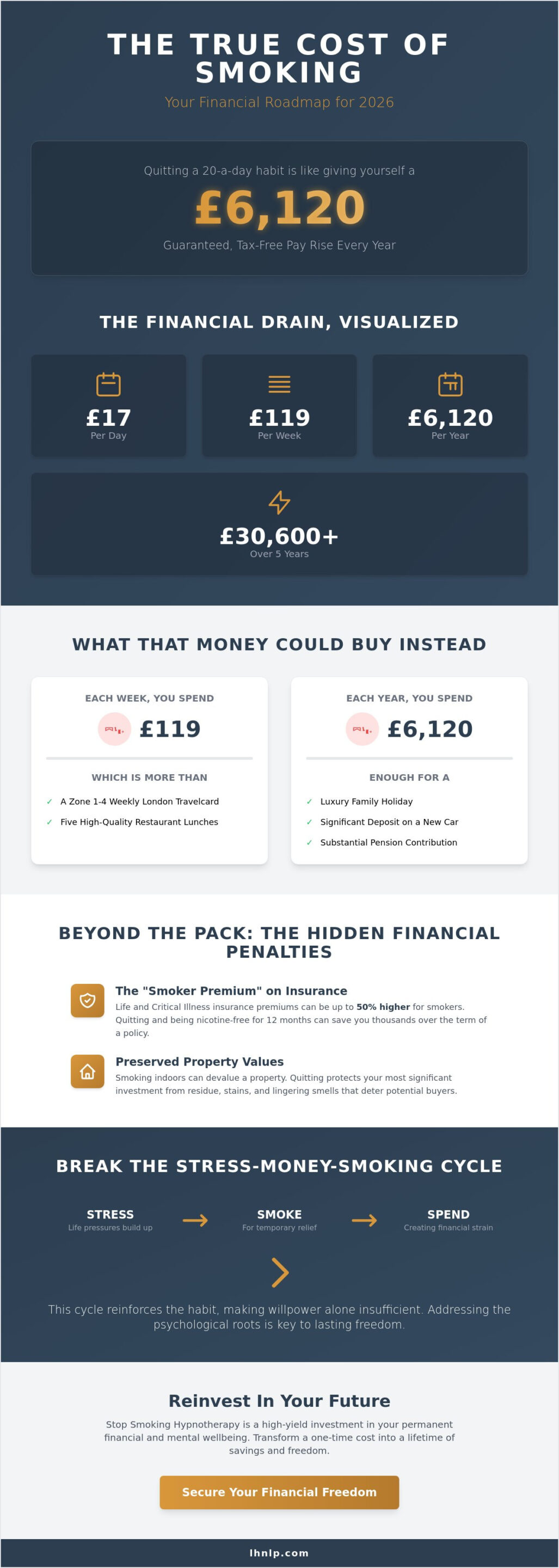
At an average of £17 per pack, a single cigarette now costs you 85p. While that might seem small in isolation, consider the rhythm of your day. A 20-a-day habit costs roughly £119 per week. That is nearly double the cost of a weekly Zone 1-4 London Travelcard or five high-quality restaurant lunches. Even a 10-a-day smoker spends over £250 every month. When you purchase “just one more pack,” you aren’t just buying tobacco. You’re disrupting the delicate flow of your weekly budgeting and sacrificing experiences that could truly nourish your wellbeing. Does the brief hit of nicotine truly outweigh the value of a stress-free commute or a peaceful meal?
Annual Totals: The Holiday You Never Took
The numbers become even more sobering when viewed through a wider lens. A pack-a-day smoker in 2026 can expect to spend between £5,400 and £6,120 annually. For many, this figure represents a luxury family holiday, a significant deposit on a new vehicle, or a substantial contribution to a pension pot. Looking ahead, the five-year forecast is staggering: you are effectively burning over £30,000 in the medium term. By seeing this “tobacco tax” as a lump sum, the path toward change becomes more than a health choice. It becomes a profound act of self-respect and financial liberation. Reclaiming this wealth is a methodical process that begins with a single, conscious decision to stop the drain.
Beyond the Pack: The Hidden Financial Benefits of Quitting Smoking
The true financial benefits of quitting smoking UK residents experience extend far beyond the checkout counter. While the direct cost of tobacco is a primary motivator, the secondary financial burdens often remain invisible until they are removed. Think of these as the structural costs of smoking; expenses baked into your life insurance, your home maintenance, and even your career trajectory. This is a methodical process of reclaiming the wealth you have unknowingly surrendered. When you choose to stop, you aren’t just saving cash. You’re opting out of a system that penalises you for a habit you no longer wish to carry.
Insurance and the “Smoker Premium”
UK insurers typically define a non-smoker as someone who has been entirely tobacco and nicotine-free for at least 12 months. Once you reach this milestone, the cost of Life Insurance and Critical Illness cover can drop by as much as 50 percent. Over a 20-year term, this single shift can save you thousands of pounds in premiums alone. Private Medical Insurance providers also view non-smokers as lower risk, which reflects in more competitive monthly rates. Your health is quite literally your greatest financial asset.
Maintenance and Asset Value
Smoke particles settle into walls and fabrics, often requiring professional deep-cleaning that costs hundreds of pounds before a property sale. Because typical quitters save around £2,000 a year just on basics, the added loss of asset value is particularly painful. In the UK car market, a smoker’s vehicle can see its resale value slashed by up to £2,000 due to lingering odours. For those in the London property market, non-smoking status can even subtly improve mortgage or rental eligibility by presenting you as a lower-risk applicant.
The financial ripple effect continues into your professional life. Reduced sick days and improved cognitive focus lead to better workplace performance and, ultimately, more frequent promotions. Frequent smoke breaks can fragment your concentration, whereas the steady energy of a non-smoker allows for deeper engagement with your goals. Additionally, you’ll likely see a reduction in private dental costs, as non-smokers require fewer treatments for gum disease and staining. If you’re ready to explore how a shift in mindset can facilitate these changes, looking into professional smoking cessation support can be the first step toward reclaiming your material wealth and inner peace.
The Stress-Money-Smoking Cycle: Why Willpower Often Fails
Have you ever noticed how the very thing you use to calm your nerves is actually the primary source of your tension? This is the central paradox of the smoker’s life in 2026. You might reach for a cigarette to cope with the rising cost of living or the pressure of a demanding career; yet, as we have seen, that single habit is what’s siphoning away your financial security. It is a closed loop of anxiety where the solution is the problem. When you understand the financial benefits of quitting smoking UK residents can achieve, you start to see that this isn’t just about money. It’s about breaking a psychological chain that thrives on your stress.
Nicotine withdrawal is a master of disguise. It mimics the physical symptoms of financial panic: the racing heart, the restless hands, the inability to focus. When these sensations arise, the mind often misinterprets them as genuine worry about the future, leading you to buy another pack for “relief.” In reality, you are simply feeding the withdrawal. This cycle doesn’t just drain your bank account; it’s also costing the NHS approximately £2.5 billion a year, highlighting how this personal struggle ripples out into a massive societal burden. Many people turn to Nicotine Replacement Therapy (NRT) like patches or gums, but these often become another recurring expense on your bank statement. They treat the chemical need without addressing the underlying mental architecture. To truly thrive, you must address the reason why you feel you need a “reward” that hurts you.
The Psychology of the “Cheap Reward”
Why does a pack costing nearly £18 still feel like a treat? When we feel financially squeezed, our brains seek immediate, affordable hits of dopamine to compensate for the lack of larger luxuries. This is the “cheap reward” trap. Through Neuro-Linguistic Programming (NLP), we can begin to re-frame this association. Instead of seeing a cigarette as a gift you give yourself, you can start to see it as a thief that steals your choices. This shift in perspective is the foundation of lasting change. It’s about moving from a state of deprivation to a state of empowerment.
Mental Wealth: How Financial Freedom Reduces Anxiety
There is a profound connection between your bank balance and your nervous system. As you reclaim the £5,000 or more you previously spent on tobacco, your cortisol levels naturally begin to drop. The “shame” of the cost disappears, replaced by a sense of quiet magisterial confidence. If you find that the roots of your stress go deeper than just your smoking habit, exploring anxiety therapy london can provide the broader support needed to find your inner peace. True wealth is the ability to breathe freely, both physically and financially. Can you imagine the relief of checking your balance and seeing the growth you once thought was impossible?
Reinvesting in Yourself: A Londoner’s Perspective
What if the capital you currently spend on tobacco became the seed for your most ambitious personal goals? In the heart of London, where the cost of living demands strategic choices, the financial benefits of quitting smoking UK professionals enjoy can transform a standard lifestyle into one of curated excellence. When we shift our gaze from the loss of a habit to the gain of a new reality, the numbers tell an inspiring story. Reclaiming over £500 every month allows you to pivot from a cycle of depletion to a methodical practice of self-investment.
Consider the contrast between a pack-a-day habit and the elite wellness resources available in the city. For the price of your monthly tobacco spend, you could easily fund a premium membership at a top-tier London health club in Marylebone or the City, including personal training and spa access. This isn’t just a swap of expenses; it’s an alignment of your financial resources with your physical vitality. Instead of funding a short-term hit of nicotine, you could be investing in confidence building sessions that sharpen your professional edge and open doors to higher-level career opportunities. This is the “Harley Street” approach to life: choosing long-term, high-yield wellness over the fleeting, expensive distractions of the past.
The ROI of Self-Care
The money you recover acts as a tax-free pay rise that compounds over time. If you redirected your annual smoking budget of £6,120 into a high-yield ISA or a pension pot, the long-term growth could secure a much earlier retirement or a significant property upgrade. Beyond the spreadsheets, this wealth allows you to access higher-tier therapy or executive coaching that might have previously felt like an indulgence. The opportunity cost of smoking for a London professional in 2026 is the measurable gap between a life dictated by a chemical habit and one defined by the freedom to access the city’s most exclusive wellness and cultural experiences.
From Habit to Legacy
True material wealth is often defined by the legacy we leave for those we love. By walking away from tobacco, you are choosing to fund your family’s future rather than the profits of tobacco corporations. That £5,000+ annual saving can cover elite extracurricular activities for your children, a premium private education fund, or a dedicated “Experience Fund” for regular West End travel and fine dining. These aren’t just luxuries; they are the tangible trophies of your success and self-discipline. Every pound not spent on a cigarette is a pound invested in a memory or a milestone. To begin your journey toward this new financial reality, you can explore our professional hypnotherapy services and start reclaiming your wealth today.
- Reclaiming £510 per month can cover a luxury London gym membership and organic nutrition.
- Redirected funds can pay for professional development that increases your lifetime earning potential.
- An “Experience Fund” created from savings can provide over £5,000 a year for travel and culture.
- The psychological shift from “smoker” to “investor” builds lasting self-esteem and material security.
Securing Your Financial Future with Stop Smoking Hypnotherapy
If we view smoking as a recurring debt, then choosing professional intervention is the one-time settlement that clears your balance for good. Many people attempt to quit using willpower alone, yet this often leads to a cycle of failed starts where money is wasted on temporary aids or the eventual purchase of “emergency” packs during a relapse. To truly realise the financial benefits of quitting smoking UK residents are seeking in 2026, you must look beyond the surface level of the habit. Hypnotherapy represents a high-yield investment. The cost of a specialist session is a small fraction of the £6,120 you would otherwise spend on cigarettes in a single year. It is a transition from being a consumer of a harmful product to being an investor in your own material wealth.
Kamal’s approach at London Hypnotherapy & NLP focuses on the root cause of the dependency rather than just the symptoms. By retraining the subconscious mind, we remove the internal conflict that makes quitting feel like a sacrifice. When the mind no longer perceives a cigarette as a reward or a coping mechanism, the urge to spend vanishes. This methodical retraining ensures that your transition to a non-smoker is permanent. It protects you from the high cost of returning to the habit as tobacco duties continue to rise. One choice. Lifetime savings.
How Hypnosis Protects Your Wallet
Impulse buying is rarely a conscious decision; it is a programmed response to a trigger. Hypnosis works by interrupting these automatic patterns, allowing you to regain control over your spending habits. Through solution-focused stop smoking hypnotherapy, we address the specific psychological anchors that lead you to the kiosk. This efficiency is particularly valuable for busy professionals who need a results-driven approach that respects both their time and their financial goals. You aren’t just quitting a habit. You’re installing a new mental operating system that prioritises your prosperity.
Your First Step Toward Financial Freedom
In our London clinic, your journey begins with a deep exploration of your personal triggers and financial aspirations. We don’t just suggest that you stop; we empower you with the tools to stay free. The long-term value of a smoke-free mindset is immeasurable, providing a foundation of confidence that ripples into every area of your life. If you’re ready to stop the drain on your resources and start building your legacy, the path is clear. You can Book your quit smoking session in London today and experience the profound shift from financial scarcity to abundance.
Reclaiming Your Wealth and Your Peace
The journey toward material and mental abundance begins with a single, conscious realignment of your priorities. By walking away from tobacco, you aren’t just avoiding an expensive habit; you’re actively choosing a life where your resources serve your highest potential. We’ve explored how the financial benefits of quitting smoking UK professionals experience can fund everything from elite wellness memberships to a more secure family legacy. It’s time to stop burning your future and start investing in your presence.
Kamal offers over 20 years of clinical experience in London, providing solution-focused treatments in Harley Street and Ealing. This is a specialist approach designed for high-ROI behavioral change that addresses the root of the habit. You deserve a life free from the anxiety of the next price hike and the shame of a habit that no longer fits who you are becoming. The path to freedom is methodical and entirely within your reach.
Invest in your future—book your professional Stop Smoking session with Kamal today
Your new chapter of material and mental wealth is waiting for you. Take that first step with confidence and let your inner strength lead the way.
Frequently Asked Questions
How much money does the average UK smoker save by quitting in 2026?
A 20-a-day smoker will save between £5,400 and £6,120 annually based on the 2026 average price of £17 per pack. Even those smoking 10 a day can expect to reclaim roughly £3,000 every year. These figures don’t account for the planned tax increases in October 2026, which will likely push these savings even higher. It’s a guaranteed, tax-free pay rise for your household budget.
Is hypnotherapy for smoking cessation more expensive than patches or gum?
While the initial cost of a professional hypnotherapy session may seem higher than a single box of patches, it’s a one-time investment in a permanent solution. Traditional Nicotine Replacement Therapy often becomes a long-term, recurring expense that can last for months or years. By addressing the subconscious root of the habit, hypnotherapy removes the need for ongoing spending on chemical substitutes that only treat the surface symptoms.
How long does it take for my insurance premiums to go down after quitting?
Most UK insurance providers require you to be entirely nicotine-free for at least 12 months before you qualify for non-smoker rates. Once you reach this milestone, you can often see your life insurance or critical illness premiums drop by up to 50 percent. It’s a methodical way to improve your financial health while protecting your future and your family’s long-term material legacy.
Can quitting smoking really help me get a mortgage in the UK?
Reclaiming over £500 a month significantly improves your debt-to-income ratio and overall affordability during a mortgage assessment. Lenders look at your disposable income to determine how much you can safely borrow. By removing tobacco costs, you present yourself as a lower-risk applicant with more capital available for monthly repayments, which is a vital advantage in the current UK property market.
What are the “hidden” costs of smoking that most people forget?
How can I stop smoking if I use it to cope with financial stress?
Is the cost of a hypnotherapy session in London worth the investment?
When you compare a one-time session fee to the £6,000 annual drain of a pack-a-day habit, the return on investment is extraordinary. The financial benefits of quitting smoking UK residents achieve often pay for the therapy within just a few weeks of success. More importantly, it provides a solution-focused path that avoids the high cost of multiple failed attempts using willpower or expensive, recurring nicotine substitutes.
What should I do with the money I save from quitting smoking?
Many successful quitters choose to redirect their savings into a high-yield ISA or a pension pot to let the wealth compound for their future. Others find deep satisfaction in funding experiences like West End theatre trips or premium wellness memberships that nourish the soul and body. Whatever you choose, ensure it feels like a tangible trophy of your success and a commitment to your new, inspired life.