

What if the best way to stop smoking for good isn’t relying on willpower, but having a plan for the moments when it feels stretched? Cravings can arrive during a familiar coffee break, a stressful commute or a night out. If you’ve smoked again after a previous attempt, starting over can feel daunting. That doesn’t mean you can’t quit. It means your approach needs to account for real life.
Quitting methods can be difficult to compare, especially when you’re managing withdrawal alongside everyday responsibilities. This guide covers practical ways to choose an approach, prepare for triggers and social situations, and respond to setbacks without shame. It looks at NHS stop-smoking support, nicotine replacement, prescribed medicines and behavioural approaches such as one-to-one hypnotherapy. These options can play different roles, and a useful plan is one that fits your needs.
Start with the foundations of a quit plan, then consider ways to handle cravings and learn from a lapse. You don’t have to get every step right first time. Begin with one clear next step.
Key Takeaways
- The best way to stop smoking for good is to build a supported plan around your needs, rather than depending on willpower alone.
- Behavioural support, nicotine replacement, prescribed medicines, e-cigarettes and hypnotherapy have different roles. Compare them to understand what may suit your plan.
- Choose a quit date, map your smoking cues and prepare practical responses to cravings before they arise.
- A lapse can show what triggered smoking and where extra support may help. It doesn’t have to end your quit attempt.
- One-to-one hypnotherapy offers a personalised space to explore smoking habits and motivations, without guaranteeing a particular outcome.
What is the best way to stop smoking for good? Start with a plan, not willpower
You can genuinely want to quit and still feel unsure about how you’ll cope. Nicotine dependence can make stopping physically and emotionally demanding, while familiar routines can make smoking feel woven into ordinary moments. Finding either difficult isn’t proof that you lack commitment.
The best way to stop smoking for good isn’t one method that guarantees success. It’s a process: choose an approach, prepare for challenges and adjust your support as you learn what helps. The wider picture of smoking cessation includes different methods and potential challenges because there isn’t one route that suits everyone.
Why quitting can feel difficult even when you are ready
Nicotine can lead to dependence, so stopping may bring cravings and withdrawal experiences such as irritability, restlessness or difficulty concentrating. The brain can also connect smoking with particular cues, such as the first coffee of the day, a break at work or a stressful moment. When a cue appears, an urge can arise even if your decision to quit hasn’t changed.
A craving is a response to dependence or a learned routine, not a measure of how much you want to stop. Noticing what tends to prompt an urge gives you something practical to work with.
What a realistic quit plan needs
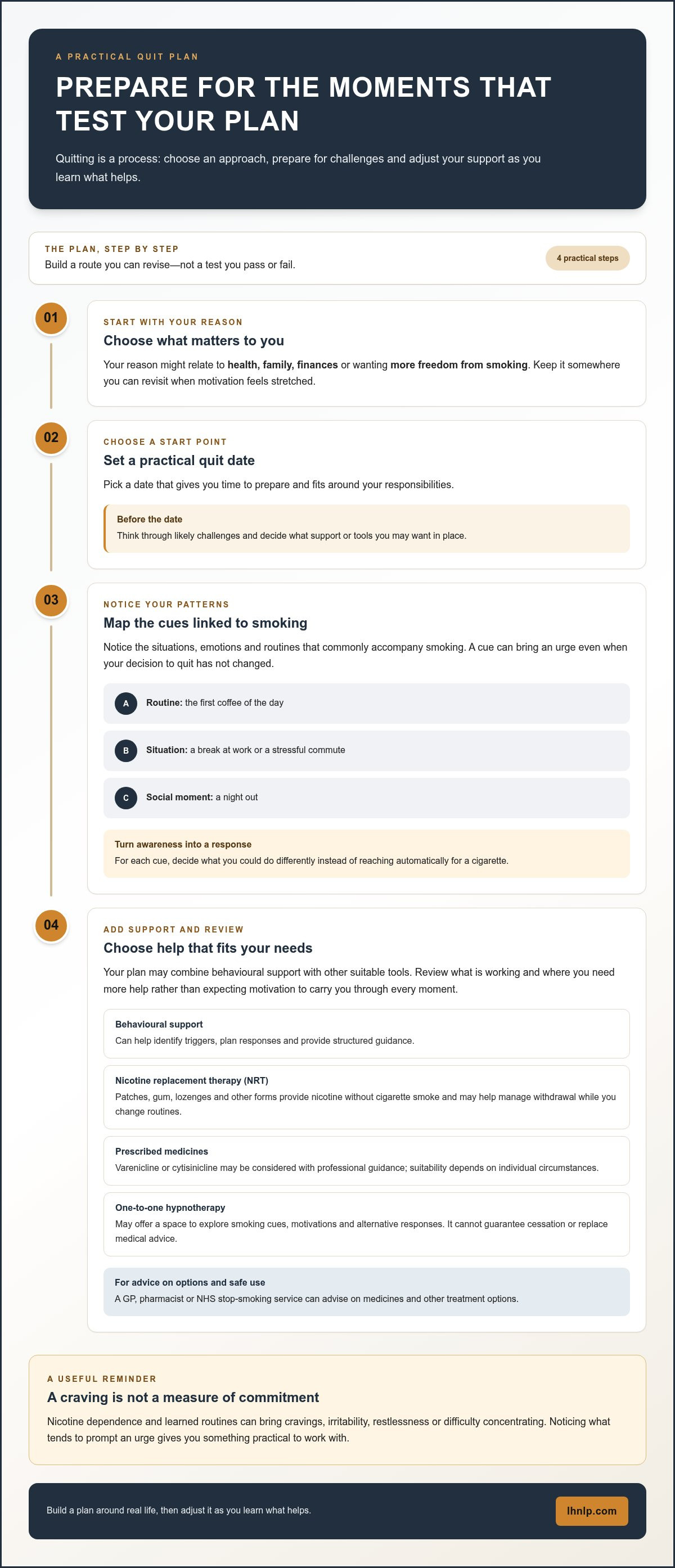
An effective quit plan is a personal, practical strategy that combines a clear reason to stop, preparation for likely triggers, suitable support and follow-up. It gives motivation somewhere to go when a difficult moment arrives.
- Choose a reason that matters to you. It might relate to your health, family, finances or wanting more freedom from smoking. Keep it somewhere you can revisit.
- Set a practical start date. Choose a date that gives you time to prepare and fits around your responsibilities.
- Map your cues. Notice the situations, emotions and routines that commonly accompany smoking. Decide what you could do differently in those moments.
- Plan support and follow-up. Your approach may combine behavioural support with other suitable tools. Review what’s working and where you need more help instead of expecting motivation to carry you through every moment.
Treat the plan as a route you can revise, not a test you either pass or fail. The next sections compare support options, help you prepare for triggers and show how a setback can inform your next step.
Compare quit-smoking methods: support, medication, nicotine replacement, and hypnotherapy
Different tools address different parts of smoking: withdrawal, learned routines or the moments when a craving feels hard to manage. Combining practical support with a suitable treatment may be more useful than relying on one approach alone. The best way to stop smoking for good depends on your health, preferences and smoking patterns. A GP, pharmacist or NHS stop-smoking service can advise on medicines and other treatment options.
| Option | What it does and who may consider it | Key limitation |
|---|---|---|
| Behavioural support | Helps you identify triggers, plan responses and stay supported through a quit attempt. Consider it if you want structured guidance or have found cravings difficult to manage alone. | It takes engagement and practice, and support alone may not ease physical withdrawal. |
| Nicotine replacement therapy (NRT) | Patches, gum, lozenges and other forms provide nicotine without cigarette smoke. They may help manage withdrawal while you change smoking routines. The American Cancer Society’s overview of Nicotine Replacement Therapy (NRT) explains common forms. | Different products suit different needs. Use them as directed and seek advice if you’re unsure which is suitable. |
| Prescription medicines | Medicines such as varenicline or cytisinicline may be considered with professional guidance as part of a quit plan. | Suitability depends on individual circumstances. A GP, pharmacist or NHS stop-smoking service can advise about options and potential risks. |
| E-cigarettes | Some adults use them as an alternative to smoking while working towards quitting cigarettes. | They are not risk-free, and using them alongside cigarettes may not meet your goal of stopping smoking. |
| Hypnotherapy | A behavioural-support option for exploring smoking cues, motivation and responses to urges. | Evidence is less certain than for established stop-smoking support and treatments. It can’t guarantee cessation or replace medical advice. |
How support and treatments can work together
Structured behavioural support can help turn a trigger into a planned decision. If a craving tends to arrive during a break, for example, prepare a response instead of reaching automatically for a cigarette. NRT can address nicotine withdrawal, while prescription medicine may be appropriate for some people. A GP, pharmacist or NHS stop-smoking service can advise on suitable options and safe use.
Where hypnotherapy fits in a quit plan
In one-to-one smoking-cessation hypnotherapy, sessions can explore the associations and motivations connected with smoking, then help you consider alternative responses to familiar cues. It’s a supportive approach, not a promise of success. London Hypnotherapy & NLP provides smoking-cessation hypnotherapy in person in London and virtually. Read more about smoking cessation hypnotherapy.
How to prepare for your quit date and handle cravings in real life
A quit plan is more useful when it reflects your actual day, not an ideal one. Think about when you usually smoke, what might make those moments difficult and what you’ll do instead. You can’t predict every craving, but you can give yourself options before one arrives.
How to identify your smoking triggers before quitting
For several typical days, note when and where you smoke, what you were doing and how you felt just beforehand. Group your observations into routines, emotions, social settings and nicotine cravings. A morning cigarette may follow coffee; another may come after an argument or when colleagues take a break. Each cue points to a moment you can prepare for.
A practical plan for your quit date
- Choose a start date. Pick a practical day that gives you time to prepare and arrange any support or treatment you plan to use.
- Map your triggers. Use your notes to identify situations likely to prompt an urge, including work breaks, travel and time with friends who smoke.
- Prepare your surroundings. Remove cigarettes, lighters and ashtrays from easy reach. Consider changing a familiar coffee or break-time routine, and decide what you’ll say if someone offers you a cigarette.
- Set up support. Tell someone you trust how they can help and make a plan for checking in. If you’re using nicotine replacement or prescribed treatment, follow professional advice on how to use it.
- Review and adjust. At the end of each day, note what was easier or harder than expected. Use that information to refine your plan, not judge yourself.
What to do when a craving arrives
Try this simple sequence: Pause. Change the situation. Use your prepared alternative. Reach out if you need support. You might step away from a smoking area, take a short walk, drink water or use a suitable nicotine replacement product as directed. Notice what helps you through that particular moment.
If a work break is a cue, take it somewhere different or invite a colleague for a walk. At a social event, keep a non-smoking plan in mind and let a friend know you may want their support. A craving can be demanding without deciding what you do next.
If withdrawal feels difficult to manage or you’re concerned about symptoms, speak with a GP, pharmacist or NHS stop-smoking service. One-to-one hypnotherapy can also help you explore smoking cues and prepare alternative responses. London Hypnotherapy & NLP offers smoking-cessation hypnotherapy in London and online.
What if you smoke again? Recover from a lapse without abandoning your goal
Smoking a cigarette after you’ve stopped can feel discouraging, especially if you think, “I’ve ruined it now.” But one lapse doesn’t have to become a return to regular smoking, and it doesn’t erase the effort you’ve already made. Treat it as a moment to understand, not a verdict on your ability to quit.
The best way to stop smoking for good is a plan that can adapt when real life gets complicated. Rather than using shame as motivation, look at what happened just before you smoked. Was there a particular place, emotion, social situation or craving involved? What might have helped you respond differently?
How to respond after smoking a cigarette
Pause before deciding what the lapse means. You can recommit to your quit attempt now rather than waiting for a perfect new start. Make a brief note of the trigger, where you were, who was with you and what support or coping option might help next time. Then revisit your plan and contact someone you trust or a relevant support service if that would be useful.
A short restart checklist:
- Don’t let the lapse become a reason to give up on the whole attempt.
- Write down what happened immediately before smoking, without judging yourself.
- Identify one alternative response or source of support for next time.
- Return to your quit plan and seek professional advice if cravings, withdrawal or treatment questions are difficult to manage.
How to make the next quit attempt more resilient
Look back with curiosity. Which strategies helped you stay smoke-free, and which moment exposed a gap in your plan? Perhaps a social setting caught you off guard, stress felt hard to manage or you needed more help with nicotine withdrawal. Add a specific response for that situation. A GP, pharmacist or NHS stop-smoking service can advise if you’re considering medication or need help with withdrawal. Behavioural support may also help you prepare for triggers.
A lapse can inform a revised plan; it doesn’t define your ability to quit. If one-to-one support would help you explore smoking cues, habits and motivations, London Hypnotherapy & NLP offers smoking-cessation hypnotherapy in person in London and virtually. It’s a supportive option, not a guaranteed outcome or a substitute for medical advice. Explore smoking cessation hypnotherapy.
Choose your next step: build support around the way you want to quit
Your next step doesn’t need to be a complete, fixed plan. Start by choosing the kind of support that fits your needs now. Think about the situations that challenge you most, whether physical cravings or familiar routines feel harder to manage, what you’ve tried before and whether you have health questions that call for professional advice. The best way to stop smoking for good is personal: support should complement your motivation and address the parts of quitting that feel most difficult.
If withdrawal or medication is a concern, a GP, pharmacist or NHS stop-smoking service can advise on suitable options. If smoking feels closely tied to particular habits, cues or motivations, one-to-one behavioural support may be another part of your plan.
When one-to-one hypnotherapy may be worth considering
Consider smoking-cessation hypnotherapy if you want dedicated time to explore your smoking patterns and how you’d like to respond to them differently. Sessions can focus on your smoking cues, habits and motivations, helping you reflect on the changes you want to make. Hypnotherapy supports a change process; it can’t guarantee that you’ll stop smoking, and it doesn’t replace medical advice or treatment where needed.
London Hypnotherapy & NLP provides individual smoking-cessation sessions. Learn more about this support option through the smoking cessation treatment page.
How to take a manageable next step
Choose a format that fits your life. In-person consultations are available at London locations including Harley Street, Ealing and Tokenhouse Yard. Virtual consultations are available through Zoom and Skype. A little preparation can help you make good use of a session.
- Write down what you hope support will help you change.
- Note the situations or habits that most often lead you to smoke.
- Reflect on previous quit attempts: what helped, and where did you need more support?
- Make a note of any health or medication questions to raise with a relevant health professional.
You don’t need every answer before you begin. If one-to-one support feels like a useful part of your quit plan, get in touch to explore smoking-cessation hypnotherapy.
Take your next step towards a smoke-free life
The best way to stop smoking for good is a realistic plan supported by tools that fit your needs, not willpower alone. Identify the situations that trigger cravings, prepare practical responses, and consider behavioural support, nicotine replacement or prescribed options with appropriate professional advice.
If you smoke again, treat the lapse as information rather than a reason to abandon your goal. Notice what led up to it, adjust your plan and seek more support if you need it. Progress can include learning what helps you through difficult moments.
One-to-one smoking-cessation hypnotherapy gives you space to explore the habits, cues and motivations connected with smoking. London Hypnotherapy & NLP offers in-person consultations at London locations and virtual sessions. Hypnotherapy can support your change process, but it can’t guarantee a particular result or replace medical advice.
If this feels like a useful next step, explore one-to-one smoking-cessation hypnotherapy. Choose one manageable step and build from there.
Frequently Asked Questions
What is the most effective way to stop smoking for good?
For many people, a quit plan that combines behavioural support with a suitable stop-smoking treatment is a practical starting point. A GP, pharmacist or NHS stop-smoking service can discuss options such as nicotine replacement or prescription medicines based on your circumstances. Set a quit date, identify your triggers and plan follow-up. The best way to stop smoking for good is an approach you can put into practice and adjust when challenges arise.
Can I quit smoking without using nicotine replacement or medication?
Yes, you can make a quit attempt without nicotine replacement or medication. Behavioural support can help you recognise smoking cues, prepare responses to cravings and stay connected to your reasons for quitting. Some people prefer to begin with these tools alone, while others find treatment helpful for withdrawal. If you’re unsure what suits your health or past experience, a GP, pharmacist or NHS stop-smoking service can discuss your options.
Is hypnotherapy an effective way to stop smoking?
Evidence for hypnotherapy as a smoking-cessation method is uncertain, so it shouldn’t be presented as a guaranteed way to quit. One-to-one sessions offer a space to explore smoking habits, cues and motivations, and consider different responses to familiar triggers. Hypnotherapy may form part of a wider quit plan, but it doesn’t replace medical advice or established treatment where appropriate. Results vary, and no particular outcome can be promised.
How do I deal with cigarette cravings when I am trying to quit?
Pause, change your immediate situation and use an alternative you’ve prepared. If a craving arrives during a break, move away from the smoking area, take a walk or contact someone you trust. If you use nicotine replacement, follow its instructions and any professional advice. Notice which situations bring cravings and plan for them in advance. If withdrawal feels hard to manage or worries you, speak with a health professional.
What should I do if I smoke again after quitting?
One cigarette doesn’t mean you have to abandon your quit attempt. Note what happened just before smoking, where you were and what support might have helped. Then revise your plan with a specific response for that situation and reconnect with someone who supports your goal. If you have questions about cravings, withdrawal or treatment, a GP, pharmacist or NHS stop-smoking service can advise you.
Can I combine hypnotherapy with stop-smoking medication or NHS support?
Hypnotherapy can sit alongside other support as part of your quit plan, but discuss medicines with a GP, pharmacist or NHS stop-smoking service. They can advise on suitability and safe use based on your circumstances. Let the professionals supporting you know what other approaches you’re using, so your plan is coordinated. Hypnotherapy focuses on habits, cues and motivation; it doesn’t prescribe medication or replace medical advice.
How can I access smoking-cessation hypnotherapy in London or online?
London Hypnotherapy & NLP offers one-to-one hypnotherapy for smoking cessation, with in-person consultations at London locations including Harley Street, Ealing and Tokenhouse Yard. Virtual consultations are available through Zoom and Skype. Sessions can explore the habits, cues and motivations connected with smoking, without guaranteeing a particular result. To take the next step, choose the format that works for you and get in touch to discuss your goals and triggers.