

The scale isn’t the only measure of progress, and chasing fast results can make motivation harder to sustain. To learn how to stay motivated for weight loss, set a long-term aim and smaller goals you can act on, while keeping expectations realistic: a steady target is around 1-2 lb (½ to 1 kg) per week. Progress is a direction, not a deadline.
If you’ve found it difficult to stay consistent, that doesn’t mean you lack willpower. Weight loss involves changes that need to fit real life. A plan is easier to return to when it reflects your reasons, focuses on manageable actions and allows for support, rather than depending on motivation being high every day.
This article explains how to set meaningful goals, draw on support from friends and family, and reconnect with the personal reasons behind your decision. It also explains why plateaus and slower weeks don’t automatically mean you’re failing, and how realistic expectations can help you continue without treating a temporary setback as a reason to quit.
Key Takeaways
- Turn a broad weight-loss aim into smaller milestones and action-based goals you can revisit as life changes.
- Make support practical by sharing your plans with someone you trust and finding ways to make movement more enjoyable together.
- Keep a visible reminder of the personal reason behind your goal, so it can guide you when motivation dips.
- Treat plateaus as a normal part of progress; focus on sustainable habits rather than expecting the scale to move steadily.
1. Setting ambitious targets and smaller goals
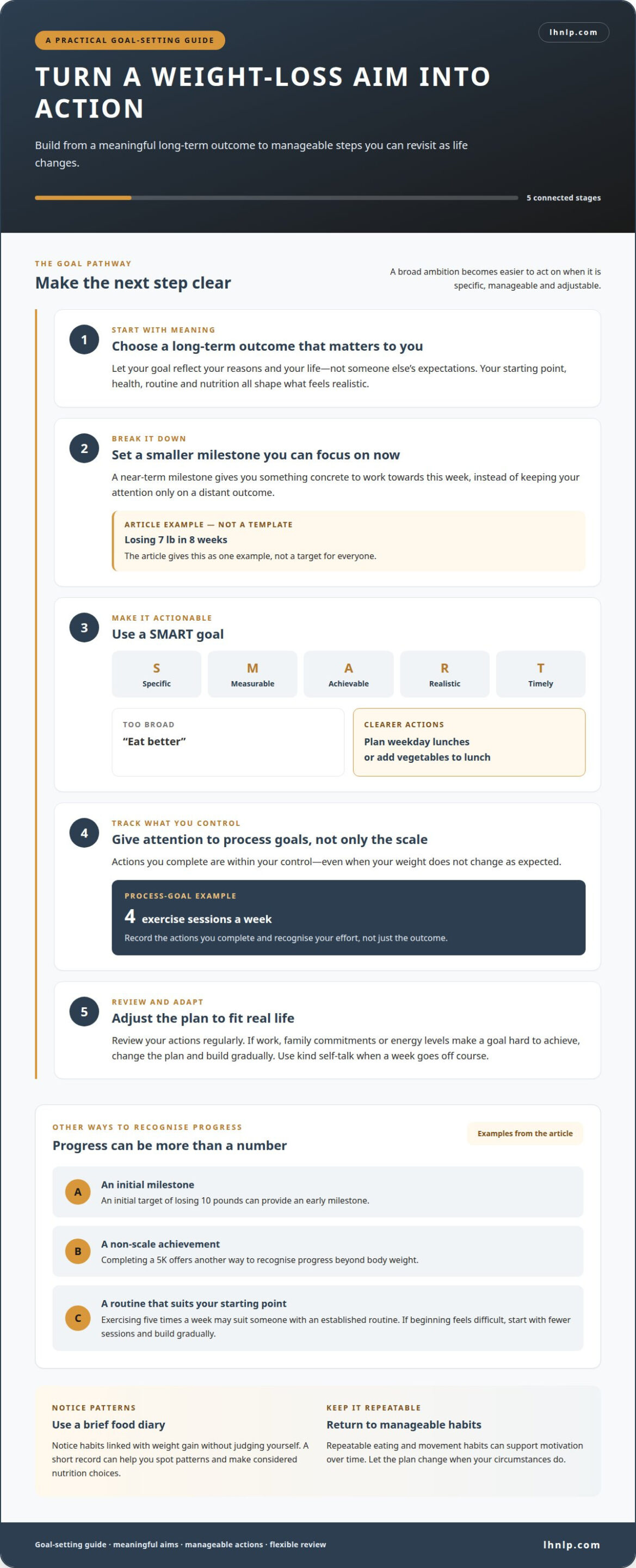
Choose a long-term outcome, then map smaller steps towards it. A distant aim can feel hard to act on, while a short-term milestone gives you something to focus on this week. Losing 7 lb in 8 weeks is one example, not a template for everyone. Your starting point, health, routine and nutrition all shape what feels realistic. A practical answer to how to stay motivated for weight loss begins with a goal that matters to you and fits your life.
Adam Peacock recommends goals that are specific, measurable, achievable, realistic and timely. Replace “eat better” with a clear action, such as planning weekday lunches or adding vegetables to lunch. Rather than tracking only your final weight, set a process goal, such as exercising four times a week. These actions are within your control, even when the scale doesn’t change as expected.
Make the challenge meaningful but attainable. Exercising five times a week may suit someone with an established routine; if you’re struggling to begin, start with fewer sessions and build gradually. An initial target of losing 10 pounds can provide an early milestone. Completing a 5K offers another way to recognise progress beyond body weight. Adjust your plan if work, family commitments or energy levels make it difficult to achieve. If mobility limitations or physical discomfort make increasing activity challenging, multidisciplinary clinics like Heartland Physiotherapy provide rehabilitation and wellness care to help you move safely toward your goals.
Repeatable eating and movement habits can support motivation over time. Review your actions regularly, and use kind self-talk when a week goes off course. If you’re wondering how to stay motivated for weight loss, notice habits linked with weight gain without judging yourself. A brief food diary can help you spot patterns and make considered nutrition choices. Record the actions you complete and recognise your effort, not just the outcome. This turns a broad ambition into practical choices you can return to.
2. Getting social support
Ask a friend, partner or family member for a specific kind of support. They might join you for a walk, share meal-planning ideas or check in after a difficult day. Explain what feels helpful, such as encouragement without comments about your body. This makes accountability collaborative rather than pressurising. If you start a weight-loss programme with friends, you may find it easier to stay engaged than if you go alone.
A weekly weigh-in can provide a consistent record, as long as it feels constructive rather than punishing. Weigh yourself at the same time of day and in similar clothes, then look at the trend instead of reacting to a single reading. You could share progress with someone you trust or a group member, but agree beforehand on how they should respond. Celebrate actions, such as completing planned walks, as well as changes on the scale.
In the UK, the NHS offers a free 12-week weight-loss plan, with guidance and tools to help you plan changes and track progress. You can use it independently or ask a friend to follow the same steps, then compare experiences without turning the process into a competition. A shared weekly check-in can focus on one practical question: what helped, and what made the plan harder to follow?
Professional support may help if difficulties with eating habits, confidence or motivation are making it hard to continue. A clinical conversation can help you explore patterns and choose realistic next steps, especially when weight concerns feel closely connected to stress or emotions. Ask someone you trust to support you in following through with your chosen action. Keep the arrangement positive and specific: for example, a message before a planned activity can make it easier to get started.
3. Remembering health and personal reasons for losing weight
Start by naming what matters to you, rather than choosing a reason someone else expects. You might want more energy for family walks, to feel more comfortable exercising or to support a health goal discussed with a clinician. Ask yourself what losing weight could make easier in everyday life. Your own answer can give your weight-loss journey meaning beyond reaching a number on the scale.
Write your reason in positive, specific language and put it somewhere visible, such as beside your kettle or on your phone’s home screen. “I’m making space for more enjoyable walks” feels more compassionate than criticising your appearance. If your reason changes, update the note. A reminder should reconnect you with your values, not become another rule to judge yourself by.
Sleep, stress and mental health can affect your motivation from day to day. If you’re struggling to follow your routine, consider whether poor sleep, stress, caffeine or hydration could be contributing before assuming you’ve lost commitment. Treat this as useful information, then choose one manageable next step, such as preparing for an earlier night or taking a short walk.
Focusing on a meaningful reason can help you choose habits that fit your life. If being more present with your children matters to you, you could make an after-dinner walk a shared routine. If feeling stronger matters, notice how regular movement feels, not just what the scales show. These personal markers help you recognise progress while your weight fluctuates.
Keep a brief journal of eating, emotions and situations that influence your choices. A note such as “I skipped lunch, then snacked while stressed after work” can reveal a pattern without turning it into blame. Respond with self-compassion: decide what support or adjustment would help next time. Your reason is a compass, not a demand for perfect behaviour.
4. Setting realistic weight-loss expectations
A realistic expectation gives your lifestyle room to change without turning the journey into a race. Around 2 lb (1 kg) weekly is described as an average healthy loss, but progress may vary rather than follow a straight line. Setting a flexible aim helps you focus on habits you can maintain, not a deadline that ignores work, family life or health.
Many practitioners recommend aiming to lose around 5% to 10% of your starting weight over six months. For someone weighing 180 lb (82 kg), that means 9 to 18 lb (4 to 8 kg); for someone weighing 250 lb (113 kg), it means 13 to 25 lb (6 to 11 kg). These examples put a percentage goal into context, but your own starting point matters.
Ask yourself why you want to lose weight, then consider whether your target supports those reasons. A goal that gives you time to practise sustainable eating and activity habits may be more useful than a faster target that feels difficult to maintain. Track actions alongside your weight, such as preparing meals or keeping a regular walking routine. These behaviours still matter when the scale changes slowly.
What if the scales stop moving? Plateaus are a normal part of the process. Continue the healthy habits that support your plan rather than treating a pause as failure. Review your routine calmly: are meals, movement and sleep still workable? For persistent plateaus, looking into underlying metabolic or hormonal health through functional wellness centres such as Emagene Life can sometimes shed light on stubborn barriers. If a change could make the plan easier to sustain, adjust one habit at a time. Avoid responding to a plateau with drastic restrictions.
Progress can also show up in everyday life, such as feeling more comfortable on a familiar walk or maintaining a routine through a busy week. If emotional patterns make consistency difficult, exploring weight-loss support may be one possible next step. A realistic weight-loss journey is built on steady habits, patience and goals that stay connected to your life.
London Hypnotherapy & NLP: Hypnotherapy for Weight Loss
London Hypnotherapy & NLP offers hypnotherapy for weight loss to support people working through thoughts and behaviours connected to their eating habits. Personalised, solution-focused sessions can help you explore what makes consistency difficult and develop a clearer approach to your goals.
This may be worth considering if you understand the practical steps but find that emotional patterns, self-belief or motivation repeatedly get in the way. Hypnotherapy can complement your own efforts; it isn’t a substitute for medical advice, and results aren’t guaranteed. The focus is on supporting change in a way that reflects your circumstances and reasons for moving forward.
If you’d like to discuss whether this support feels right for you, contact London Hypnotherapy & NLP.
Let your next step be one you can sustain
Motivation doesn’t have to arrive fully formed before you begin. It can grow as you choose a meaningful next step and adjust when circumstances change. If you’re considering how to stay motivated for weight loss, think of consistency not as never wavering, but as returning to what matters after a difficult day.
You don’t have to solve every obstacle at once. Notice what tends to disrupt your routine, then choose one supportive response you can put into practice. That might mean making time to reflect on emotional patterns or seeking help with barriers that feel difficult to shift alone. Progress can be quieter than you expected and still count.
When you’d like to explore whether guided support could suit your needs, contact London Hypnotherapy & NLP. You can take the next step at your own pace, with patience for the person you are today and care for the direction you want to go.
Frequently Asked Questions
What is a realistic and healthy rate of weight loss per week in the UK?
A steady rate is around 1-2 lb (½ to 1 kg) per week, although weekly changes can vary. Treat this as a broad guide, not a pass-or-fail test: water retention, digestion and routine can affect a reading. Look at the direction of progress over time, and keep your energy and sustainable habits in view rather than trying to force faster loss.
How do you set achievable weight-loss goals and track progress?
Choose a behaviour you can record, such as preparing lunch at home on workdays, and mark each time you do it on a calendar. Review your notes regularly to see what fits your routine and where obstacles arise. You can also record changes in energy, stamina or how everyday tasks feel, so you don’t judge progress solely by the number on the scales.
What are practical ways to make exercise enjoyable and sustainable?
Choose movement you genuinely like, such as dancing at home, cycling or walking somewhere pleasant. If starting feels difficult, try a 10-15-minute walk and build from there as it suits you. Pairing a walk with a phone call can make it more enjoyable. A friend’s company or a favourite podcast can also help turn activity into something you look forward to.
How can meal planning support weight loss without strict dieting?
Plan a few meals at the start of the week, using foods you enjoy and ingredients that work in several dishes. Cooking extra portions gives you a convenient meal to freeze for a busy evening. A simple plan can reduce last-minute decisions without banning favourite foods. Leave room for flexibility, and adapt meals to your schedule and appetite.