

What if a difficult quit attempt isn’t proof you can’t succeed, but information that can help you plan differently? If you’re thinking, “I want to quit smoking but I’m scared of failing,” that fear makes sense, especially if cravings, withdrawal or familiar routines have pulled you back before. A lapse doesn’t erase what you learned or mean you’re back at the beginning.
Quitting can feel daunting because smoking is woven into ordinary moments: a break at work, a stressful journey or time with friends. You don’t have to rely on willpower alone, and you don’t need a perfect plan before you begin. Support and a few practical preparations can make the next step feel more manageable.
This guide explains why quitting may feel hard, compares support options such as NHS stop smoking services, nicotine replacement and personalised hypnotherapy, and helps you make a plan for cravings and setbacks. Start with one small, considered step. Fear can be part of the process without deciding how it ends.
Key Takeaways
- If you’re thinking, “I want to quit smoking but I’m scared of failing,” remember that a lapse is something to learn from, not proof you can’t quit.
- Notice which cravings are linked to nicotine withdrawal and which are tied to routines, social situations or emotions.
- Compare behavioural support, nicotine replacement therapy and hypnotherapy to find an approach that suits your needs. A GP or pharmacist can answer questions about cessation aids.
- Make your quit plan practical: name your reason, identify triggers, arrange support and decide what you’ll do if a craving or lapse occurs.
- Personalised hypnotherapy can explore your smoking patterns, triggers and goals. London Hypnotherapy & NLP offers in-person consultations across London and virtual sessions.
I want to quit smoking but I’m scared of failing: why that fear makes sense
You can genuinely want to stop smoking and still feel afraid to try. Perhaps you’re worried about cravings, withdrawal, managing stress without a cigarette or facing friends who smoke. If you’re thinking, “I want to quit smoking but I’m scared of failing,” that fear isn’t a verdict on your ability. It can help you identify the situations where you’ll need a plan or extra support.
A previous attempt can offer useful clues. It may show you when smoking feels hardest, what situations catch you off guard and which kinds of support could help next time. Rather than treating the attempt as a pass or fail, look for details you can use.
For a personal perspective on facing this fear, watch the video below.
What are you afraid might happen if you try to quit?
Name one concern instead of treating quitting as one enormous challenge. Is it the discomfort of cravings, changes in mood, a stressful commute or being offered a cigarette in a social setting? Your experience may differ from someone else’s. Understand cravings, nicotine withdrawal and the wider challenges of stopping, then consider what might help in the specific situation you’re anticipating. For example, if you’re concerned about a break at work, decide in advance where you’ll go and what you’ll do instead of smoking.
Does a slip mean you have failed?
A lapse means smoking after you’ve started a quit attempt. It could be one cigarette, but it doesn’t automatically mean you’ve abandoned your goal. A lapse is an event in a quit attempt, not a final decision about whether you can stop. If it happens, pause before judging yourself. What was happening just beforehand? Were you tired, stressed, with other smokers or responding to a craving? That detail can help you adjust your plan instead of giving up on it.
Past attempts aren’t wasted effort. They can reveal which triggers deserve attention and whether you’d benefit from more structured support. If a personalised approach feels relevant, explore the stop smoking hypnotherapy in London guide as one option to consider alongside appropriate medical advice. Your next attempt doesn’t have to be perfect. It can be better prepared.
Understand cravings, nicotine withdrawal, and the situations that can challenge a quit attempt
Cravings can feel like a sudden urge to smoke. They may arise as your body adjusts to getting less nicotine, or when something around you has become linked with having a cigarette. Withdrawal can involve changes such as irritability, restlessness, difficulty concentrating, changes in sleep or low mood, but experiences differ. You don’t have to predict exactly how you’ll feel. Noticing what tends to prompt an urge gives you something specific to prepare for.
Nicotine dependence is only part of the picture. Smoking can also become attached to daily routines, social settings or ways of responding to stress. Triggers differ from person to person, so your own patterns matter more than a generic list.
Which smoking triggers are most useful to notice?
For a short period, note the time, place, feeling, company and event surrounding each cigarette. A break at work or finishing a meal may be a cue for some people, but not for everyone. Look for repeated patterns before choosing coping strategies. The aim isn’t to judge yourself; it’s to identify the moments where changing a routine or arranging extra support might help.
Illustrative example, not a universal pattern: someone notices they often smoke after lunch while chatting with a colleague. They might plan to take a short walk or meet that colleague somewhere they don’t usually smoke. Your trigger and response may be quite different.
What can a craving plan include?
Prepare a few options for moments when an urge arrives: try a brief alternative activity, contact someone supportive or change your setting. You could also use a structured prompt to Build a quit plan. It’s a US resource, so use it for planning ideas rather than guidance on UK services or treatment.
If you’re concerned about withdrawal or unsure which treatment may suit you, talk with a pharmacist or GP. They can discuss treatment suitability and explain options such as nicotine replacement therapy. For an overview of London Hypnotherapy & NLP’s smoking cessation support, explore smoking cessation treatment options. Hypnotherapy can form part of a broader quit plan, but it isn’t a substitute for medical advice.
Compare ways to quit smoking and choose support that fits your needs
If you’re thinking, “I want to quit smoking but I’m scared of failing,” choosing support can feel like another decision you might get wrong. There isn’t one route everyone must take. Some people prefer structured support, others want to explore nicotine replacement therapy (NRT), and some choose to stop abruptly, often called going “cold turkey”. That’s one approach, not a test of commitment or a requirement for success.
How do behavioural support and nicotine replacement differ?
Behavioural support focuses on the patterns around smoking: identifying triggers, preparing ways to cope and keeping your reasons for quitting in view. It may be offered one-to-one or in a group, including through NHS stop smoking services. NRT works differently. Products such as patches or gum provide nicotine without cigarette smoke and may be used to help manage withdrawal while you work on changing routines.
These approaches can be considered together as part of a quit plan. The most suitable option depends on your circumstances, preferences and health. A pharmacist or GP can advise on NRT, other medicines and clinical questions, including whether a particular treatment is appropriate for you. NHS stop smoking services can explain the behavioural support available locally. You don’t have to decide everything alone.
Where might hypnotherapy fit into a quit plan?
Personalised hypnotherapy can give you a space to explore your smoking patterns, motivations and responses to triggers. The focus is on understanding what smoking has come to mean in your daily life and considering new ways to respond. It’s one option to weigh as part of a broader plan, not a guaranteed way to quit or a replacement for medical advice.
For practical ideas to prepare for urges, Mayo Clinic shares guidance on cravings, difficult moments, and possible lapses. Compare each form of support by asking what it helps you address, how it fits your routine and who can answer questions about its suitability. The best fit is a plan you can realistically use, not the one that sounds toughest.
If you’d like to explore a personalised approach, read the stop smoking hypnotherapy in London guide. You can also learn more about smoking cessation support from London Hypnotherapy & NLP as you consider your next step.
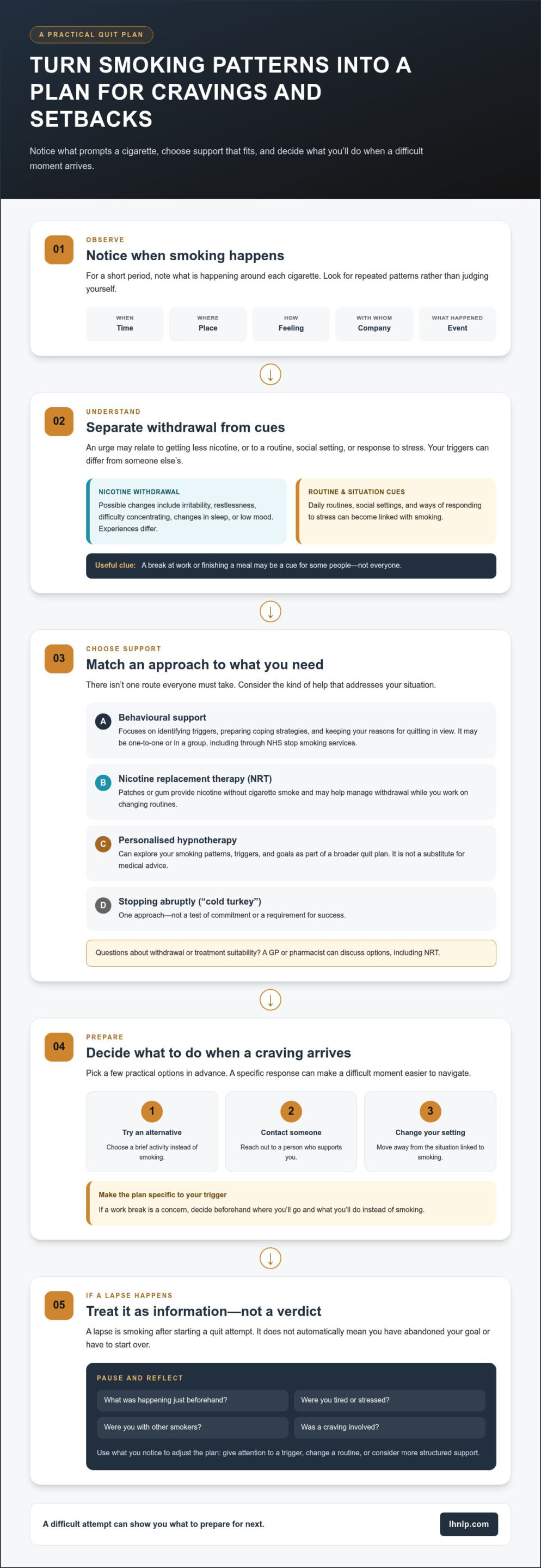
Build a quit plan for cravings, difficult moments, and possible lapses
A useful quit plan doesn’t need to predict every challenge. It gives you a few steady reference points: why you want to stop, which situations may test you, who can support you and how you’ll adjust as you learn. If your starting thought is “I want to quit smoking but I’m scared of failing,” choose a first step small enough to feel possible.
How can you prepare for your first difficult moments?
Write down your personal reasons for quitting, then note the situations you expect might be difficult. These could include a stressful part of the day, a break at work or time with friends who smoke. Choose a realistic quit date if that helps you prepare, or begin with another manageable step, such as arranging support or discussing treatment options with a pharmacist or GP.
Tell someone you trust what kind of help would feel useful. You might ask them to check in, listen without judging or join you for a walk during a usual smoking break. You can also plan a replacement routine for a challenging moment. The more specific the plan, the easier it is to put into practice when a trigger appears.
What should you do after smoking again?
If you smoke, pause before deciding what it means. You don’t need to punish yourself or wait for a perfect new beginning. Notice what happened just beforehand: where you were, what you were feeling and whether you needed support that wasn’t available. Then reconnect with someone who’s helping you and adjust the plan to address what you’ve learned.
After a lapse, pause, identify the trigger, reconnect with support, and revise your next step.
For instance, if a difficult conversation preceded the cigarette, consider what support or alternative response might help if a similar situation arises again. If a particular routine was involved, try changing one part of it. A lapse can point to a gap in the plan; it doesn’t require you to abandon your goal. Return to your quit attempt promptly, and speak with a GP or pharmacist if you have concerns about withdrawal or treatment.
If personalised support feels like a helpful part of your plan, explore the stop smoking hypnotherapy in London approach. Sessions can explore your smoking patterns, motivations and triggers without promising a particular outcome. Explore personalised smoking cessation support as you consider a manageable next step.
Get support for quitting smoking in London or online when you feel ready
If you’re thinking, “I want to quit smoking but I’m scared of failing,” support can help you approach change with more care and less pressure. London Hypnotherapy & NLP provides personalised hypnotherapy for smoking cessation as one option within a broader quit plan. It doesn’t guarantee a particular outcome and doesn’t replace medical advice or treatment from a GP or pharmacist.
What might personalised smoking-cessation hypnotherapy involve?
An individual session can explore your smoking patterns, what motivates you to stop, the changes you want to make and the situations that feel difficult. Discussing these details helps focus the session on your circumstances rather than assuming every smoker has the same habits or concerns. You don’t need to have everything figured out before beginning.
In-person consultations are available across London, including Harley Street, Ealing and Tokenhouse Yard. If meeting online is more practical, virtual hypnotherapy sessions are available via Zoom and Skype. The format may affect what feels convenient for you, but neither setting can promise a particular result. Discuss questions about nicotine replacement, medication or health concerns separately with a GP or pharmacist.
What is a manageable next step if you are not ready to book?
You can take time before choosing formal support. Write down one situation that tends to prompt smoking and one kind of help you might consider, such as talking with someone you trust, exploring behavioural support or asking a pharmacist about nicotine treatment. A small note can turn a broad intention into a clearer next step.
There’s no need to wait until you feel completely confident. Read, reflect and ask questions at a pace that feels right. If personalised hypnotherapy feels worth exploring, Explore supportive hypnotherapy options as one possible part of your quit plan. Taking time to consider support is a valid step in itself.
Take your next step towards a smoke-free life
If you’re thinking, “I want to quit smoking but I’m scared of failing,” remember that fear can guide your preparation without deciding what you’re capable of. Notice the situations that make smoking more tempting, choose support that fits your needs and make a plan for what you’ll do if a craving or lapse occurs. A setback can offer useful information for your next step.
You don’t have to make every decision today. A manageable start could be writing down one reason you want to quit or speaking with a GP or pharmacist about nicotine treatment. Personalised one-to-one hypnotherapy for smoking cessation is another option to consider as part of a broader plan. London Hypnotherapy & NLP offers in-person consultations across London and virtual sessions online.
If you’d like to explore one-to-one hypnotherapy for smoking cessation, contact London Hypnotherapy & NLP. Move at a pace that feels realistic, with a plan that reflects your triggers and the support you want.
Frequently Asked Questions
Why am I scared I will fail when I try to quit smoking?
Fear can come from several places, and it doesn’t mean you’re unable to quit. A previous attempt may make you worry about repeating a difficult experience; you might also anticipate cravings, withdrawal or changes to your routines. These concerns affect people differently. Try naming the specific thing you’re most worried about, such as a stressful break at work. That can help you shape a more realistic plan around your own needs.
Does smoking one cigarette mean I have failed to quit?
No. Smoking one cigarette during a quit attempt is a lapse; it doesn’t automatically mean you’ve decided to abandon your goal. Rather than blaming yourself, pause and notice what happened just beforehand. Was there a particular feeling, situation or unmet need? Use that information to adjust your plan, reconnect with support and continue. If you’re unsure how to change your approach, a GP, pharmacist or stop smoking service can help.
What can I do when a cigarette craving feels overwhelming?
Have a response ready that feels realistic for you, such as changing activity, stepping away from a smoking cue or contacting someone supportive. A short walk or moving to another room may suit some people, but experiences and useful strategies vary. If you’re concerned about withdrawal symptoms or want to explore treatment, speak with a GP or pharmacist, or consult current NHS stop smoking guidance for UK support options.
Is it better to quit smoking cold turkey or use support?
There isn’t one approach that everyone must follow. Some people stop abruptly, while others choose behavioural support, nicotine replacement therapy or a combination of options. WhyQuit advocates quitting nicotine without replacement, but that is its stated preference, not a rule for everyone. UK NHS stop smoking support includes behavioural help and cessation-treatment options. A GP or pharmacist can discuss which treatments may be suitable for your circumstances.
Can hypnotherapy help me quit smoking if I am afraid of failing?
Hypnotherapy is one option that can help you explore smoking habits, motivations and responses to triggers. A personalised approach gives you space to consider what you want to change and what concerns you about quitting. Suitability and expected outcomes vary, and hypnotherapy can’t guarantee that you’ll stop smoking. For questions about nicotine treatment, withdrawal symptoms or your health, seek advice from a GP or pharmacist.
How do I start a quit-smoking plan after previous attempts?
Start by looking back without judging yourself. What made earlier attempts difficult, and were there particular routines, feelings or situations that prompted smoking? Use those observations to identify triggers, choose support that fits your circumstances and plan how you’ll respond to a lapse. Your plan can change as you learn. A previous attempt isn’t proof that future change is impossible; it can offer useful clues for your next step.
Can I access smoking-cessation hypnotherapy online or in London?
Yes. London Hypnotherapy & NLP offers in-person consultations across London, including Harley Street, Ealing and Tokenhouse Yard, as well as virtual sessions via Zoom and Skype. These formats provide access to individual hypnotherapy support for smoking cessation without guaranteeing a particular outcome. You can explore smoking cessation treatment information or read about virtual hypnotherapy services to consider what may suit you.